Top 10 Logistics Companies in Japan (2026)
Explore the top logistics companies in Japan for 2026, from NX Group and Yamato to LOGISTEED and Nichirei, with strengths, services and how to choose.

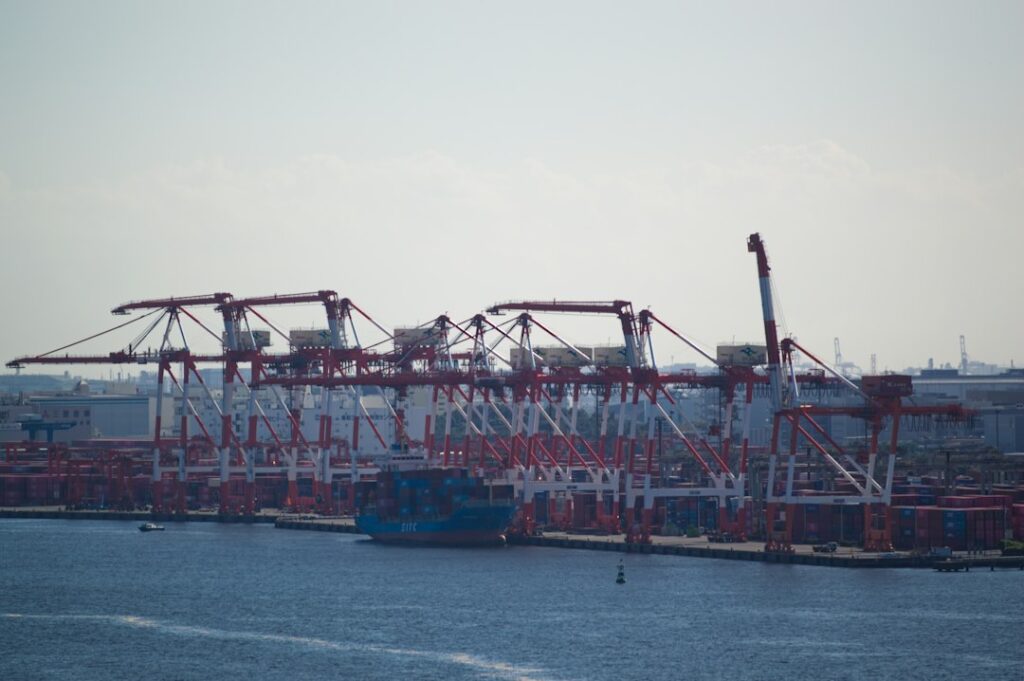
Every day, Japan’s parcel carriers push millions of boxes through some of the world’s most crowded cities, often to a delivery window the customer chose the night before. Behind that precision sits an industry under real strain. Since April 2024, truck drivers have been capped at 960 hours of overtime a year, and a study often cited by the government warns that Japan could lack the capacity to move as much as 34% of its domestic cargo by 2030.
That pressure is reshaping the sector quickly. In October 2025, KKR agreed to sell a 19.9% stake in LOGISTEED to Japan Post. In October 2026, NX Group completed the largest acquisition in its history, buying Canada’s Metro Supply Chain. The same month, Mitsubishi Logistics agreed to buy freight forwarder Hankyu Hanshin Express. Consolidation is no longer a slow trend. It’s the plan.
For shippers, price still matters, but so does whether a provider has the drivers, warehouses and digital tools to keep goods moving when capacity is tight. Japanese logistics companies have answered with automation, shared trunk routes and a wave of deals.
This guide looks at ten logistics companies in Japan that stand out in 2026, from global freight forwarders and parcel networks to 3PL operators and a cold chain specialist, and explains how to choose the right one.
Why Businesses Are Investing in Logistics in Japan
Japan is a manufacturing base for cars, machinery and electronics as well as a mature e-commerce market, so demand for reliable freight and warehousing never really slows. What has changed is the cost of getting it wrong.
Securing Capacity Before It Runs Out
The driver overtime cap has cut the hours available on long-haul routes. Businesses that lock in contracts with large carriers, or move freight onto rail and coastal shipping through them, are far less exposed to sudden shortages.
Meeting New Legal Duties
Revised logistics laws now place obligations on shippers as well as carriers. From April 2026, large “specified shippers” handling more than 90,000 tonnes of cargo a year must appoint an executive-level chief logistics officer and submit medium- to long-term efficiency plans, which pushes many firms towards experienced partners.
Access to Automation and Data
Japan’s big operators are investing heavily in automated warehouses, robotics and visibility platforms. That work links directly to the country’s leading robotics companies.
A Gateway to Asia
Many freight forwarders in Japan run dense networks across China, South-East Asia and India. One contract can cover Japanese warehousing, customs clearance and onward freight across the region.
Top 10 Logistics Companies in Japan at a Glance
| Rank | Company | Primary Strength | Best For | HQ / Founded |
|---|---|---|---|---|
| 1 | NX Group (Nippon Express Holdings) | Global forwarding and contract logistics | Multinationals needing end-to-end coverage | Tokyo / 1937 |
| 2 | Yamato Holdings | TA-Q-BIN parcel delivery | E-commerce and B2C shipping | Tokyo / 1919 |
| 3 | SG Holdings (Sagawa Express) | B2B parcels and global forwarding | Corporate shippers and high-tech exporters | Kyoto / 1957 |
| 4 | LOGISTEED | Third-party contract logistics | Outsourced warehousing and supply chain design | Tokyo / 1950 |
| 5 | Yusen Logistics | Forwarding backed by NYK’s shipping network | Ocean-heavy importers and exporters | Tokyo / 1955 |
| 6 | Kintetsu World Express | Air freight and electronics logistics | Time-sensitive, high-value cargo | Tokyo / 1970 |
| 7 | Japan Post | Nationwide last-mile network | Small parcels to every address in Japan | Tokyo / 2006 |
| 8 | Seino Holdings | Commercial less-than-truckload freight | Manufacturers and wholesalers | Ogaki, Gifu / 1930 |
| 9 | SENKO Group Holdings | Diversified 3PL and distribution centres | Retail, chemicals and consumer goods | Tokyo / 1916 |
| 10 | Nichirei Logistics Group | Cold storage and temperature-controlled transport | Food and frozen goods supply chains | Tokyo / 1942 (parent) |
Top 10 Logistics Companies in Japan (2026)
The ranking below weighs scale, network reach, service depth and recent strategic moves among the top logistics companies in Japan. No company paid for inclusion.
1. NX Group (Nippon Express Holdings)
Established in 1937 and headquartered in Tokyo, Nippon Express is Japan’s largest logistics group and, by Armstrong & Associates’ 2026 list, the biggest Asia-Pacific-based 3PL, with 2025 gross logistics revenue of about US$17.2 billion. It moved to a holding company structure under the NX Group brand in January 2022 and now employs more than 78,000 people across 56 countries and regions.
NX covers almost everything: air and ocean forwarding, rail and road freight, warehousing, heavy cargo and relocation. Its growth push abroad is serious. In October 2026 it completed the purchase of Montreal-based Metro Supply Chain, a 3PL with more than 190 sites and about 9,000 staff, at an enterprise value of CAD 1.8 billion. It’s the largest deal in NX’s history and gives it real contract logistics weight in North America.
Key Solutions:
- ✔ Global air and ocean freight forwarding
- ✔ Contract logistics and warehousing in Asia, Europe and North America
- ✔ Rail, road and heavy-haul transport within Japan
- ✔ Industrial relocation and project cargo
Best for: Multinationals that want one partner for domestic, regional and intercontinental flows.
2. Yamato Holdings
Yamato was founded in 1919 and is based in Ginza, Tokyo. Its black-cat logo is familiar to almost every household in the country thanks to TA-Q-BIN, the door-to-door parcel service it pioneered. According to the company, it handled roughly 2.3 billion TA-Q-BIN parcels in the year to March 2025, giving it a 47.2% share of Japan’s domestic parcel market. The group employs around 170,000 people.
Parcels are only part of the story now. Yamato is building a contract logistics business for corporate clients and, in December 2024, took an 87.7% stake in Tokyo-based Nakano Shokai, a contract logistics firm with net sales of about ¥86.8 billion in its 2023 fiscal year. It also runs about 400 facilities for corporate customers and offers forwarding abroad. More detail on its services is available on the Yamato Holdings business profile.
Key Solutions:
- ✔ TA-Q-BIN nationwide parcel delivery
- ✔ E-commerce fulfilment and returns
- ✔ Contract logistics and warehousing
- ✔ International forwarding and moving services
Best for: Online retailers and brands that need dependable B2C delivery to any address in Japan.
3. SG Holdings (Sagawa Express)
Sagawa Express began operations in Kyoto in 1957, and its parent, SG Holdings, was set up in 2006. The group is still headquartered in Kyoto and is best known for business-to-business parcel delivery, where Sagawa’s trucks are a fixture outside offices and factories nationwide. GlobalData puts its 2025 revenue at about US$10.6 billion.
Its international side has grown quickly. EFL Global, part of the Expolanka Group, is the core forwarder, focused on ocean freight for apparel and consumer goods. In February 2025, SG Holdings announced the purchase of Morrison Express, an air freight forwarder known for semiconductor and high-tech logistics, which gives it much stronger coverage of Asia’s electronics corridors. That matters for exporters tied to Japan’s semiconductor companies. At home, a subsidiary announced the purchase of trucking firm D-Line and six group companies in late 2025 to stabilise trunk-line capacity.
Key Solutions:
- ✔ B2B parcel and freight delivery
- ✔ Ocean and air forwarding through EFL Global and Morrison Express
- ✔ Warehousing, inspection and customs clearance
- ✔ Logistics real estate development
Best for: Corporate shippers and high-tech exporters needing domestic and cross-border reach.
4. LOGISTEED
LOGISTEED started life in 1950 as Hitachi Transport System and is headquartered in Kyobashi, Tokyo. KKR bought the company in 2023 and renamed it the same year. It ranks sixth on Armstrong & Associates’ list of Asia-Pacific 3PLs, with 2025 gross logistics revenue of about US$6.1 billion, and operates 334 sites in Japan and 471 overseas.
Its core is third-party contract logistics: designing, running and digitising warehouses and distribution for manufacturers and retailers, plus heavy transport and forwarding. Japan Post agreed in October 2025 to buy a 19.9% stake from KKR for ¥142.3 billion, and the two have since worked under a joint framework. In May 2026 they signed a memorandum on LOGISTEED investing in two Asian units of Japan Post’s Australian arm, Toll. KKR has also reportedly hired Morgan Stanley to prepare a possible Tokyo listing, perhaps as early as 2027. Its corporate outline has more.
Key Solutions:
- ✔ End-to-end 3PL and warehouse operations
- ✔ Logistics digital transformation and automation
- ✔ Heavy machinery transport and relocation
- ✔ Global freight forwarding
Best for: Companies that want to outsource an entire warehouse or distribution operation.
5. Yusen Logistics
Founded in 1955 and headquartered in Tokyo, Yusen Logistics is the logistics arm of the NYK shipping group. According to NYK, it works from about 650 locations in more than 45 countries and regions. Armstrong & Associates ranks it ninth among Asia-Pacific 3PLs, with 2025 gross logistics revenue of about US$5.2 billion.
The NYK link gives it a natural edge in ocean freight, but the business is broader than that. Yusen handles air freight, trucking and rail, customs clearance and contract logistics, with warehouse services covering storage, inspection, labelling and repacking. It has built a strong profile in automotive, retail and technology supply chains, and has been expanding its healthcare logistics platform.
Key Solutions:
- ✔ Ocean and air freight forwarding
- ✔ Contract logistics and distribution centres
- ✔ Customs brokerage and trade compliance
- ✔ Healthcare and temperature-sensitive logistics
Best for: Importers and exporters with heavy ocean volumes and multi-country distribution.
6. Kintetsu World Express
Kintetsu World Express (KWE) was founded in 1970 and is headquartered in Minato, Tokyo. It became a wholly owned subsidiary of railway group Kintetsu Group Holdings in 2022 after a tender offer took it private. Armstrong & Associates ranks it 12th among Asia-Pacific 3PLs, with 2025 gross logistics revenue of about US$5.0 billion.
KWE built its name in air freight, especially for electronics, semiconductors and other high-value, time-critical goods. Its 2015 purchase of Singapore-based APL Logistics for US$1.2 billion added contract logistics capability and a much bigger ocean freight presence, turning KWE into a more balanced business. Today it offers air and sea forwarding, customs brokerage and warehouse inventory management across Asia, the Americas and Europe. Component makers shipping around Asia will find few more experienced freight forwarders in Japan.
Key Solutions:
- ✔ Air freight forwarding for high-value cargo
- ✔ Ocean freight and consolidation
- ✔ Contract logistics through APL Logistics
- ✔ Customs brokerage
Best for: Electronics and high-tech firms shipping urgent cargo across Asia.
7. Japan Post
Japan Post Holdings was incorporated in 2006 and is based in Chiyoda, Tokyo. Its postal subsidiary runs a delivery network that reaches every address in the country, and in the year to March 2026 it handled about 565 million Yu-Pack parcels and 563 million Yu-Packet items, according to company figures.
The group wants to become a full logistics provider, not just a post office. It took control of trucking firm Tonami Holdings in April 2025, agreed to buy its LOGISTEED stake later that year, and has owned Australia’s Toll since 2015. There have been setbacks: in June 2025 the transport ministry moved to revoke Japan Post’s licence to run about 2,500 trucks and vans after widespread failures to carry out mandatory alcohol checks on drivers, a reminder that compliance is now a selection factor in its own right.
Key Solutions:
- ✔ Yu-Pack and Yu-Packet parcel delivery
- ✔ B2B trucking through Tonami
- ✔ International logistics through Toll
- ✔ Contract logistics partnerships with LOGISTEED
Best for: Senders of small parcels who need coverage of rural and remote areas.
8. Seino Holdings
Seino was founded in 1930 by Rihachi Taguchi with a single used truck and is still headquartered in Ogaki, Gifu Prefecture. Its kangaroo logo is a common sight on Japanese highways, and the group now employs more than 31,000 people across transport, vehicle sales and real estate.
Its strength is commercial freight: consolidated, less-than-truckload shipments moving from factories and wholesalers to businesses. Consolidating loads from many shippers onto shared routes is exactly the kind of efficiency the driver overtime cap now rewards. It bought a 66.6% stake in Mitsubishi Electric Logistics in October 2024, renaming it MD LOGIS, to deepen its contract logistics work. It also holds 34% of Hankyu Hanshin Express, a stake that Hankyu Hanshin Holdings plans to buy back before selling the forwarder to Mitsubishi Logistics.
Key Solutions:
- ✔ Commercial less-than-truckload freight
- ✔ Contract logistics through MD LOGIS
- ✔ Shared and joint delivery programmes
- ✔ Freight forwarding and warehousing
Best for: Manufacturers and wholesalers shipping mixed B2B loads across Japan.
9. SENKO Group Holdings
SENKO traces its roots to 1916 and is headquartered in Tokyo. It is one of the most diversified 3PL providers in Japan, with logistics alongside trading, life support and business support divisions, and about 27,800 employees. In the year to March 2026, its revenue was close to ¥900 billion.
The logistics business combines warehousing and packaging with truck, rail, maritime and international transport, so clients can mix modes within one contract. SENKO has grown through steady acquisitions, including a majority stake in Australia’s Simon Transport. In November 2025 it announced a plan to take Tokyo-listed logistics firm Maruwn private through a tender offer, aiming for 80% of voting rights while Maruwn’s largest shareholder, JX Metals, would keep 20%. Combining trucking with rail and sea routes helps clients cut reliance on long-haul drivers.
Key Solutions:
- ✔ Distribution centre operations for retail and chemicals
- ✔ Modal shift using rail and coastal shipping
- ✔ International transport and forwarding
- ✔ Packaging and logistics-related trading
Best for: Retailers and process industries that want a broad, multimodal 3PL.
10. Nichirei Logistics Group
Nichirei Logistics Group is the cold chain arm of Nichirei Corporation, the Tokyo food company founded in 1942. It is one of Japan’s largest refrigerated warehouse operators and ranks sixth worldwide on the Global Cold Chain Alliance’s 2026 Top 25 list, with capacity of roughly 6.5 million cubic metres.
This is the specialist on the list. Nichirei stores and moves frozen and chilled food for manufacturers, importers and retailers, and runs cross-docking and regional delivery services built around temperature control. Through its European network, Thermotraffic, Nichirei has been present in Europe for more than 30 years and operates 23 locations there. For any business where a broken cold chain means written-off stock, a dedicated provider like this often beats a generalist.
Key Solutions:
- ✔ Frozen and chilled warehousing
- ✔ Temperature-controlled regional delivery
- ✔ Cross-docking for food retailers
- ✔ Cold chain services in Europe
Best for: Food manufacturers, importers and retailers handling chilled or frozen goods.
How to Choose the Right Logistics Partner
Match the Network to Your Flows
Start with where your goods actually go. Parcel networks suit consumer deliveries, forwarders suit imports and exports, and contract logistics firms suit warehousing. Mixing them up is an expensive mistake.
Ask How They Handle the Driver Shortage
Every provider is affected by the overtime cap. Ask for specifics: relay points, rail and coastal shipping, shared trunk routes and booking lead times. Vague answers usually mean you’ll absorb the delays.
Check Compliance Records
Recent regulatory action in the sector shows that safety and labour compliance can disrupt service overnight. Review a provider’s record with the transport ministry and ask how it audits subcontracted carriers.
Look at Technology and Visibility
Real-time tracking and warehouse data matter more under the new shipper rules, because you will need to report on efficiency. Make sure the provider’s systems integrate with yours.
Think Regionally
If your supply chain stretches beyond Japan, compare regional networks too. Our guide to logistics companies in Indonesia is a useful reference for firms expanding across South-East Asia.
Frequently Asked Questions
What is Japan’s “2024 problem” in logistics?
It refers to the cap of 960 hours of overtime a year for truck drivers, which took effect in April 2024. It reduced available driving hours in an industry already short of workers, raising costs and pushing carriers towards rail, sea and shared delivery.
Do shippers have new legal obligations in Japan?
Yes. Under revised logistics laws, from April 2026 specified shippers moving more than 90,000 tonnes a year must appoint a chief logistics officer at executive level and submit plans to improve logistics efficiency.
Which Japanese logistics company is the largest?
By revenue, NX Group (Nippon Express) is the largest. It tops Armstrong & Associates’ 2026 list of Asia-Pacific-based 3PLs with 2025 gross logistics revenue of about US$17.2 billion.
Are foreign companies able to work with 3PL providers in Japan directly?
Yes. Most large Japanese logistics companies have international offices, so overseas businesses can contract directly or through a local subsidiary. Forwarders such as Yusen Logistics and KWE often act as a single point of contact for customs, warehousing and delivery.
Conclusion
Japan’s logistics sector is consolidating around fewer, larger groups that can promise capacity as labour gets scarcer. NX, Yamato, LOGISTEED and Japan Post are all buying scale at home and reach abroad.
The right partner depends on what you ship and where. Define your flows first, test each provider on capacity and compliance, and choose a Japan supply chain partner that can grow with you.