Samsung SK hynix Capex Hits 88.16 Trillion Won in Nine Months
Samsung SK hynix capex reached 88.16 trillion won in the first nine months of 2026 as AI memory demand lifted cash holdings to 329.23 trillion won.

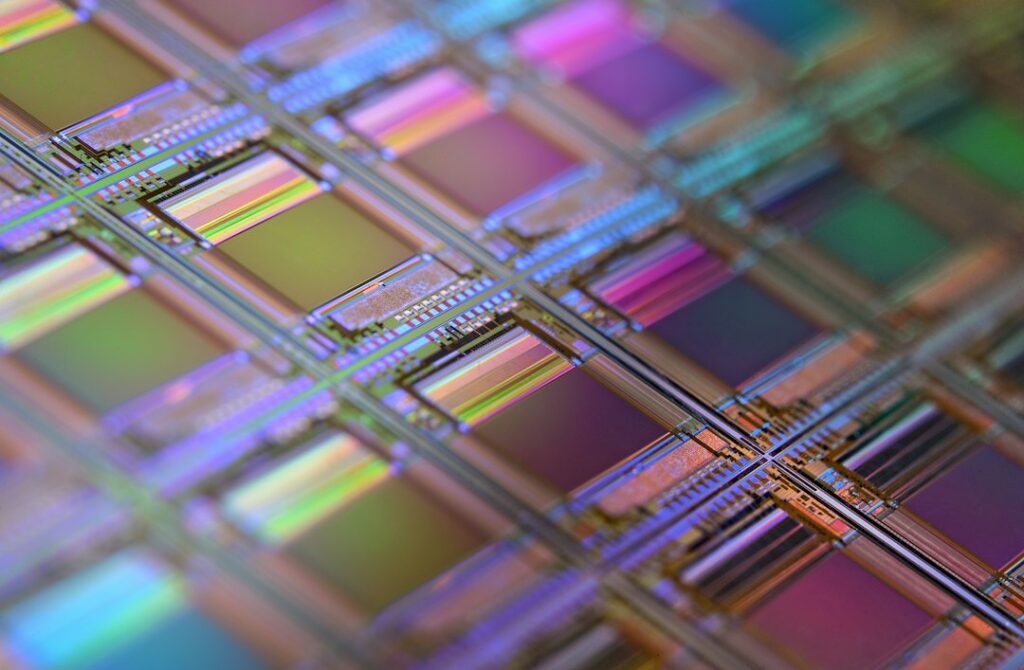
Samsung Electronics and SK hynix spent a combined 88.16 trillion won ($65.7 billion) on capital expenditure in the first nine months of 2026, according to regulatory filings released on 16 November. The surge in Samsung SK hynix capex has come alongside a sharp build-up in cash, as profits from AI memory chips flow into both balance sheets.
The filings, reported by The Korea Herald and Yonhap, show the two chipmakers held 329.23 trillion won (about $246 billion) in cash and liquid assets at the end of September. That is more than double the 136.3 trillion won they held a year earlier.
Samsung SK hynix capex: the numbers
Samsung spent 56.94 trillion won ($42.6 billion) on facilities between January and September, up 76.6% from 32.25 trillion won a year earlier. About 93% of that, or 52.75 trillion won, went to its Device Solutions division, which runs the semiconductor business.
The company said in its filing that it had expanded and upgraded chip production facilities.
SK hynix spent 31.22 trillion won ($23.4 billion) over the same nine months. That already exceeds its full-year 2025 capex of 30.17 trillion won. Its third-quarter spending alone reached 13.62 trillion won ($10.2 billion).
Research budgets are also rising. Samsung spent 41.8 trillion won on research and development in the first three quarters, against 37.75 trillion won for the whole of 2025. SK hynix spent 10.09 trillion won, compared with 6.73 trillion won for all of 2025. Together, the two companies have put 51.89 trillion won into R&D so far this year.
SK hynix cash holdings quadruple
The cash figures are the more striking part of the filings. Samsung’s cash, cash equivalents and short-term financial instruments stood at 214.77 trillion won at the end of September. A year earlier, the figure was 108.44 trillion won.
SK hynix cash holdings rose more than fourfold, to 114.46 trillion won from 27.85 trillion won. The company also cut its borrowings by 8.28 trillion won over the past year to 15.8 trillion won, leaving it with net cash of 98.66 trillion won ($73.9 billion).
Combined cash rose by 51.32 trillion won in the third quarter alone, up from 277.91 trillion won at the end of June. However, the two companies classify their liquid assets differently. Samsung reports short-term financial instruments while SK hynix reports other liquid assets, so the totals are not strictly comparable.
Reports on the filings tie the gains to demand for high-bandwidth memory (HBM) and other advanced chips used in AI data centres. HBM demand has turned memory, long a cyclical commodity business, into one of the most profitable parts of the semiconductor supply chain.
Why it matters for investors in Korea and Asia
The scale of the cash pile puts pressure on both boards to explain how they will use it. SK hynix moved first. On 19 August, it announced a 40 trillion won buyback of its own shares, to be cancelled, and raised its shareholder return target to 50% or more of cumulative free cash flow for 2025 to 2027, according to Korea JoongAng Daily.
Samsung’s current policy returns half of the free cash flow generated between 2024 and 2026, and a new policy is being prepared for 2027. Its chief financial officer, Park Soon-cheol, said on the second-quarter earnings call that the company was weighing the trade-off. “We are discussing how to strike the optimal balance between reinvestment for future growth and shareholder returns,” he said.
The filings arrive during a difficult month for Korean chipmakers on the stock market. Foreign investors have been heavy net sellers of Korean shares in November, with SK hynix and Samsung among the most heavily sold stocks, The Korea Herald reported. Some analysts have linked part of the pressure to a reallocation of global funds ahead of Anthropic’s Nasdaq listing, and the AI developer’s shares began trading on 19 November.
For the wider region, the spending matters beyond Korea. Equipment makers, materials suppliers and packaging firms across Japan, Taiwan and Southeast Asia depend on orders from the two Korean chipmakers. Their budgets are a useful signal for the AI hardware cycle, alongside updates from other chipmakers, such as SMIC’s third-quarter results in China. Readers tracking the domestic ecosystem can also see our list of leading AI companies in South Korea.
The key question for the coming months is whether Samsung SK hynix capex keeps rising at this pace or whether part of the cash is handed back to shareholders. Samsung has said it plans to invest more than 110 trillion won this year in research and production facilities for HBM, advanced foundry and chip packaging. Investors will also watch whether AI data centre spending holds up, since that is what supports current memory prices.
The full filing details were first reported by The Korea Herald.