Singapore AI Chip Checks: Wong Opens Door to US After STI Slide
Singapore AI chip checks: PM Lawrence Wong says Singapore will help US checks on advanced chip use as new licence rules weigh on the Straits Times Index.

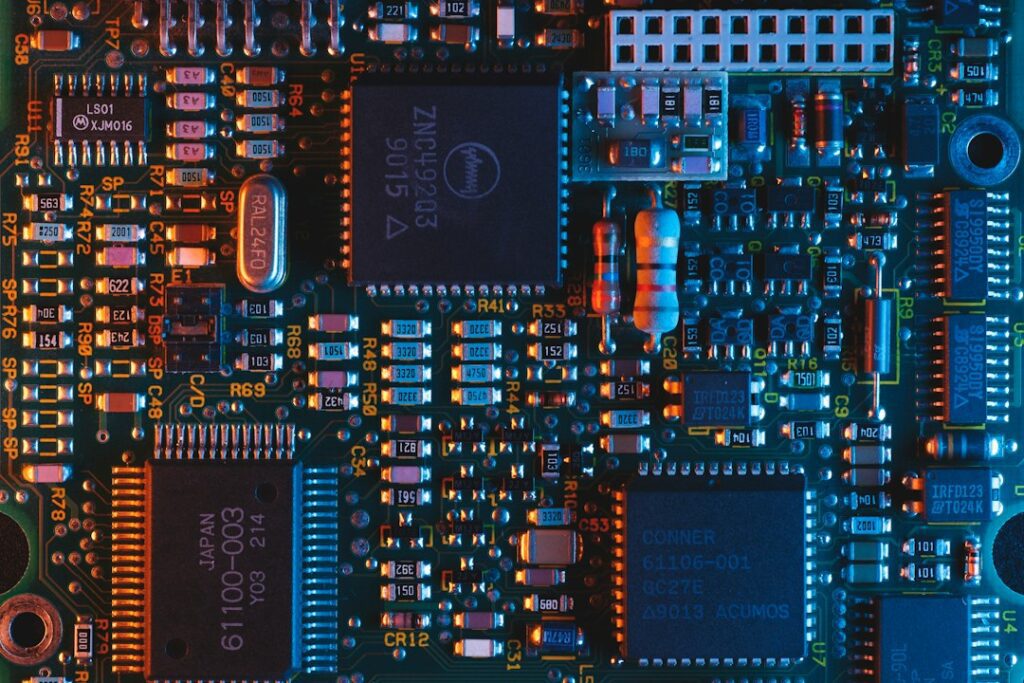
Singapore will facilitate US government checks on how advanced AI chips are used in the city-state, Prime Minister Lawrence Wong has said, as tighter US export rules weigh on local stocks. The offer on Singapore AI chip checks came after Washington added Singapore to a group of countries where shipments of advanced chips now need a US licence.
Wong made the remarks to Singapore media in Manila after the 49th ASEAN Summit, where he received the ceremonial gavel for Singapore’s chairmanship of the bloc in 2027. His comments were widely reported on 18 November.
The Straits Times Index fell 1.06% to close at 5,054.89 on Wednesday, 18 November. Longbridge described it as the fifth straight decline and the index’s lowest close in five months, as AI chip curbs weighed on sentiment. The index steadied the next day, rising 0.49% to 5,079.49 on Thursday, 19 November, to end the five-session losing streak.
What the new US rules require
The US Commerce Department now requires licences to ship advanced chips to Singapore, Malaysia, Thailand, Indonesia and Brazil. It says these countries present a “higher-than-normal risk of diversion”.
Data centres anywhere in the world also need a licence to provide large amounts of computing power from advanced chips to companies headquartered in China or in other countries under US arms embargoes. The rule closes a route by which Chinese firms could rent computing capacity from data centres in Southeast Asia.
The tightening follows questions over whether Singapore-based Megaspeed helped Chinese firms gain access to advanced AI chips, AFP reported.
Wong on Singapore AI chip checks and transhipment
Wong said the government was studying the rule and expected it to affect transhipment volumes. However, he described the impact as “manageable”, according to Mothership.
He said many chips recorded as sales to Singapore never enter the country and are instead transhipped or moved directly elsewhere. “Only a small volume of those chips directly comes into Singapore,” he said, according to CNA.
The government is more focused on chips that do arrive and are used by local companies and data centres. If Washington has concerns about their use, Singapore will help it check the companies involved.
Wong drew a line on enforcement. “We are not here to implement or enforce the export controls of other countries,” he said. Instead, Singapore expects businesses to follow its laws and any applicable foreign export restrictions, and firms that use the country to get around controls will face “clear and firm action”.
He also said he had “a good conversation” with US President Donald Trump during the summit. Singapore’s chairmanship in 2027 will mark 50 years of US-ASEAN relations.
Market reaction and why it matters
Bank stocks led the decline on 18 November. DBS fell 1.1% to S$66.94, OCBC lost 1.0% to S$27.40 and UOB dropped 1.6% to S$36.13, according to Longbridge. Singtel slipped 1.5% to S$4.04.
Losers outnumbered gainers 355 to 229 on turnover of about 1.1 billion shares. Jardine Matheson was the standout gainer, rising 2.43% to US$60.59.
The rebound on 19 November was led by Singtel, which rose 3.96%. DBS gained 0.6% to S$67.34, its first rise after four straight declines, while OCBC and UOB were little changed.
The stakes are high for Singapore’s role as a regional hub for data centres and chip trading. Earlier US scrutiny of chip shipments routed through the city-state has already drawn attention to its trade data, and the new licensing rule adds a compliance step for operators building AI capacity.
For the wider region, the rule places Singapore alongside Malaysia, Thailand and Indonesia in a tighter US export regime. Data centre investors across Southeast Asia will need to show that their capacity is not serving restricted customers.
The economy itself has held up well. Advance estimates released in October showed third-quarter growth of 5.4% year on year, and the Ministry of Trade and Industry raised its 2026 forecast to 4.5% to 5.5% in August on the back of AI-related capital spending.
What comes next
The government is still assessing the full effect of the rule on trade volumes and local operators, and on how Singapore AI chip checks would work in practice. Final third-quarter GDP figures from the Ministry of Trade and Industry are the next data point for investors.
ASEAN has also agreed to China’s proposal to make 2027 the Year of ASEAN-China AI Cooperation, with autonomous vehicles, industrial AI and advanced manufacturing among possible areas. Wong said any joint projects would have to address cybersecurity and data privacy.
Also Read: Top 10 Cybersecurity Companies in Singapore (2026) | Top 10 Logistics Companies in Singapore (2026)
Read our earlier report on how Malaysia data centres face the new US licence rule and our list of top fintech companies in Singapore. Wong’s full comments were reported by Mothership.