Top 10 Industrial Robotics Companies in Japan (2026)
Explore the top 10 robotics companies in Japan for 2026, from FANUC and Yaskawa to Mujin, with strengths, key robots and physical AI moves compared.

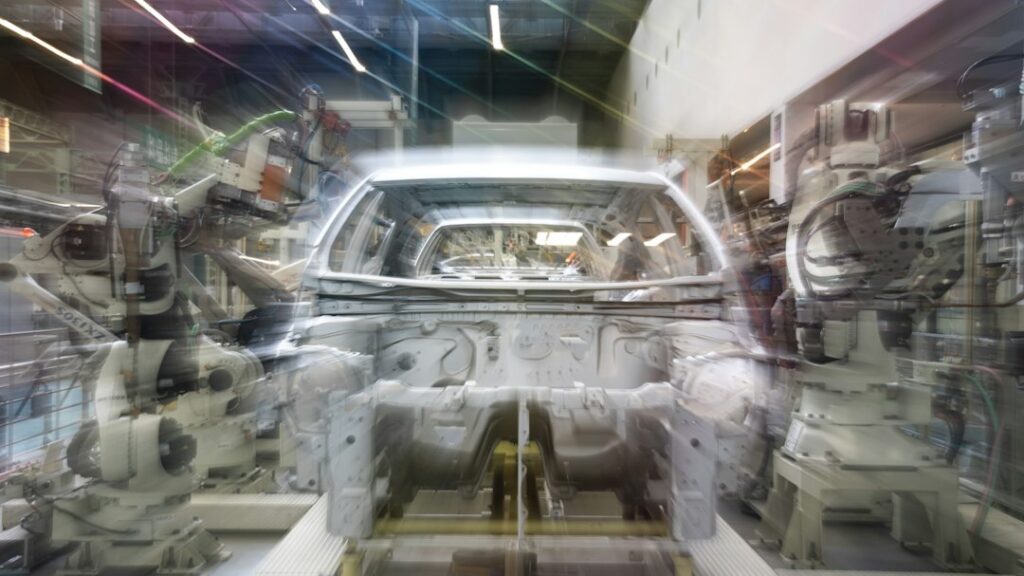
Walk into almost any car plant, electronics line or logistics hub in the world and there’s a good chance a Japanese robot is doing the heavy lifting. Welding seams. Placing chips. Stacking boxes.
Yet the country building these machines faces its own problem. Japan’s workforce is shrinking and ageing, and its factories still need to keep pace. Automation is no longer optional at home.
According to the International Federation of Robotics’ World Robotics 2025 report, Japan installed 44,500 industrial robots in 2024 and stayed the world’s second-largest market for them, with around 450,500 units in operation.
What’s changed lately is the software. The big names are wiring their arms into AI from NVIDIA, Google DeepMind, SoftBank and Fujitsu, chasing “physical AI”: robots that plan and adapt rather than repeat a taught path.
This guide looks at the leading robotics companies in Japan for 2026, from century-old industrial groups to a Tokyo software start-up, and explains what each one does best and who it suits.
Why Businesses Are Investing in Industrial Robotics in Japan
Buyers don’t choose Japanese suppliers for the cheapest arm. They choose them for reliability, range and process knowledge.
Proven reliability on high-volume lines
Several Japanese robot makers have been building industrial robots since the late 1960s and 1970s. That track record matters on automotive and electronics lines, where unplanned downtime is expensive.
A complete automation stack
Many of these firms also make the controllers, servo motors, drives and sensors that sit around the robot. Sourcing more of the cell from one supplier usually means fewer integration headaches and a single point of support.
Early moves into physical AI
Japan’s leaders are now linking their hardware to AI simulation and reasoning tools, so robots can be trained virtually and handle variable tasks. If you’ve followed the rise of generative AI platforms, this is the same wave reaching the factory floor.
Global service networks
The largest Japanese robot manufacturers support customers across dozens of countries. For multinationals, local spares and engineers often decide the deal.
Top 10 Robotics Companies in Japan at a Glance
| Rank | Company | Primary Strength | Best For | HQ / Founded |
|---|---|---|---|---|
| 1 | FANUC | Industrial robots, CNC and cobots at scale | Automotive and general manufacturing | Yamanashi / 1972 |
| 2 | Yaskawa Electric | MOTOMAN robots and motion control | Welding, handling and AI-ready cells | Kitakyushu / 1915 |
| 3 | Kawasaki Heavy Industries | Heavy-duty, wafer and service robots | Automotive, semiconductors, healthcare | Tokyo and Kobe / 1896 |
| 4 | Seiko Epson | SCARA and compact 6-axis robots | Precision assembly and electronics | Suwa, Nagano / 1942 |
| 5 | Mitsubishi Electric | MELFA robots within a full FA portfolio | Integrated factory automation | Tokyo / 1921 |
| 6 | DENSO WAVE | Compact, cleanroom and medical robots | Small parts, pharma and labs | Aichi / DENSO Group |
| 7 | Nachi-Fujikoshi | Fast, lightweight MZ series robots | Machining, spot welding, palletising | Tokyo (founded Toyama) / 1928 |
| 8 | OMRON | Mobile robots and cobots with PLC control | Intralogistics and flexible lines | Kyoto / 1933 |
| 9 | DAIHEN | Arc welding robots and clean transfer robots | Fabrication and semiconductor fabs | Osaka / 1919 |
| 10 | Mujin | Vendor-neutral robot intelligence software | Warehouse and logistics automation | Tokyo / 2011 |
Top 10 Robotics Companies in Japan (2026)
Here’s how the best robotics companies in Japan compare, ranked on scale, technology, range and recent momentum.
1. FANUC
Established in May 1972, with roots in a project team formed in 1955, FANUC is headquartered in Oshino-mura, Yamanashi Prefecture. It runs three core businesses: FA (CNCs and servos), ROBOT and ROBOMACHINE. The company passed one million robots shipped in 2022 and supports customers in more than 100 countries through over 280 service locations. Kenji Yamaguchi is President and CEO.
FANUC’s range runs from small arms to robots that handle 2.3 tonnes, plus the CRX collaborative series. In December 2025 it released a ROS 2 driver on GitHub, confirmed Python support as standard and announced a physical AI collaboration with NVIDIA. Its robots are becoming SimReady assets in NVIDIA Isaac Sim, and its ROBOGUIDE simulator now links to Isaac Sim. In July 2026, Fujitsu also began exploring physical AI work with FANUC.
Key Solutions:
- ✔ Industrial robots from 3 kg up to 2.3 tonnes payload
- ✔ CRX collaborative robots
- ✔ CNC systems and servo motors
- ✔ ROBODRILL, ROBOSHOT and ROBOCUT machines
Best for: Manufacturers wanting one proven supplier for robots, CNC and global service.
2. Yaskawa Electric
Yaskawa was founded on 16 July 1915 and is based in Kitakyushu, Fukuoka. It had 12,483 employees on a consolidated basis at the end of February 2026. Its MOTOMAN line goes back to 1974, when the company exhibited what it describes as Japan’s first electrically driven industrial robot. The first unit sold, a MOTOMAN-L10, went to a car-parts plant in 1977. Hiroshi Ogasawara currently serves as Representative Director, Chairman and President.
Yaskawa has been one of the busiest players in AI this year. In July 2026 it showed an agentic robot system that pairs its MOTOMAN NEXT robot with Google DeepMind’s Gemini Robotics ER 1.6 model, so the robot can work out its own task steps from a plain instruction. It also validated a vision-language-action system with SoftBank Corp. for handling wire harnesses. In May 2026 it set out its long-term “Vision 2035” plan.
Key Solutions:
- ✔ MOTOMAN NEXT autonomous AI robots
- ✔ MOTOMAN GP heavy-handling robots
- ✔ MOTOMAN-HC collaborative robots
- ✔ Servo drives, AC drives and machine controllers
Best for: Welding, handling and businesses piloting AI-driven robot cells.
3. Kawasaki Heavy Industries
Incorporated in October 1896, Kawasaki Heavy Industries keeps head offices in both Tokyo and Kobe and employed 41,652 people at the end of March 2026. Its robot business sits inside the Precision Machinery & Robot Company. Kawasaki entered robotics in 1968 through a technical tie-up with Unimation of the US, and built the Kawasaki-Unimate 2000, Japan’s first domestically produced industrial robot, in 1969. It has shipped more than 300,000 robots since. Yasuhiko Hashimoto is President.
The range is unusually wide. Alongside heavy payload and painting robots, Kawasaki makes wafer transfer robots, the duAro dual-arm cobot and the hinotori surgical robot system through Medicaroid. On 27 May 2026 it opened its Physical AI Center San Jose in Silicon Valley, working with NVIDIA, Microsoft, Analog Devices and Fujitsu, with an early focus on healthcare and nursing care.
Key Solutions:
- ✔ Heavy-duty, painting and palletising robots
- ✔ Semiconductor wafer transfer robots
- ✔ duAro collaborative dual-arm robots
- ✔ Service robots such as Nyokkey and FORRO
Best for: Automotive, semiconductor and healthcare operators needing broad capability.
4. Seiko Epson
Most people know Epson for printers, but its robots grew out of something more delicate: assembling watch movements. Seiko Epson was established in May 1942 and is headquartered in Suwa, Nagano. Junkichi Yoshida is President and CEO. Epson launched its first SCARA robot, the SSR-H Series, in 1983.
SCARA arms remain the company’s speciality. Epson says it held the top share of the global SCARA robot market in 2024, citing a Fuji Keizai market report. It pairs those robots with 6-axis arms, force sensors, IntelliFlex part feeders and its Epson RC+ software. In October 2026 it presented the AX6, its first collaborative 6-axis robot, which uses no-code software to make deployment simpler for smaller teams with limited robotics experience.
Key Solutions:
- ✔ SCARA robots for high-speed assembly
- ✔ Compact 6-axis robots
- ✔ AX6 collaborative robot
- ✔ Force sensors, feeders and Epson RC+ software
Best for: Electronics and precision small-parts assembly.
5. Mitsubishi Electric
Mitsubishi Electric was established on 15 January 1921 and is headquartered in Marunouchi, Tokyo, with 150,386 employees as of March 2026. Kei Uruma is President and CEO. Robots are one part of a much larger factory automation business that includes PLCs, servos, inverters and CNCs, which lets the company sell complete, connected production cells.
Its MELFA robots cover vertical arms and SCARA models. In August 2025 it introduced the MELFA RV-CR and RH-CRH series, with the new SCARA models about 65% lower and 50% lighter than the earlier FR series. The MELFA ASSISTA cobot, launched in 2020, uses block-based RT VisualBox software. In May 2026 the group signed a three-year physical AI agreement with the Chiba Institute of Technology, aimed at dexterous tasks such as machining and assembly.
Key Solutions:
- ✔ MELFA vertical articulated and SCARA robots
- ✔ MELFA ASSISTA collaborative robots
- ✔ CR800 controllers and RT ToolBox3 simulation
- ✔ PLCs, servos and e-F@ctory integration
Best for: Plants that want robots tightly integrated with their wider control system.
6. DENSO WAVE
DENSO WAVE is an operating company of the DENSO Group and the developer of the QR Code, invented in 1994. It’s based in Agui-cho, Chita-gun, Aichi Prefecture, and had 1,175 employees as of March 2026. DENSO Corporation owns 75%, with Toyota Tsusho and TOPPAN Industrial Materials holding the rest. Takayoshi Sagara is President and CEO. The company runs three businesses: auto-ID, robotics and industrial controllers.
Its robots are built for small, precise work. The COBOTTA weighs about 4 kg and is designed to run without safety fences, while the COBOTTA PRO serves heavier collaborative tasks. DENSO WAVE also offers 4-axis and 5/6-axis ranges and the VS-S2 series for pharmaceutical and medical use, all supported by ORiN middleware and WINCAPS III software.
Key Solutions:
- ✔ COBOTTA and COBOTTA PRO collaborative robots
- ✔ 4-axis SCARA and 5/6-axis compact robots
- ✔ VS-S2 robots for pharma and medical work
- ✔ RC8A and MC8A controllers
Best for: Laboratories, pharmaceutical lines and small-parts assembly.
7. Nachi-Fujikoshi
Nachi-Fujikoshi was founded on 21 December 1928 in Toyama as Fujikoshi Steel Industry. Today its head office is in Shiodome, Tokyo, while the Toyama Plant remains its main manufacturing base. It employs 6,530 people across the group, and Naritoshi Nakamura is President. Robots form one of four business segments, next to tools and machinery, components such as bearings and hydraulics, and special steels.
That mix is its edge. Because Nachi also makes cutting tools and machine tools, its robots are often designed with machining and spot welding in mind. The MZ series focuses on speed and light weight for tight cells, and the line-up runs from ultra-compact arms and collaborative models to palletising and heavy-duty handling robots.
Key Solutions:
- ✔ MZ series compact high-speed robots
- ✔ CZ10 and MZS05 collaborative robots
- ✔ LPA180 palletising robots
- ✔ SC700 and MC350 heavy-duty handling robots
Best for: Automotive suppliers and machining shops.
8. OMRON
OMRON was established on 10 May 1933 and is headquartered in Kyoto, with 26,050 employees as of March 2026. Junta Tsujinaga is President and CEO. Its robotics business took shape after OMRON completed the acquisition of US firm Adept Technology in October 2015, and in April 2025 it brought its robotics work together in a dedicated global organisation.
OMRON’s strength is mobile automation tied to factory control. At Automate 2026 it showed the LD-150 and LD-300 autonomous mobile robots, the next generation of its LD Series, alongside its MD and OL lines. It also sells TM collaborative robots through a long-standing alliance with Taiwan’s Techman Robot, in which it holds roughly a 10% stake. SCARA, parallel and articulated robots round out the range.
Key Solutions:
- ✔ LD, MD and OL series autonomous mobile robots
- ✔ TM Series collaborative robots
- ✔ SCARA, parallel and articulated robots
- ✔ Fleet management software
Best for: Intralogistics and flexible material flow inside factories.
9. DAIHEN
DAIHEN was incorporated in 1919 as Osaka Transformer Co. and adopted its current name in December 1985. It’s still based in Osaka, and Shoichiro Minomo leads the company. Its business is split across energy management, factory automation and material processing, so welding robots sit next to transformers, power supplies and plasma generators for chipmaking.
In robotics, DAIHEN is best known for welding. Sold internationally under the OTC DAIHEN brand, its FD series robots pair with the company’s own welding power sources, sensors and positioners, which helps fabricators tune the whole process. The group also makes clean transfer robots for semiconductor wafers and flat panel displays, a useful niche as chip investment rises across the region, as seen in deals such as Mitsui Chemicals’ move on JSR.
Key Solutions:
- ✔ FD series arc welding robots
- ✔ Welding power sources and robot welding sensors
- ✔ Positioners and sliders for welding cells
- ✔ Wafer and FPD clean transfer robots
Best for: Metal fabrication, construction machinery and semiconductor equipment makers.
10. Mujin
Mujin is the newest company on this list and the only one that doesn’t build robot arms. It was set up in 2011 at the University of Tokyo’s Entrepreneur Plaza by Rosen Diankov and Issei Takino. The company is headquartered in Tokyo, with offices in Atlanta, Eindhoven and Guangzhou, and more than 500 staff worldwide.
Its MujinOS platform and MujinController give robots from brands including FANUC, Yaskawa, ABB and Kawasaki the ability to plan their own motion, so they can pick, palletise and depalletise mixed items without being taught every path. Clients named by the University of Tokyo include Fast Retailing and ASKUL. In December 2025, Mujin closed the first round of its Series D at US$233 million, led by NTT Group with Qatar Investment Authority as co-lead.
Key Solutions:
- ✔ MujinOS intelligent robot control platform
- ✔ MujinController industrial edge computer
- ✔ Palletising, depalletising and piece picking
- ✔ Warehouse execution and fleet management
Best for: Distribution centres automating mixed, unpredictable loads.
How to Choose the Right Industrial Robot Manufacturer in Japan
Start with the application
Welding, painting, precision assembly and palletising each favour different specialists. Write down payload, reach, cycle time and environment before you compare brands, not after.
Check the local service network
A robot is only as good as the engineer who can fix it. Ask where the nearest service centre and spare parts stock are, and what response times the supplier commits to.
Look at the software, not just the arm
Simulation tools, no-code programming and open interfaces such as ROS 2 can shorten commissioning. For small teams, ease of programming may matter more than speed.
Ask about the AI roadmap
Many Japanese robotics companies now have partnerships with AI platform providers. Find out which features ship today and which are still demonstrations.
Think about your wider stack
If you already run a brand’s PLCs or drives, its robots may slot in more easily. Mixed fleets can work too, but need careful integration.
FAQs
Which is the largest robotics company in Japan?
FANUC is one of the biggest by scale. It passed one million robots shipped in 2022 and supports customers in more than 100 countries.
Why are Japanese robotics companies so strong globally?
They started early, some in the late 1960s, and many also make the motors, drives and controllers inside their robots. That depth built a reputation for reliability.
What is physical AI in factory automation?
It refers to AI that perceives, reasons and acts through machines in the real world. In practice, it means robots trained in simulation and guided by AI models so they can handle variable tasks without step-by-step programming.
Conclusion
Japan’s robot makers no longer compete only on precision and uptime. The top industrial robot manufacturers in Japan are racing to make their machines plan and adapt, and the partnerships signed in 2025 and 2026 show how fast that shift is moving.
For buyers, the right choice still depends on the job, the service on offer and how well the software fits your team. Shortlist two or three suppliers and test them on your own parts, while keeping an eye on the wider regional supply chain, from Malaysia’s semiconductor firms to Japan’s AI partners. Product ranges are listed at FANUC and Yaskawa Electric.