Top 10 Renewable Energy Companies in India (2026)
Compare the top renewable energy companies in India for 2026, from Adani Green and ReNew to Tata Power, with dated capacity figures and C&I buying tips.

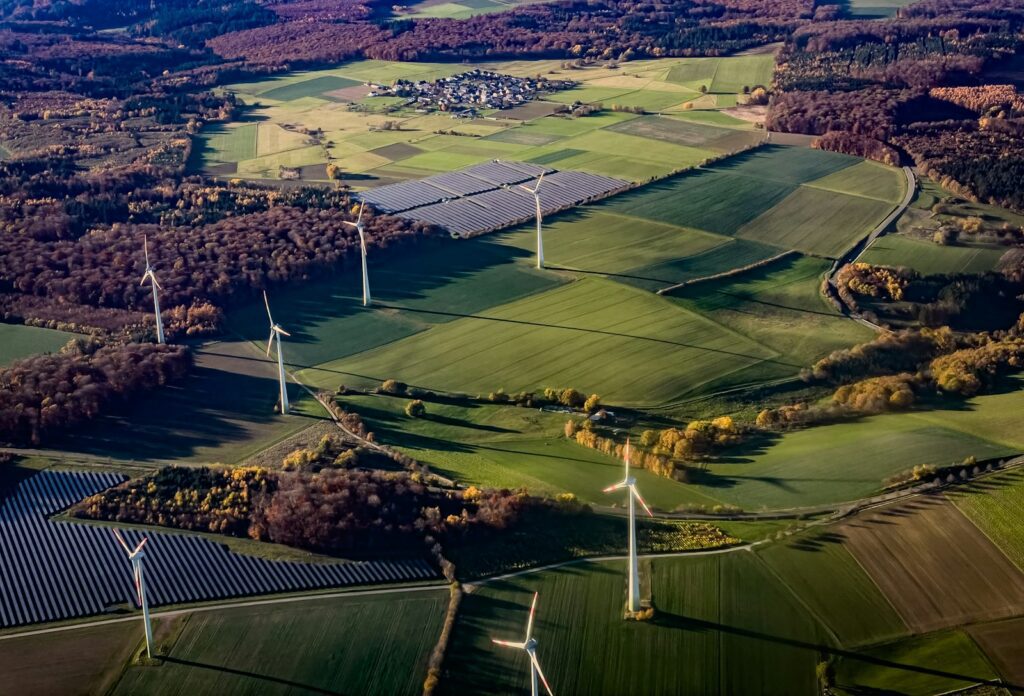
India’s power demand keeps climbing. So does the pressure on companies to prove where their electricity comes from.
For a factory owner in Gujarat or a data centre operator in Mumbai, green power is no longer a branding exercise. It’s a line item on the cost sheet and a question in every export customer’s supplier survey. Supply has moved quickly too. According to Ministry of New and Renewable Energy data, India’s cumulative renewable capacity stood at about 299.25 GW as of 30 September 2026, with solar at roughly 171.05 GW and wind at about 59.20 GW. Around 24.56 GW was added in the first half of FY27 alone.
The result is a crowded field. Some players build gigawatt-scale parks for utilities. Others focus on rooftop and group captive plants. A third group makes the modules and turbines everyone else relies on.
Picking the wrong partner can lock a business into a 25-year contract that doesn’t fit how it actually uses power. Picking the right one can cut costs and close an ESG reporting gap at the same time.
This guide looks at the top renewable energy companies in India for 2026, from developers to manufacturers, with dated figures and a plain view of which buyer each one suits best.
Why Businesses Are Investing in Renewable Energy in India
Clean power in India is now about economics and access as much as emissions.
Lower and more predictable power costs
Long-term power purchase agreements fix a tariff for years, which shields a business from swings in grid prices.
Easier access through open access rules
The Green Energy Open Access Rules, 2022, cut the threshold for buying green power through open access from 1 MW to 100 kW. That brought mid-sized factories, campuses and commercial buildings into a market that once suited only the largest consumers.
Customer and investor pressure on emissions
Global buyers increasingly ask suppliers to cut Scope 2 emissions. Contracting renewable power is one of the most direct ways to do that.
A clear national direction
India has set a target of 500 GW of non-fossil capacity by 2030. That signal keeps capital flowing in and widens the choice of suppliers for corporate buyers.
Top 10 Renewable Energy Companies in India at a Glance
| Rank | Company | Primary Strength | Best For | HQ / Founded |
|---|---|---|---|---|
| 1 | Adani Green Energy | Largest operational fleet | Utility-scale offtakers and large PPAs | Ahmedabad / 2015 |
| 2 | ReNew | Dedicated C&I arm plus solar manufacturing | Corporates with net-zero targets | Gurugram / 2011 |
| 3 | Tata Power Renewable Energy | Rooftop, captive and utility projects | Manufacturers and multi-site businesses | Mumbai / Tata Power subsidiary |
| 4 | NTPC Green Energy | Public-sector scale and long-term pipeline | Large institutional buyers | NCR / 2022 |
| 5 | JSW Energy | Wind, solar, hydro and storage mix | Buyers needing firm, storage-backed supply | Mumbai / 1994 |
| 6 | Avaada Group | Open access hybrids and green molecules | Industrial C&I and hard-to-abate sectors | Noida / 2009 |
| 7 | ACME Solar Holdings | Storage-linked and firm renewable projects | Peak and round-the-clock power needs | Gurugram / 2015 |
| 8 | Suzlon Energy | Home-grown wind turbine technology | Developers and C&I wind projects | Pune / 1995 |
| 9 | Waaree Energies | Multi-gigawatt module and cell manufacturing | Developers, EPCs and installers | Mumbai / 1990 |
| 10 | Hero Future Energies | Flexible C&I open access and rooftop | Corporates seeking tailored deals | New Delhi / 2012 |
Top 10 Renewable Energy Companies in India (2026)
Here’s how each company stands as of November 2026, ranked on scale, execution, relevance to business buyers and breadth of offering.
1. Adani Green Energy
Adani Green Energy was incorporated in January 2015 as part of the Ahmedabad-based Adani Group and listed on the BSE and NSE in June 2018. Its operational renewable capacity reached 20,763 MW as of 30 September 2026, up 24% year on year, after 4,083 MW of greenfield additions in the period. It develops utility-scale solar, wind and hybrid projects, selling mainly under long-term PPAs to central and state government entities.
Its flagship is Khavda in Gujarat, a park planned for 30 GW across 538 sq km. The company targets 50 GW by 2030. Storage is growing fast: it operationalised 3,081 MWh of battery storage at Khavda in Q2 FY27, taking installed BESS to 6,632 MWh.
Key Solutions:
- ✔ Utility-scale solar and wind farms
- ✔ Solar-wind hybrid projects
- ✔ Battery energy storage at Khavda
- ✔ Long-term PPAs
Best for: Large offtakers and utilities that need gigawatt-scale supply from a proven builder.
2. ReNew
ReNew was founded by Sumant Sinha in 2011, is based in Gurugram and listed on Nasdaq in 2021. As of 30 September 2026, its gross portfolio was about 20.5 GW, including 1.7 GW/6.2 GWh of battery storage, with about 13.7 GW commissioned. It also runs 6.4 GW of module and 2.5 GW of cell manufacturing.
For corporate buyers, ReNew stands out. Its C&I arm, ReNew Green, had 2.5 GW committed and more than 2.0 GW commissioned as of 31 March 2026, with partners including Microsoft, Amazon and Google. Ownership is changing: in August 2026 ReNew agreed to a take-private by a consortium of CPP Investments and Sinha at US$7.02 per share, subject to shareholder, court and regulatory approvals.
Key Solutions:
- ✔ Corporate PPAs and green credits
- ✔ Round-the-clock hybrid power
- ✔ Energy storage and green hydrogen
- ✔ Solar modules and cells
Best for: Multinationals and large Indian corporates with formal net-zero or RE100 commitments.
3. Tata Power Renewable Energy
Tata Power Renewable Energy (TPREL) is the clean energy subsidiary of Mumbai-based Tata Power. As of its Q2 FY27 update on 12 October 2026, it had about 7.2 GW of operational utility-scale renewable capacity, with more than 2 GW of further projects due in the second half of FY27.
Few C&I solar companies in India cover as many formats. Its Tata Power Solaroof business added 88,397 rooftop installations and 426 MWp in Q2 FY27, taking cumulative capacity past 5.67 GWp. On the group captive side, it commissioned a 72.5 MW captive project for Tata Steel in H1 FY27, and in April 2025 it tied up with Tata Motors on a 131 MW wind-solar hybrid project. Parent Tata Power has 4.9 GW of cell and module manufacturing.
Key Solutions:
- ✔ Rooftop solar for homes and businesses
- ✔ Group captive solar, wind and hybrid
- ✔ Utility-scale projects with storage
- ✔ Solar EPC services
Best for: Manufacturers and multi-site businesses wanting rooftop and off-site supply from one provider.
4. NTPC Green Energy
NTPC Green Energy (NGEL) was incorporated in April 2022 as the renewable arm of state-owned NTPC. It listed on the BSE and NSE on 27 November 2024 after raising Rs 10,000 crore in its IPO. Its installed capacity reached 11,424.29 MW as of 30 October 2026, with 41 projects fully commissioned and 47 under execution, according to its website.
NGEL’s strength is public-sector backing and a long runway. It aims for 60 GW by FY2031-32, and its portfolio spans solar, floating solar, wind, hybrid, storage and green hydrogen. One of its current builds is a 500 MW round-the-clock renewable project for REMCL (Railway Energy Management Company Limited), which shows its reach into large institutional and transport-sector supply.
Key Solutions:
- ✔ Utility-scale and floating solar
- ✔ Wind and hybrid projects
- ✔ Round-the-clock renewable supply
- ✔ Green hydrogen development
Best for: Public-sector undertakings and large institutions that value a state-backed counterparty.
5. JSW Energy
JSW Energy was incorporated in 1994 and is headquartered in Mumbai. Its total installed capacity stood at 15,147 MW as of early October 2026, with about 61% (9,189 MW) from renewables: 3,125 MW wind, 2,426 MW solar, 1,857 MW hybrid and 1,781 MW hydro. It added 1,694 MW between April and early October 2026 and had about 14.5 GW under construction.
The company’s edge is firmness. It has 29.6 GWh of locked-in storage, mostly pumped hydro, and targets 30 GW of generation and 40 GWh of storage by 2030. Its subsidiary JSW Neo Energy acquired O2 Power’s 4.7 GW renewable platform, and the group also assembles battery containers in Pune, makes wind blades and has moved into green hydrogen.
Key Solutions:
- ✔ Wind, solar and hybrid power
- ✔ Hydro and pumped storage
- ✔ Battery energy storage
- ✔ Green hydrogen
Best for: Industrial buyers who need dependable, storage-backed renewable supply.
6. Avaada Group
Avaada began its journey in 2009 under Chairman Vineet Mittal and has offices in Noida, New Delhi and Mumbai. Its website reports about 7.2 GWp of operational capacity as of November 2026, with a roadmap to 30 GWp by 2030. Its manufacturing arm, Avaada Electro, runs 8.5 GW of module and 3 GW of TOPCon cell capacity.
Avaada is one of the more C&I-focused green energy companies in India, selling solar-wind hybrid and open access power to corporates chasing RE100 and Scope 2 goals, and won a 2025 award for C&I open access in Karnataka. It also has a 0.5 MTPA green ammonia facility planned in Odisha. Avaada Electro received SEBI approval for an IPO of up to Rs 7,600 crore in April 2026 and was reported in October to be preparing a mid-November launch.
Key Solutions:
- ✔ C&I open access power
- ✔ Solar-wind hybrid supply
- ✔ Green hydrogen and ammonia
- ✔ Solar modules and cells
Best for: Industrial firms and hard-to-abate sectors wanting both green power and green molecules.
7. ACME Solar Holdings
ACME Solar Holdings was incorporated in June 2015 and is headquartered in Gurugram. It listed on the NSE and BSE on 13 November 2024. As of its Q2 FY27 results, released on 28 October 2026, it had 2.99 GW fully operational, a further 1.92 GW partially commissioned, and a contracted portfolio of 8.37 GW.
ACME has moved well beyond plain solar. It had commissioned about 5.24 GWh of battery storage by that date and raised its FY27 storage target to more than 12 GWh. In Q2 it signed PPAs for 430 MW of firm and dispatchable renewable projects. Its in-house EPC and O&M teams give it tighter control over cost, quality and delivery timelines.
Key Solutions:
- ✔ Solar and wind generation
- ✔ Battery storage projects
- ✔ Firm and dispatchable renewable power
- ✔ In-house EPC and O&M
Best for: Offtakers who need power at peak hours or around the clock, not just in daylight.
8. Suzlon Energy
Suzlon Energy was founded in 1995 by Tulsi Tanti and is headquartered in Pune. It reports more than 22 GW of installed capacity across 17 countries. Its order book stood at about 6 GW at its Q2 FY27 results in late October 2026, after 710 MW of deliveries in the quarter.
Suzlon is India’s home-grown wind turbine maker, which matters as wind becomes central to hybrid and round-the-clock supply. The company describes its S144 turbine as among the world’s lowest lifecycle-emission wind turbines, and in June 2026 it launched the 5 MW S175, with a 175-metre rotor and a tip height of 247.5 metres. It also offers asset management and full-stack wind, solar and storage solutions for businesses.
Key Solutions:
- ✔ S144 and S175 wind turbines
- ✔ Wind project EPC
- ✔ Asset management and servicing
- ✔ Full-stack wind, solar and storage
Best for: Developers and C&I buyers adding wind to a hybrid or captive portfolio.
9. Waaree Energies
Waaree Energies was incorporated in December 1990, is headquartered in Mumbai and listed on 28 October 2024. As of 28 October 2026, it had 25.8 GW of module capacity (24.2 GW in India and 1.6 GW in the US) plus 5.4 GW of cells. Its order book was about Rs 59,200 crore as of 26 October 2026.
Among the best solar energy companies in India on the manufacturing side, Waaree operates at multi-gigawatt scale and is adding a second 1.6 GW module line in the US, while its cell capacity is set to rise to 15.4 GW. It is also widening its range, with a battery storage plant in Gujarat whose first container line is commissioned, inverter capacity expanding to 4.15 GW and a 1 GW electrolyser plant planned, which makes it a broader clean-tech supplier than a pure module maker.
Key Solutions:
- ✔ Solar PV modules
- ✔ Solar cells
- ✔ Inverters and battery storage
- ✔ Electrolysers (under development)
Best for: Developers, EPC firms and installers sourcing domestic modules at volume.
10. Hero Future Energies
Hero Future Energies was founded in 2012 as the renewable arm of the Hero Group, led by Founder and Chairman Rahul Munjal. It opened a new corporate headquarters at Aerocity, New Delhi, in June 2026. Its website lists 7.7 GWp of renewable capacity and 2.9 GWh of battery storage across operating and under-construction projects in India, Ukraine, Vietnam and the UK.
The company works closely with C&I customers, offering customised open access and rooftop solutions, with a focus on hard-to-abate sectors such as steel, cement and chemicals. It won a 120 MW firm and dispatchable round-the-clock project in a SECI auction in August 2026, and counts IFC and KKR among its investors, which adds financial depth for long-tenure contracts.
Key Solutions:
- ✔ Open access solar and wind
- ✔ Rooftop solar
- ✔ Battery storage
- ✔ Round-the-clock and peak power
Best for: Mid-to-large corporates wanting a tailored deal rather than an off-the-shelf tariff.
How to Choose the Right Renewable Energy Partner
Match the model to your load
Rooftop, group captive, open access and utility PPAs all suit different consumption patterns. A single plant with steady daytime demand may do well with rooftop solar, while a 24-hour operation needs wind, storage or a hybrid.
Check the delivery record
Commissioned capacity says more than a pipeline. Ask how much a developer has actually built, how close it stays to promised timelines and what plant availability it reports.
Look at storage and firmness
Solar alone stops at sunset. If you need power at night or at peak hours, favour renewable energy developers in India with operating battery or pumped storage, and get firmness commitments written into the contract.
Understand state rules and charges
Open access charges, banking rules and approvals vary from state to state. A good partner should explain the full landed cost in your state before you sign.
Assess the counterparty
A PPA can run for 20 to 25 years, so the supplier’s balance sheet and ownership matter. Check for recent listings, acquisitions or ownership changes. Recent IPOs, such as the Jio Platforms listing, show how quickly India’s capital markets are re-rating large companies, and energy firms are part of that shift.
Frequently Asked Questions
Which is the largest renewable energy company in India?
By operational capacity, Adani Green Energy, with 20,763 MW as of 30 September 2026.
What is the difference between group captive and open access?
Open access lets a business buy renewable power from an off-site generator through the grid. Group captive is a form of open access where the buyer also takes an equity stake in the plant, which can reduce some charges in many states.
Can a mid-sized company buy green power through open access?
Yes. Under the Green Energy Open Access Rules, 2022, consumers with a connected load of 100 kW or more can buy green power through open access, subject to each state’s regulations.
Is ReNew still listed on Nasdaq?
As of November 2026, yes. ReNew agreed in August 2026 to a take-private by a consortium of CPP Investments and founder Sumant Sinha at US$7.02 per share. The deal still needs shareholder, court and regulatory approvals before it closes.
Conclusion
This list spans the value chain, from Adani Green’s gigawatt parks to Tata Power’s rooftops, Suzlon’s turbines and Waaree’s modules. For business buyers, fit with your load, location and contract length matters more than size.
Clean energy is moving fast across Asia, from Indian solar to the top EV companies in China. When comparing renewable energy companies in India, shortlist two or three on fit, ask for dated figures and compare landed costs before signing.