Mitsui Chemicals JSR Acquisition Valued at ¥1.84 Trillion
Mitsui Chemicals JSR acquisition worth 1.84 trillion yen is the biggest deal in Japan's chemicals industry. Mitsui shares fell 8.5% on the news.

Mitsui Chemicals has agreed to buy chip materials maker JSR Corp for about 1.84 trillion yen (about $11.6 billion), the biggest deal in the history of Japan’s chemicals industry. The Mitsui Chemicals JSR acquisition, announced on Monday 9 November, is being made jointly with the state-owned Development Bank of Japan (DBJ).
The seller is Japan Investment Corp (JIC), the government-backed fund that took JSR private in 2024. Mitsui’s board approved the purchase on Monday, and the buyers signed a share purchase agreement with funds managed by JIC Capital the same day.
Inside the Mitsui Chemicals JSR acquisition
The headline price is made up of an equity value of 1.3921 trillion yen (about $8.8 billion), which includes DBJ’s contribution, and 447.9 billion yen (about $2.8 billion) of interest-bearing debt and other items. The final figure will be adjusted at closing.
DBJ will put in 200 billion yen (about $1.26 billion) and will end up holding non-voting preferred shares. Mitsui Chemicals will control all of the voting rights once the deal is done.
The transaction is larger than Showa Denko’s $4.55 billion purchase of Hitachi Chemical in 2020, the deal that created Resonac. It also dwarfs the buyer. Mitsui Chemicals had a market value of 664.6 billion yen (about $4.2 billion) at Friday’s close, according to LSEG data.
Investors did not take the news well. Mitsui’s shares fell 8.5% on Monday, extending a slide that began when Reuters reported the talks the previous week. Market participants questioned the business logic and the debt the price requires, Reuters reported.
How Mitsui plans to pay
Mitsui has lined up a 1.64 trillion yen (about $10.4 billion) bridge loan from its main lenders. It plans to refinance that within a year through bank loans, bonds and equity, and is weighing mezzanine financing.
The company has filed a shelf registration to issue up to 150 billion yen (about $950 million) of new common shares. It expects its net debt to EBITDA multiple to rise above four times for a period after completion.
To bring that down, Mitsui intends to sell JSR’s life sciences unit and other non-core operations. It aims to restore a sound financial position within three years.
Why JSR matters to Japan’s chip ambitions
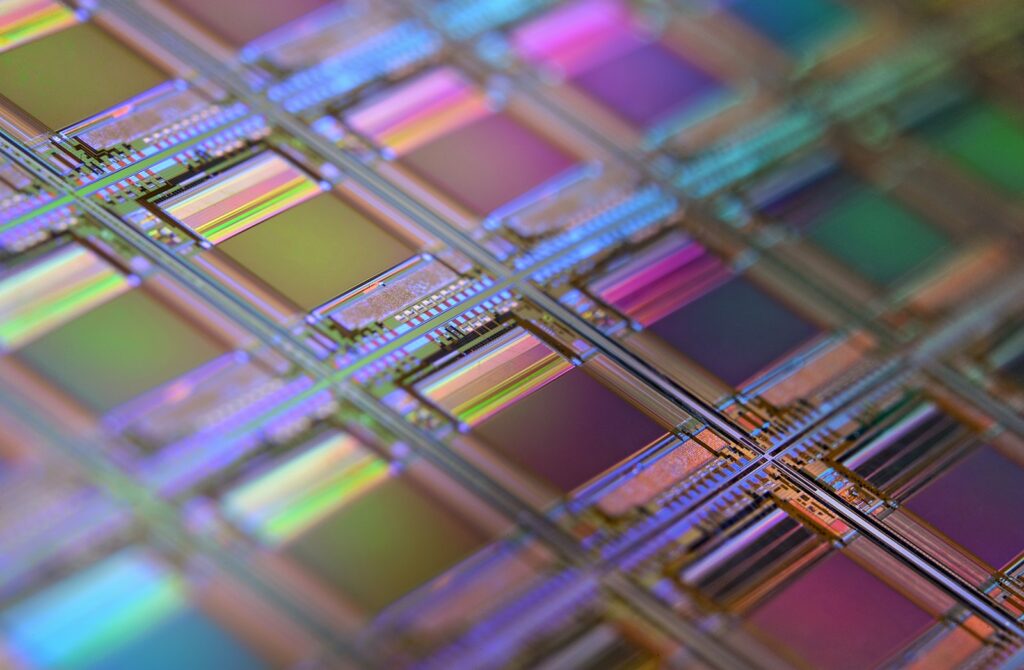
Founded in 1957, JSR is one of the world’s leading producers of photoresists, the light-sensitive resins used to print fine circuit patterns on silicon wafers. It also owns Inpria, a US developer of metal-oxide resists for extreme ultraviolet lithography, the technology behind the most advanced chips.
JSR reported revenue of 440.72 billion yen (about $2.8 billion) and profit attributable to owners of 59.33 billion yen (about $375 million) for the year to March 2026. It develops and makes materials in Japan and South Korea and supplies chipmakers around the world.
JIC bought JSR for about 900 billion yen in 2024. At the time, the fund said it would use the company to lead consolidation in semiconductor materials. It has now chosen to sell to a domestic chemicals group as valuations of chip-related businesses rise with the boom in AI investment.
Mitsui will place JSR at the centre of its ICT solutions business. The plan is to pair JSR’s photoresists with Mitsui’s own semiconductor materials, including the pellicles used to protect photomasks.
Satoshi Ichimura, President and CEO of Mitsui Chemicals, described the purchase as “a strategic deal to accelerate the transformation of our portfolio.” At a press conference in Tokyo, he said the company aims to “establish a strong presence in the semiconductor materials industry.”
The seller sounded a note of caution. JIC Capital President Shogo Ikeuchi said that simply having complementary materials does not mean the two companies can quickly generate significant synergies, according to Reuters.
What it means for investors and the region
The deal keeps a key supplier to the global chip industry in Japanese hands at a time when AI is lifting demand for advanced materials. JSR sells its photoresists to chipmakers around the world, so the change of owner will be watched well beyond Japan.
For Mitsui shareholders, the test of the Mitsui Chemicals JSR acquisition will be execution. The company is targeting about 40 billion yen (about $250 million) in extra annual profit from growth and cost synergies by fiscal 2035. That is a company goal, not a guaranteed outcome, and it sits a long way beyond the three-year window Mitsui has set to repair its balance sheet.
The deal still needs competition and foreign investment approvals in Japan and other markets. Mitsui is aiming to complete it in the second half of the fiscal year ending March 2028.
Also Read: Yinson Privatisation: MISC-Led Group Offers RM2.50 a Share | The Broadcom acquisition machine keeps on rolling
For now, the market will watch how quickly Mitsui taps equity investors and how much of the bridge loan it can refinance on acceptable terms. Those steps will show whether the Mitsui Chemicals JSR acquisition can deliver on its promise.