Top 10 Real Estate Developers in Vietnam (2026)
Explore the leading real estate developers in Vietnam for 2026, from Vinhomes and Nam Long to CapitaLand, ranked on delivery, finances and reputation.

Vietnam’s property market has had a bruising few years. Bond defaults, stalled approvals and a credit squeeze in 2022 and 2023 pushed several big names into restructuring. Yet the recovery that followed has been sharp. According to Vietnam Report, apartment prices rose by 20 to 30% on average in 2025, and by more than 40% in some areas, while outstanding real estate credit reached VND4.74 quadrillion by the end of that year.
That rebound has not lifted every company equally. Developers with clean legal paperwork, steady handovers and sensible balance sheets have pulled ahead, while those still working through debt are only now steadying themselves. For buyers, investors and corporate tenants, the name on the hoarding matters more than it did five years ago.
Vietnam also has a distinctive mix of players, from home-grown township giants to Singaporean and Malaysian groups with long records in master-planned communities. With mortgage costs climbing again in 2026, picking a developer that delivers on time matters even more.
This guide looks at the real estate developers in Vietnam that stand out in 2026 on delivery record, financial health, land bank and reputation, and explains how to choose between them.
Why Businesses Are Investing in Real Estate in Vietnam
Vietnam’s property sector draws capital for reasons that go well beyond short-term price gains.
Urban demand that keeps growing
Hanoi and Ho Chi Minh City continue to absorb new residents, and supply of mid-range homes has lagged behind demand for years. Vinhomes alone reported close to 650,000 residents living across its projects at the end of 2025, a sign of how quickly large townships fill up.
Infrastructure is opening new corridors
Metro lines, ring roads, expressways and the Long Thanh International Airport are changing which suburbs make sense to live in. Several leading property developers in Vietnam now plan projects around transit hubs, a model known as transit-oriented development.
A deep pool of project finance
Domestic banks remain the main lenders to both developers and homebuyers, and many sign preferential mortgage packages with individual projects. Our guide to the top banks in Vietnam covers the lenders most active in this space.
Strong foreign partnerships
Japanese, Singaporean and Malaysian groups are long-term co-investors in Vietnamese housing, bringing capital, design standards and governance that buyers now expect.
Top 10 Real Estate Developers in Vietnam at a Glance
| Rank | Company | Primary Strength | Best For | HQ / Founded |
|---|---|---|---|---|
| 1 | Vinhomes | Mega-township scale | Large integrated communities | Hanoi / 2008 |
| 2 | Sun Group | Tourism-led master planning | Resort and second homes | Da Nang / 2007 (Vietnam) |
| 3 | Masterise Homes | Branded luxury residences | High-end city living | Hanoi / 2007 (as Thao Dien Investment) |
| 4 | Nam Long Group | Mid-market townships | Owner-occupier families | Ho Chi Minh City / 1992 |
| 5 | CapitaLand Development | International delivery standards | Premium condominiums | Singapore parent / 30+ years in Vietnam |
| 6 | Khang Dien House | Clean land bank in HCMC | Landed homes in Thu Duc | Ho Chi Minh City / 2001 |
| 7 | Gamuda Land Vietnam | Green townships | Long-term township living | Hanoi / 2007 |
| 8 | Ecopark | Ecological urban design | Nature-focused suburbs | Hung Yen / 2003 |
| 9 | Keppel | Mixed-use and commercial assets | Offices, retail and joint ventures | Singapore parent / 29 projects in Vietnam |
| 10 | Van Phu | Mid-sized northern and central projects | Value-focused homebuyers | Hanoi / HOSE: VPI |
Top 10 Real Estate Developers in Vietnam (2026)
Here is how the leading names compare, ranked on scale, delivery record, finances and reputation.
1. Vinhomes
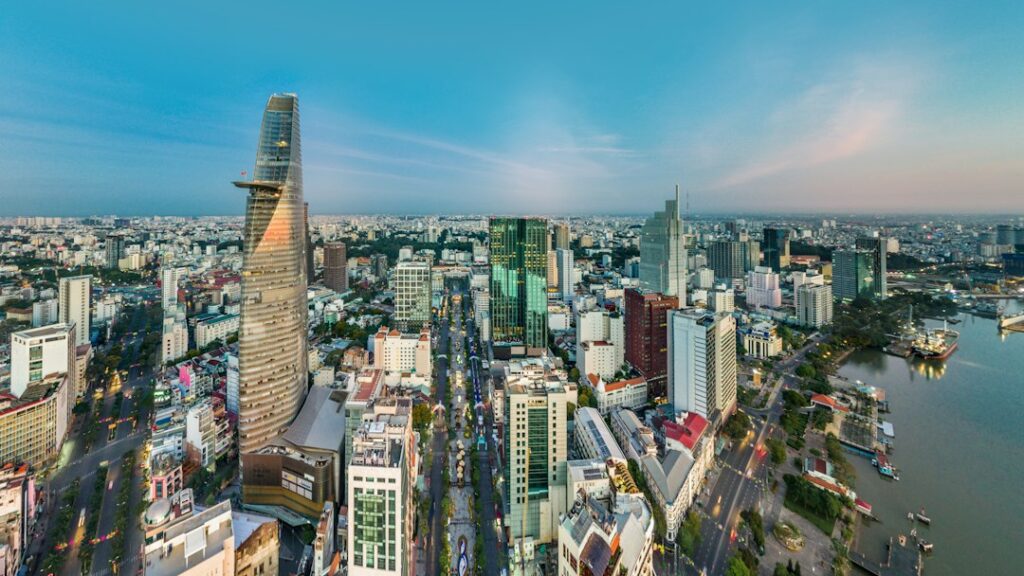
Vinhomes is the property arm of Vingroup and by far the largest developer in the country. Its roots go back to BIDV-PP Urban JSC, set up in 2008, and it listed on the Ho Chi Minh City Stock Exchange under its current name in 2018. By the end of 2025 it had 32 urban developments across eight provinces, more than 168,000 homes and a land bank of over 295 million square metres. Flagships include Vinhomes Central Park, home to the 461-metre Landmark 81, Vinhomes Ocean Park and Vinhomes Grand Park.
Revenue topped VND153 trillion in 2025, up 50%, with net profit above VND43 trillion. In April 2026 it raised its targets for the year to VND285 trillion in revenue and VND60 trillion in net profit, and it has shifted focus to transit-oriented projects and a 500,000-unit “Happy Home” social housing plan. It also topped Vietnam Report’s 2026 ranking of reputable developers.
Key Solutions:
- ✔ Mega-townships with schools, hospitals and malls on site
- ✔ Apartments, villas and townhouses across price points
- ✔ Social and affordable housing under the Happy Home brand
- ✔ Industrial park development
Best for: Buyers and investors who want a large, fully serviced community from the most established name in the market. Visit the Vinhomes website for current launches.
2. Sun Group
Sun Group, founded by chairman Le Viet Lam, began its Vietnam operations in 2007 with the Ba Na cable car company in Da Nang, where it is headquartered. Its property brand, Sun Property, was formed in 2020 and develops townships and resort homes alongside the group’s Sun World attractions, including Ba Na Hills and the Golden Bridge.
The group’s edge is that it builds the reason to visit before selling the homes. Sun Urban City in Phu Ly (formerly Ha Nam province, now part of Ninh Binh) spans up to 420 hectares with a Sun World park inside, and the company’s Phu Quoc projects sit beside its own airline hub, Sun PhuQuoc Airways. In July 2026 it expanded its partnership with Accor to nearly 6,000 hotel rooms and serviced apartments in Phu Quoc and Da Nang.
Key Solutions:
- ✔ Resort townships linked to theme parks
- ✔ Branded hotel and serviced residences
- ✔ Urban apartments in Da Nang and northern provinces
- ✔ Social and rental housing plans in Phu Quoc
Best for: Buyers looking for second homes or hospitality-linked property in tourism hubs.
3. Masterise Homes
Masterise Homes manages the residential brands of Masterise Group, which started life in 2007 as Thao Dien Investment and rebranded in 2019. It now has more than 30 developments across northern, central and southern Vietnam under its Masteri Collection and Lumière Series lines. Well-known projects include The Global City and Grand Marina, Saigon in Ho Chi Minh City and Masteri Trinity Square in Hanoi.
Masterise has made branded residences its calling card. Grand Marina, Saigon carries the Marriott and JW Marriott names, The Rivus delivered Elie Saab-branded villas, and One Central Saigon, launched in May 2026 opposite Ben Thanh Market, will include The Ritz-Carlton Residences. Brand Finance ranked it the third most valuable real estate brand in Southeast Asia in 2025.
Key Solutions:
- ✔ Branded luxury residences with global hotel partners
- ✔ Mid-to-high-end Masteri apartments
- ✔ Large mixed-use townships such as The Global City
Best for: High-net-worth buyers who value brand, design and central locations.
4. Nam Long Group
Nam Long Investment Corporation was founded in 1992 in Ho Chi Minh City and has been listed on HOSE since 2013. It holds a land bank of over 680 hectares across Ho Chi Minh City, Long An (now part of Tay Ninh) and Can Tho, and builds under three product lines: EHome, Flora and Valora. Its main townships include Waterpoint and Izumi City.
Nam Long’s strength is disciplined delivery in the mid-market. It posted record sales of VND11,800 billion in 2025 and handed over more than 4,000 land-use certificates. Long-standing Japanese partners, including Hankyu Hanshin Properties and Nishi-Nippon Railroad, have co-developed nine projects with it, and Tokyu Corporation bought a 15.1% stake in Izumi City. It ranked second in Vietnam Report’s 2026 list for the fourth year running.
Key Solutions:
- ✔ Affordable and mid-range homes under EHome and Flora
- ✔ Integrated townships with schools and clubs
- ✔ Joint ventures with Japanese developers
Best for: Families seeking well-run, mid-priced homes with a strong record of paperwork being completed. See the Nam Long website for details.
5. CapitaLand Development
CapitaLand Development is the development arm of Singapore’s CapitaLand Group and has worked in Vietnam for more than 30 years. Its portfolio now spans over 19,000 homes across 20 projects in Hanoi, Ho Chi Minh City and Binh Duong, and the company aims to reach 27,000 residential units by 2028.
Its main draw is consistency. In September 2026 it began handing over 2,375 homes at Lumi Signature, the first phase of Lumi Hanoi, a joint venture with Mitsubishi Estate and Far East Organization. It expects to hand over close to 3,000 homes in Vietnam this year, including at The Fullton Edition and Orchard Hill. Euromoney named it Vietnam’s best real estate developer in its 2024 awards.
Key Solutions:
- ✔ Premium condominiums in Hanoi and Ho Chi Minh City
- ✔ Integrated and SOHO developments
- ✔ Joint ventures with international partners
Best for: Buyers, including foreigners, who want international build and management standards.
6. Khang Dien House
Khang Dien House Trading and Investment JSC was founded in 2001 and is based in Ho Chi Minh City. It concentrates on the eastern side of the city, especially Thu Duc, and is known for holding land with legal paperwork already in order before it launches.
The company keeps a conservative balance sheet, with equity making up 62% of total capital and a debt-to-equity ratio below one at the end of 2025. Revenue rose 42% to VND4,651 billion that year and profit grew 29%. Its current driver is Gladia by the Waters, an 11.8-hectare joint venture with Keppel, where handovers of land-use certificates have begun. Vietnam Report placed it third among reputable developers in 2026.
Key Solutions:
- ✔ Villas and garden townhouses in Thu Duc
- ✔ High-rise apartments, including Gladia’s tower phase
- ✔ Industrial park development in Binh Chanh
Best for: Buyers who prize legal certainty and low-density homes in Ho Chi Minh City.
7. Gamuda Land Vietnam
Malaysia’s Gamuda entered Vietnam in 2007, setting up Gamuda Land Vietnam in Hanoi. Its first big bets were Gamuda City, a 500-hectare township in Hanoi, and Celadon City, an 82-hectare project in Ho Chi Minh City with low building density. Newer projects include Eaton Park and Elysian in Thu Duc and Springville near Long Thanh airport.
Vietnam has become Gamuda Land’s biggest overseas market. Sales there reached about RM6.8 billion between FY24 and FY26, with RM601 million in profit before tax in FY26 alone. The company has partnered with Hankyu Hanshin Properties on Norton Park and with Hong Kong’s MTR Corporation on transit-oriented projects.
Key Solutions:
- ✔ Large green townships with parks and lakes
- ✔ High-end apartments in Thu Duc
- ✔ Transit-linked developments
Best for: Long-term residents who want generous green space and full legal status.
8. Ecopark
The Ecopark brand began in 2003, when its founders started work on a 500-hectare township in Van Giang, Hung Yen, just outside Hanoi. The township is known for its Swan Lake and parks, and won an International Property Awards title for urban landscape design in 2015.
Ecopark has since taken its formula south and to central Vietnam. Eco Central Park in Vinh covers nearly 200 hectares, and in April 2025 the company broke ground on Eco Retreat, a 220-hectare project in Long An about 30 minutes from central Ho Chi Minh City. It ranked fourth in Vietnam Report’s 2026 list of reputable developers.
Key Solutions:
- ✔ Eco-townships with large green and water areas
- ✔ Villas, townhouses and apartments
- ✔ Schools and leisure facilities within each project
Best for: Families who want a greener, quieter suburb with city access.
9. Keppel
Singapore-listed Keppel has been active in Vietnam’s property market for decades, starting in Hanoi with Grade A offices such as International Centre and Vietcombank Tower. It reports 29 projects and more than S$5 billion in registered investment capital in the country, including Saigon Centre and Estella Heights in Ho Chi Minh City.
Keppel works mostly through partnerships and recycles capital as projects mature. It co-develops Gladia with Khang Dien, broke ground on Estiva Charm, its first Hanoi residential project, with Phu Long in July 2026, and opened the Hanoi Centre retail mall the same month.
Key Solutions:
- ✔ Grade A offices and mixed-use complexes
- ✔ Residential joint ventures with local developers
- ✔ Retail mall development and operation
- ✔ Real estate fund management
Best for: Corporate tenants and investors seeking institutional-grade commercial assets.
10. Van Phu
Van Phu Real Estate Development JSC, listed under the ticker VPI and formerly known as Van Phu – Invest, is a Hanoi-based developer active in the north, Hue and Ho Chi Minh City. It builds mainly under its Vlasta brand and also owns operating assets such as Oakwood Residence Hanoi.
Van Phu has earned a place on Vietnam Report’s top 10 for several years running and ranked fifth in 2026. Its 2026 plan targets VND4,500 billion in revenue and VND720 billion in after-tax profit, its highest goal since listing. Key projects this year include Vlasta Premier Phu Thuan in Ho Chi Minh City, Vlasta Thuy Nguyen in Hai Phong and Vlasta Premier Phu Hoi in Hue.
Key Solutions:
- ✔ Townhouses and shophouses under the Vlasta brand
- ✔ Serviced apartments and hospitality assets
- ✔ Infrastructure-linked urban projects
Best for: Buyers looking for mid-sized projects in growing secondary cities.
How to Choose the Right Real Estate Developer in Vietnam
Check the legal status of the project
Ask whether the project has its investment approval, land-use rights and construction permit in place. Many of Vietnam’s past problems came from projects that sold units before paperwork was finished, which later delayed ownership certificates for years.
Look at the handover record
A developer’s last five projects tell you more than its brochure. Visit completed sites and ask residents how long their pink books took.
Read the balance sheet
Listed real estate developers in Vietnam publish audited accounts. Watch debt levels, bond maturities and cash flow, since companies under financial pressure are more likely to slow construction.
Understand the payment schedule
Off-plan payment terms vary widely. Compare deposit sizes, progress payments and any bank interest support, and make sure your contract ties payments to construction milestones.
Consider who manages the building
Service charges and upkeep shape long-term value. Developers with strong property management usually protect resale prices better.
Frequently Asked Questions
Who is the largest real estate developer in Vietnam?
Vinhomes is the largest by revenue, profit and land bank. It reported more than VND153 trillion in revenue for 2025 and manages 32 urban developments across eight provinces.
Can foreigners buy property from developers in Vietnam?
Yes, within limits. Eligible foreigners can buy homes in approved housing projects, subject to caps on numbers and locations. A draft revision of the Law on Housing released in 2026 proposes limiting foreigners to apartments, capped at 30% of each building, with a 50-year ownership term that can be extended once. Check the final rules before buying.
Which property developers in Vietnam are best for first-time buyers?
Nam Long, Van Phu and Vinhomes’ Happy Home line focus on more affordable segments. Nam Long in particular has a long record in mid-priced homes around Ho Chi Minh City.
Are foreign developers safer than local ones?
Not automatically. CapitaLand, Gamuda Land and Keppel have strong governance, but local firms like Khang Dien and Nam Long also have clean records. Judge each project on its own merits.
Conclusion
The gap between Vietnam’s strongest developers and the rest has widened since the 2022 and 2023 downturn. Firms with clean land, steady handovers and sound finances, from Vinhomes and Nam Long to CapitaLand and Khang Dien, are the ones setting the pace in 2026.
Whichever of these real estate developers in Vietnam you consider, do your own checks on legal status and delivery history. For regional comparisons, see our lists of the top real estate developers in Thailand and the leading real estate developers in the UAE.