Top 10 Banks in Hong Kong (2026)
Explore the top banks in Hong Kong for 2026, from HSBC and Bank of China (Hong Kong) to Hang Seng, DBS and ZA Bank, with strengths and best-fit clients.

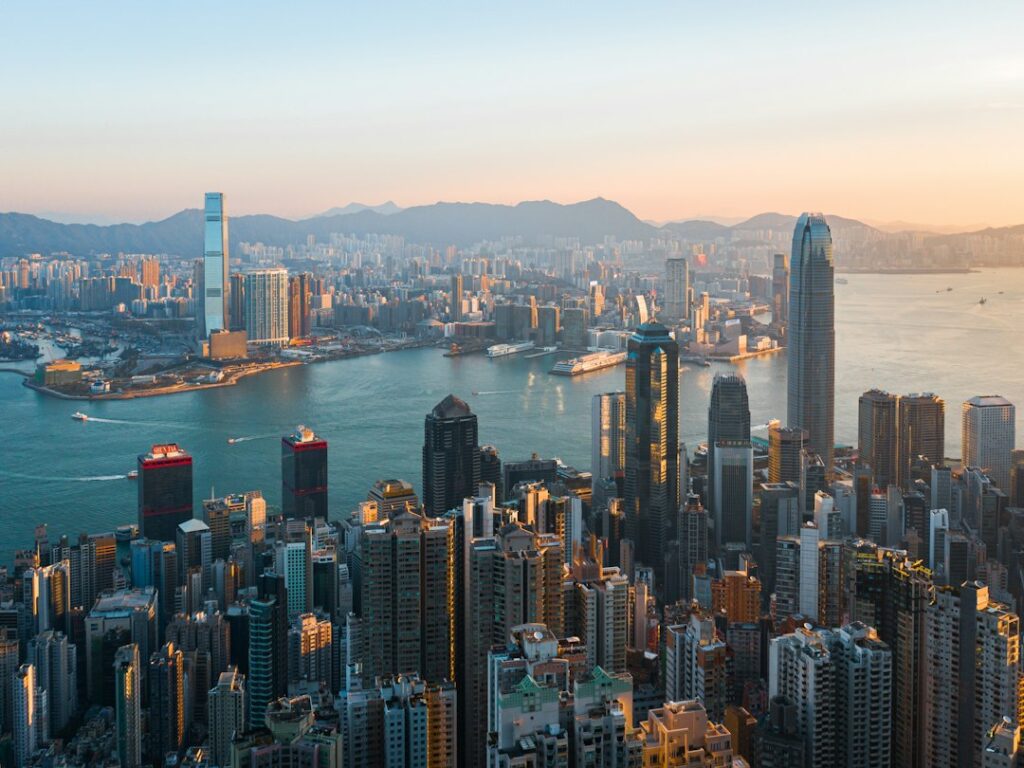
Few cities pack as much banking muscle into so small a space as Hong Kong. Walk along Queen’s Road Central and you pass the head offices of lenders that finance trade across Asia, clear US dollar payments and move capital in and out of mainland China every day. KPMG’s Hong Kong Banking Report 2026 puts the total assets of the city’s licensed banks at HK$26 trillion, up 7.1%, with operating profit before impairments of HK$337 billion in 2025.
For a company setting up a regional treasury, a family office looking for custody, or a start-up that needs an account in days rather than weeks, the choice of bank shapes cost, speed and market access. The sector is also changing fast. HSBC completed its privatisation of Hang Seng Bank in January 2026, digital banks have begun reporting full-year profits, and the push to attract corporate treasury centres has sharpened competition for business clients.
Hong Kong is unusual, too, in letting commercial lenders issue money. Three commercial banks issue most of the city’s banknotes under the Hong Kong Monetary Authority (HKMA): HSBC, Bank of China (Hong Kong) and Standard Chartered Bank (Hong Kong). All three feature here.
This guide looks at the top 10 banks in Hong Kong for 2026, from the note-issuing giants to the leading virtual bank, and what each does best.
Why Businesses Are Investing in Banking Relationships in Hong Kong
A gateway between China and global markets
Hong Kong lenders sit where mainland China meets international capital. Schemes such as Cross-boundary Wealth Management Connect and the city’s role as the largest offshore renminbi centre mean one relationship can cover both sides of the border.
Deep, well-capitalised institutions
The biggest lenders are among the strongest in Asia, and the HKMA is a demanding regulator. Large balance sheets and a common-law framework are a big reason treasury teams keep regional cash here.
Growth in trade and capital markets
The economy has picked up in 2026, with the government raising its GDP growth forecast to 4.8% on AI-led exports. Busier trade and listings feed straight into demand for trade finance and cash management.
Digital options alongside traditional ones
Eight digital banks now compete with the established names, several of them in SME banking. Companies can pair a large house bank for credit with an app-based account for everyday payments.
Top 10 Banks in Hong Kong at a Glance
| Rank | Company | Primary Strength | Best For | HQ / Founded |
|---|---|---|---|---|
| 1 | HSBC | Scale and trade finance | Multinationals, retail | Central / 1865 |
| 2 | Bank of China (Hong Kong) | RMB clearing | China-facing firms | Central / 2001 (current form) |
| 3 | Standard Chartered Hong Kong | Emerging-market corridors | Cross-border traders | Central / 1859 in HK |
| 4 | Hang Seng Bank | Local retail and SME | Local SMEs, households | Central / 1933 |
| 5 | Bank of East Asia | Independent local lender | Family and mid-market firms | Central / 1918 |
| 6 | DBS Bank (Hong Kong) | Digital and wealth | SMEs, affluent clients | Hong Kong / 2001 in HK |
| 7 | ICBC (Asia) | Custody | Institutions, mainland corporates | Central / 1964 |
| 8 | Citibank (Hong Kong) | Global treasury | Regional treasury centres | Hong Kong / 1902 in HK |
| 9 | Dah Sing Bank | Mid-sized local bank | Consumers, SMEs | Hong Kong / 1947 |
| 10 | ZA Bank | All-in-one digital bank | Start-ups, digital users | Hong Kong / 2020 |
Top 10 Banks in Hong Kong (2026)
Here is how the leading lenders compare on scale, specialism and service.
1. HSBC (The Hongkong and Shanghai Banking Corporation)
HSBC opened on 3 March 1865 at 1 Queen’s Road Central to finance trade between Asia and Europe, and its Hong Kong headquarters still stands there. It calls itself the biggest bank in Hong Kong, serves more than 7 million retail customers in the city and issues more than half of all Hong Kong dollar banknotes. KPMG ranks The Hongkong and Shanghai Banking Corporation first by total assets, at about HK$11.7 trillion, a figure that includes much of HSBC’s wider Asian business.
Euromoney named HSBC Hong Kong’s best bank for 2026, citing more than 1 million customers added in 2025 and leading positions in Hong Kong dollar markets, cash management and trade finance. Maggie Ng became CEO, Hong Kong, in October 2025, and HSBC has owned all of Hang Seng Bank since January 2026.
Key Solutions:
- ✔ Global trade and supply chain finance
- ✔ Cash management and US dollar clearing
- ✔ Wealth, insurance and asset management
- ✔ Commercial banking for SMEs and corporates
Best for: Multinationals and individuals wanting the widest network. See HSBC Hong Kong’s official site.
2. Bank of China (Hong Kong)
Bank of China opened its first Hong Kong branch in 1917. The present Bank of China (Hong Kong) took shape on 1 October 2001, when 12 Bank of China subsidiaries and associates in the city merged, and its holding company listed in 2002. Based in the Bank of China Tower in Central, BOCHK has been the designated renminbi clearing bank in Hong Kong since 2004 and is one of the three note issuers.
BOCHK reported 2025 profit attributable to shareholders of HK$40.12 billion, up 4.9%, with total assets of about HK$4.49 trillion and customer deposits of about HK$2.94 trillion. Net fee and commission income rose nearly 14%. KPMG ranks it second among Hong Kong lenders by assets.
Key Solutions:
- ✔ Renminbi clearing and cross-border payments
- ✔ Corporate and syndicated lending
- ✔ Personal banking, wealth and insurance
- ✔ Greater Bay Area and ASEAN services
Best for: Companies and investors whose business runs through mainland China.
3. Standard Chartered Hong Kong
Standard Chartered’s local history goes back to 1859, when the Chartered Bank of India, Australia and China opened a Hong Kong branch, and it has issued Hong Kong dollar banknotes since the 1860s. Standard Chartered Bank (Hong Kong) Limited is now locally incorporated and ranks third by assets in KPMG’s tables, at about HK$2.9 trillion.
Hong Kong is the group’s biggest earner. Underlying pre-tax profit in the city rose 40% in 2025 to US$2.66 billion, more than a third of the group total, on operating income of US$5.35 billion. Mary Huen leads the business as CEO, Hong Kong and Greater China & North Asia, and the group also backs digital lender Mox Bank.
Key Solutions:
- ✔ Transaction banking across Asia, Africa and the Middle East
- ✔ Corporate and investment banking
- ✔ Priority and private banking
- ✔ SME business banking
Best for: Businesses with trade corridors into emerging markets beyond China.
4. Hang Seng Bank
Founded in 1933, Hang Seng Bank has nearly 4 million customers and close to 250 service outlets in Hong Kong, plus a mainland subsidiary. Its subsidiary Hang Seng Indexes Company compiles the benchmark index that carries its name. HSBC took control in 1965, and its privatisation took effect on 26 January 2026, with minority holders paid HK$155 a share and the stock delisted on 27 January.
HSBC says Hang Seng keeps its own governance, brand, branch network and customer proposition, so little changes for clients day to day, and its HSBC parent adds global reach. Luanne Lim has been Chief Executive since October 2025, and KPMG ranks the bank fourth by assets, at about HK$1.8 trillion.
Key Solutions:
- ✔ Retail banking and wealth management
- ✔ Commercial banking for local SMEs
- ✔ Insurance and asset management
- ✔ Markets and securities services
Best for: Local SMEs and households wanting a familiar brand with HSBC backing.
5. Bank of East Asia
The Bank of East Asia was incorporated in November 1918 and opened in January 1919 at 10 Des Voeux Road Central, still its head office. Described in the financial press as Hong Kong’s largest family-owned lender, it is led by co-chief executives Adrian Li and Brian Li and has operated on the mainland since 1992, now through its locally incorporated BEA China.
BEA ended 2025 with total assets of HK$920.99 billion and customer deposits of HK$706.58 billion. Net profit fell to HK$3.50 billion as it worked through property-related loans, but management is pushing wealth management, syndicated loans and digital capability. In 2025 it partnered with Guangzhou Rural Commercial Bank to expand Southbound cross-boundary wealth services.
Key Solutions:
- ✔ Corporate and commercial lending
- ✔ Wealth management and bancassurance
- ✔ Cross-boundary Wealth Management Connect
- ✔ Personal banking and mortgages
Best for: Family businesses and mid-market firms that value a long local relationship.
6. DBS Bank (Hong Kong)
Singapore’s DBS built its local presence through the 2001 acquisition of Dao Heng Bank. DBS Bank (Hong Kong) now sits among the ten largest locally incorporated banks, with total assets of about HK$549 billion in KPMG’s rankings, and serves retail, wealth, SME and large corporate clients across the city.
Momentum is strong. DBS Hong Kong posted a record HK$6.3 billion net profit in the first half of 2026, up 23%, with wealth management income up 38%. Sebastian Paredes, CEO since 2010, retires on 1 March 2027 and will be succeeded by DBS Taiwan chief Ng Sier Han, subject to regulatory approval. Heavy investment in data, AI and digital channels underpins its pitch to business customers.
Key Solutions:
- ✔ Digital SME and business banking
- ✔ DBS Treasures wealth management
- ✔ Corporate lending and trade services
- ✔ Cross-border banking across North Asia
Best for: SMEs and affluent clients who want strong digital tools.
7. ICBC (Asia)
Industrial and Commercial Bank of China (Asia) traces its roots to Union Bank of Hong Kong, founded in 1964. ICBC acquired it in 2000, renamed it in 2001 and took it private in 2010. Headquartered at 3 Garden Road, Central, it ranked fifth among Hong Kong lenders by total assets at end-2025, at about HK$993 billion, and sixth by net profit.
Custody is a growing specialism. By the end of 2025 the bank served about 90 institutional custody clients across more than 3,300 accounts and covered 92 markets through ICBC Group branches and sub-custodians, adding securities lending custody in May 2026. For mainland companies expanding offshore, its link to the ICBC Group and its overseas branches is a natural draw.
Key Solutions:
- ✔ Global and local custody
- ✔ Corporate and commercial banking
- ✔ Treasury and bond services
- ✔ Consumer banking
Best for: Institutional investors and mainland-linked corporates.
8. Citibank (Hong Kong)
Citi has operated in Hong Kong since 1902. Its institutional business runs through the Citibank N.A. branch, while Citibank (Hong Kong) Limited serves retail and wealth clients. In 2022 it opened its first Global Wealth Centre at K11 Atelier Victoria Dockside for Citi Private Bank and Citigold Private Client customers.
Institutional client business grew 20% year on year in the first half of 2026, according to chief executive Aveline San, helped by fast-growing corridors with the UK, Saudi Arabia, Kazakhstan, Taiwan and Thailand. Wealth revenue rose at a double-digit rate, and Citi says it is in talks with several large enterprises about setting up treasury centres in the city. That makes it a strong choice for corporate banking in Hong Kong when a client’s footprint is global.
Key Solutions:
- ✔ Treasury and trade solutions
- ✔ Corporate treasury centre support
- ✔ Citigold and private banking
- ✔ Capital markets, including convertible bonds
Best for: Multinationals running regional treasury from Hong Kong.
9. Dah Sing Bank
Established in 1947, Dah Sing Bank is one of Hong Kong’s remaining independent mid-sized local banks. Its parent, Dah Sing Banking Group, has been listed since 2004 and runs 62 locations across Hong Kong, Macau and the mainland, including Banco Comercial de Macau, acquired in 2005, and Shenzhen-based Dah Sing Bank (China), set up in 2008.
Group profit attributable to shareholders rose 20% to HK$2.48 billion in 2025, helped by a strategic stake in Bank of Chongqing that contributed HK$729 million. Vice Chairman and Chief Executive Derek Wong leads the group, and a bancassurance tie-up with Sun Life Hong Kong strengthens its wealth offering. More is on Dah Sing Bank’s website.
Key Solutions:
- ✔ Personal banking, cards and consumer loans
- ✔ SME and commercial banking
- ✔ Wealth management and bancassurance
- ✔ Hong Kong, Macau and mainland services
Best for: Consumers and SMEs who prefer a local lender with personal service and Macau reach.
10. ZA Bank
ZA Bank was in the HKMA’s first batch of virtual banking licences in March 2019 and became the first virtual lender to launch fully, in March 2020. Backed by ZhongAn and ZA Group, it was the first digital bank in the city to pass 1 million users, in 2025, with customer deposits above HK$21 billion.
In 2025 ZA Bank was one of the first two digital banks to post a full-year profit, with pre-tax profit of HK$17 million. Euromoney named it Hong Kong’s best digital bank for 2026, noting that SMEs can open accounts in about two hours and manage deposits, payments, stocks, funds and crypto in one app. It was also the first digital bank to offer stablecoin reserve custody under the HKMA sandbox, a link to the city’s growing fintech companies.
Key Solutions:
- ✔ Fast digital business accounts
- ✔ Deposits, payments and transfers
- ✔ Stock, fund and regulated crypto trading
- ✔ Services for stablecoin issuers
Best for: Start-ups and digital-first customers who want speed over branches.
How to Choose the Right Banking Partner
Match the bank to your trade corridors
A bank’s strengths follow its network. For mainland trade, BOCHK or ICBC (Asia) may suit; for Africa, South Asia or the Middle East, Standard Chartered or Citi usually reaches further.
Check onboarding time
Large banks can take weeks to open accounts for new or overseas-incorporated companies, while digital banks often work in hours or days. Prepare ownership charts and business plans early.
Compare total cost
Minimum balances, FX spreads and transfer charges often outweigh monthly fees. Model a typical month of your own transactions before comparing the best banks in Hong Kong on price.
Think about credit and wealth
Trade finance lines and syndicated loans still sit mainly with the larger lenders, and the business bank often becomes the family’s private bank. Many lenders bundle bancassurance, so compare offers with leading insurance companies in Hong Kong.
Frequently Asked Questions
Which are the largest banks in Hong Kong?
By total assets at the end of 2025, KPMG ranks The Hongkong and Shanghai Banking Corporation first, followed by Bank of China (Hong Kong), Standard Chartered Bank (Hong Kong), Hang Seng Bank and ICBC (Asia).
Which banks issue Hong Kong banknotes?
HSBC, Bank of China (Hong Kong) and Standard Chartered Bank (Hong Kong). The government itself issues the HK$10 note.
Is Hang Seng Bank still listed?
No. HSBC’s privatisation took effect on 26 January 2026 and the shares were delisted the next day. The bank keeps its own brand and branches as a wholly owned HSBC subsidiary.
Are virtual banks in Hong Kong safe?
They are licensed and supervised by the HKMA like traditional lenders, and eligible deposits are covered by the Deposit Protection Scheme. They suit payments and everyday accounts, while complex credit usually still needs a larger bank.
Conclusion
Banks in Hong Kong range from 19th-century note issuers with trillion-dollar balance sheets to a digital lender that opened in 2020. HSBC, BOCHK and Standard Chartered lead on scale, Hang Seng, BEA and Dah Sing offer local depth, and DBS, ICBC (Asia), Citi and ZA Bank each bring a clear specialism.
The right choice depends on where your money needs to go, how fast you need an account and whether you need credit. Many businesses use two banks, so compare total costs and check current terms with each lender before signing.