Top 10 Fintech Companies in Malaysia (2026)
Meet the top fintech companies in Malaysia for 2026, from Touch 'n Go eWallet and GXBank to CapBay, BJAK and MoneyMatch, ranked on scale and merit.

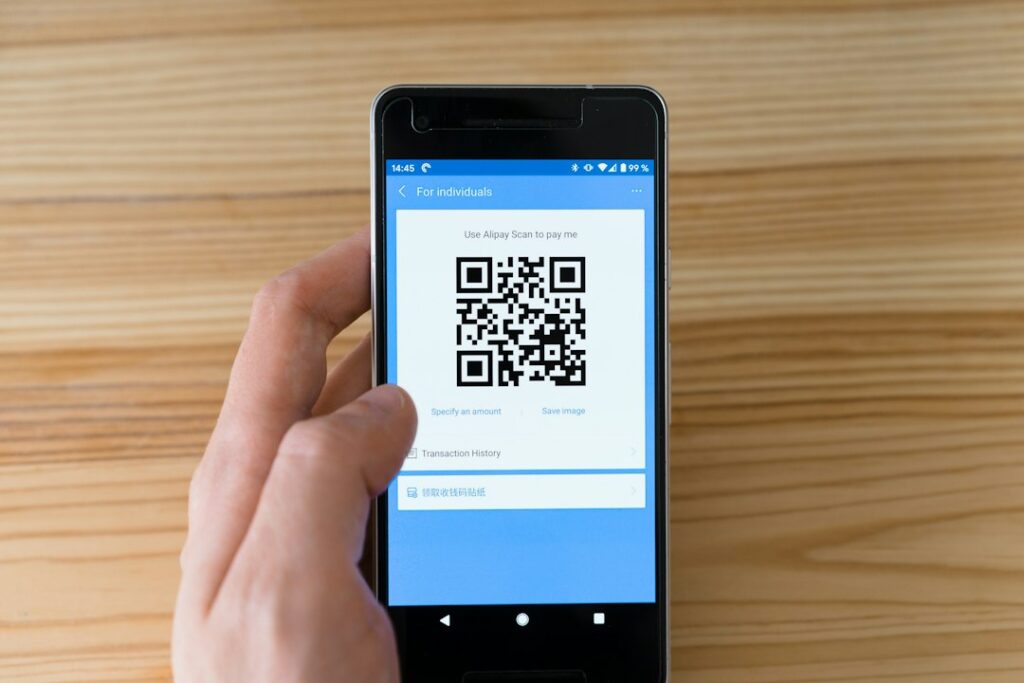
Malaysia’s money has gone mobile, and it has done so faster than most of the region expected. A hawker stall in Penang takes DuitNow QR, and a contract manufacturer in Selangor gets working capital against an invoice in days rather than months. Behind each of those moments sits a fintech company that barely existed a decade ago.
The numbers explain why boardrooms are paying attention. Touch ‘n Go eWallet now counts 26 million verified users. Bank Negara Malaysia’s Annual Report 2025 put the country’s five digital banks at 2.4 million customers and RM4.2 billion in deposits by the end of last year. Supply chain lenders that started with a single RM6,000 deal now report billions of ringgit facilitated for small firms. And the first full-year profit at the country’s largest e-wallet operator, reported for 2025, has shown that the business model can work at home.
For a CFO or founder, though, the crowded field is the problem. Licences differ, product depth varies, and some once-prominent Malaysian fintech names are now restructuring.
This guide looks at the fintech companies in Malaysia that matter most in 2026, covering payments, digital banking, SME financing, insurance and cross-border transfers, and explains what each one does best.
Why Businesses Are Investing in Fintech in Malaysia
Companies are turning to fintech firms in Malaysia for practical reasons: the economics now favour digital channels.
Faster Access to Working Capital
SMEs make up the vast majority of Malaysian businesses, yet many still struggle to borrow from traditional banks without property as collateral. Fintech lenders assess invoices, trading data and buyer payment records instead, which can cut approval times from months to days. For a growing supplier, that speed often decides whether a new contract can be accepted.
Lower Payment Costs and Wider Reach
QR payments, e-wallets and online gateways let even small merchants accept cards, wallets and bank transfers from one integration. Real-time rails such as DuitNow and the RENTAS+ settlement system, launched in 2025, support these services.
New Customers Through Digital Banks
Digital banks licensed by Bank Negara Malaysia target younger consumers, rural communities and micro-businesses. Partnering with them opens segments incumbent banks have long underserved.
Top 10 Fintech Companies in Malaysia at a Glance
| Rank | Company | Primary Strength | Best For | HQ / Founded |
|---|---|---|---|---|
| 1 | Touch ‘n Go eWallet (TNG Digital) | Mass-market e-wallet and wealth hub | Consumer payments and retail reach | Malaysia / wallet launched 2018 |
| 2 | GXBank | First digital bank to launch | Savings, credit and MSME loans | Malaysia / launched 2023 |
| 3 | Boost | E-wallet plus digital bank | SME banking and payments | Malaysia / 2017 |
| 4 | CapBay | Supply chain finance | Invoice-backed SME funding | Petaling Jaya / 2016 |
| 5 | Funding Societies Malaysia | Digital SME lending at scale | Fast unsecured business loans | Singapore (group) / 2015; Malaysia 2016 |
| 6 | Ryt Bank | AI-led digital banking | Tech-savvy retail customers | Malaysia / 2025 |
| 7 | BJAK | Online insurance comparison | Motor and personal cover | Petaling Jaya / 2019 |
| 8 | AEON Bank | Islamic digital banking | Shariah-compliant savings and financing | Malaysia / 2024 |
| 9 | Razorpay Curlec | Payment gateway and recurring billing | Online merchants and subscriptions | Kuala Lumpur / Razorpay-owned since 2022 |
| 10 | MoneyMatch | Cross-border transfers | SME and personal remittances | Kuala Lumpur / 2015 |
Top 10 Fintech Companies in Malaysia (2026)
Our ranking of the top fintech companies in Malaysia weighs scale, regulatory standing, product depth and recent momentum.
1. Touch ‘n Go eWallet (TNG Digital)
Run by TNG Digital Sdn Bhd, Touch ‘n Go eWallet launched in March 2018 and has become the default payment app for much of the country. It now counts 26 million verified users and 13.5 million monthly active users. Filings with the Companies Commission of Malaysia show revenue of RM707.28 million in 2025, up 72%, and a first full-year profit after tax of RM103.23 million. Chief executive Alan Ni has said the company is working towards a Bursa Malaysia listing.
What sets it apart is its reach beyond payments. Non-payment services, including wealth, insurance and B2B products, now bring in over half of revenue. Its GOfinance hub has served more than five million wealth users and processed RM3.57 billion in investments as at 30 September 2026, with some products starting at RM10.
Key Solutions:
- ✔ Touch ‘n Go eWallet for QR, toll, transit and bill payments
- ✔ GOfinance, including GO+, digital gold and equities via a Webull partnership
- ✔ Cross-border and remittance services
- ✔ Merchant advertising and value-added services
Best for: Retailers and consumer brands that need the widest possible payment reach in Malaysia. See TNG Digital’s official site for merchant options.
2. GXBank
GXBank became the first of Malaysia’s five digital bank licensees to receive approval to operate, effective 1 September 2023, and opened to the public later that year. It is a subsidiary of GXS Bank, the Grab and Singtel joint venture, with Malaysian investors including Kuok Group. By May 2026 it had passed 1.4 million users and processed over 450 million transactions, under chief executive Kaushik Chowdhury.
Its strength is everyday usefulness tied to the Grab ecosystem, through Savings Pockets, the cashback GX Card and the FlexiCredit personal credit line. It is now pushing into small business credit: about 15,000 MSMEs hold GXBank accounts, and in September 2026 it signed a risk-sharing deal with the World Bank’s IFC to lend up to RM448 million to small firms.
Key Solutions:
- ✔ Savings account with Pockets and Bonus Pockets
- ✔ GX Card debit card with cashback
- ✔ FlexiCredit personal financing
- ✔ GX Biz FlexiLoan, with no collateral required
Best for: Consumers and micro-businesses already active on Grab who want quick, app-based credit.
3. Boost
Boost launched its e-wallet in 2017 as the fintech arm of telecoms group Axiata, and has since grown into a full financial services group under Boost Holdings. Its most significant step came in June 2024 with Boost Bank, a digital bank run with RHB Banking Group, in which Boost holds 60% and RHB 40%. In July 2026, the World Bank’s International Finance Corporation subscribed for US$20 million of preference shares in Boost Holdings, valuing the company at US$340 million post-money, The Edge reported.
Boost’s edge is combining a wallet, merchant tools and a licensed bank. Boost Bank gathered more than RM700 million in deposits within six months of launch and disbursed nearly RM150 million in SME financing in its first year, with banking embedded in the Boost app. Its SME offering includes term loans, revolving credit, QR acceptance and property-backed financing with Funding Societies.
Key Solutions:
- ✔ Boost eWallet for consumer payments
- ✔ Boost Bank savings and SME financing
- ✔ Boost Biz merchant app and QR acceptance
- ✔ Boost Credit lending for micro-businesses
Best for: SMEs wanting payments and banking from a single, locally rooted provider.
4. CapBay
CapBay launched in 2016 and, according to the company, became the first licensed multi-bank supply chain finance platform in Malaysia that year, regulated by the Securities Commission Malaysia. Based in Petaling Jaya and led by co-founder and group CEO Ang Xing Xian, it has facilitated over RM6 billion in financing for more than 2,700 SMEs across 20 industries.
CapBay assesses firms on trading activity, invoice validity and buyer payment records rather than physical collateral. That approach has drawn public partners: it is a financial intermediary for SME Corp Malaysia schemes and works with MDEC and CGC Digital on SME financing schemes. It appears on the 2026 CNBC and Statista list of the world’s top fintechs.
Key Solutions:
- ✔ Supply chain and invoice financing
- ✔ Islamic and Bumiputera SME financing
- ✔ CapBay P2P investment platform
- ✔ CrediBill financing for clinics and pharmacies
Best for: Suppliers to large corporates who need cash before invoices are paid. Details are on CapBay’s website.
5. Funding Societies Malaysia
Funding Societies was founded in Singapore in 2015 by Kelvin Teo and Reynold Wijaya, and its Malaysian business became one of six SME lending platforms recognised by the Securities Commission in November 2016. The group also operates in Indonesia, Thailand and Vietnam. In Malaysia alone, it has disbursed close to RM7 billion to more than 10,000 businesses.
Speed and consistency are its selling points. Applications are made online, and the platform draws funding from investors and institutional partners. In August 2026 it secured a new multi-year facility from Malaysia Debt Ventures, which has worked with the platform since 2022, to expand lending to digital and technology-driven firms. Country head Chai Kien Poon leads the Malaysian business.
Key Solutions:
- ✔ Unsecured SME business term financing
- ✔ Invoice and trade financing
- ✔ Property-backed financing with Boost Bank
- ✔ P2P notes for investors
Best for: Established SMEs needing quick, collateral-light loans to bridge cash flow.
6. Ryt Bank
Ryt Bank is one of Malaysia’s newest digital banks, launched in August 2025 with backing from YTL Power International and Sea Limited. It markets itself as the country’s first AI-powered bank and reached 1.5 million customers by its first anniversary in August 2026, under interim CEO Wilson Soon.
Its distinctive feature is Ryt AI, a conversational assistant running on ILMU, a homegrown Malaysian large language model. Customers can pay bills, transfer money and split receipts by chat, and the assistant was used more than 10 million times in year one. Ryt PayLater offers instant credit of up to RM1,499, and Ryt Invest, announced in 2026, brings investing into the app.
Key Solutions:
- ✔ Ryt AI banking assistant
- ✔ Save Pockets with no lock-in period
- ✔ Ryt Card, combining debit and PayLater functions
- ✔ Ryt Invest for in-app investing
Best for: Digitally fluent consumers who want a chat-first banking experience.
7. BJAK
Founded in 2019 and based in Petaling Jaya, BJAK has become Malaysia’s largest online insurance aggregator, according to Bloomberg reporting in December 2025. The company says it has served more than nine million people and works with 16 licensed insurers and takaful operators. It holds Approved Financial Adviser and Approved Islamic Financial Adviser status from Bank Negara Malaysia.
BJAK’s appeal is simplicity: drivers can compare and buy motor cover and renew road tax online in one place. Founder Wei Low has said the business has been profitable since inception, and it has expanded into Japan, Taiwan and Thailand, with an IPO under consideration. It was a first-time entrant on the 2026 CNBC list of top global fintechs.
Key Solutions:
- ✔ Car and motorcycle insurance comparison
- ✔ Road tax renewal
- ✔ Travel, medical and personal accident cover
- ✔ Home content insurance
Best for: Motorists and households wanting fast, comparable insurance quotes online.
8. AEON Bank
AEON Bank, a subsidiary of Japan’s AEON Financial Service, was approved in January 2024 as Malaysia’s first Islamic digital bank and officially launched on 26 May 2024. Mohammad Ridzuan Abdul Aziz became chief executive in May 2026 as the bank moved into its next growth phase.
Every product follows Shariah principles, and the bank links naturally to AEON’s retail network through membership points earned on debit card spending. Its business arm, AEON Bank Biz, launched in August 2025 and added Term Financing-i and Working Capital Financing-i in July 2026, with no collateral needed for term financing and tenures of up to 60 months. Deposits are protected by PIDM up to RM250,000 per depositor.
Key Solutions:
- ✔ Savings Account-i with Savings Pots
- ✔ AEON Bank Visa Debit Card-i with AEON points
- ✔ Business Current Account-i and Biz Term Deposit-i
- ✔ Term Financing-i and Working Capital Financing-i
Best for: Individuals and SMEs that require fully Shariah-compliant digital banking.
9. Razorpay Curlec
Kuala Lumpur-based Curlec started out in direct debit and recurring payments, serving clients such as AXA and Axiata Digital. In February 2022, Indian payments giant Razorpay acquired a majority stake, its first international acquisition, and the business now trades as Razorpay Curlec under a Bank Negara Malaysia licence.
The company has broadened into a full payment gateway while keeping its subscription billing strengths. Recent additions include Apple Pay acceptance, a January 2026 PayPal partnership for cross-border SME payments and, in August 2026, DuitNow Pay checkout, making it among the first PayNet participants to offer the service. It has also partnered with NPCI International to bring UPI payments to Malaysia, and Razorpay used the business to launch its first international payment gateway.
Key Solutions:
- ✔ Online payment gateway
- ✔ Recurring payments and direct debit
- ✔ Payouts and billing
- ✔ DuitNow Pay, Apple Pay and UPI acceptance
Best for: Subscription businesses, insurers and e-commerce sellers handling recurring collections.
10. MoneyMatch
Founded in Kuala Lumpur in 2015 by Adrian Yap and Naysan Munusamy, MoneyMatch was part of the first batch of companies in Bank Negara Malaysia’s regulatory sandbox in 2017. It now holds licences or approvals in Malaysia, Singapore, Brunei and Australia, and was part of the KAF Digital Bank consortium that won an Islamic digital bank licence in 2022.
The company reports more than 1.3 million customers and over RM66 billion in transaction volume, a big footprint for a homegrown remittance firm. Its Series A in 2021 raised RM18.5 million, and a 2023 equity crowdfunding campaign passed its RM4 million target. Businesses use it for supplier payments abroad, while individuals use bank transfers, mobile wallet transfers and cash pickup.
Key Solutions:
- ✔ Business cross-border transfers
- ✔ Personal remittances and cash pickup
- ✔ Enterprise payment network and agent programme
- ✔ Business cards and insurance
Best for: Importers, exporters and individuals who send money overseas regularly.
How to Choose the Right Fintech Partner
Check the Licence First
Ask which regulator oversees the service and under what licence. Digital banks, e-money issuers and payment operators answer to Bank Negara Malaysia, while P2P and equity crowdfunding platforms sit with the Securities Commission. A clear licence protects your funds and your data.
Match the Product to the Problem
A supply chain lender suits a supplier waiting on large invoices; an unsecured term loan suits a firm with steady revenue but no collateral.
Compare the Full Cost
Look past headline rates to processing fees, guarantee fees, early settlement charges and FX spreads. A CGC-guaranteed loan, for instance, can carry a guarantee fee on top of the base rate.
Weigh Financial Stability
Some players are still loss-making or restructuring. Review funding, shareholders and published results before relying on one provider.
Frequently Asked Questions
How many digital banks operate in Malaysia?
Bank Negara Malaysia awarded five digital bank licences in 2022. GXBank, Boost Bank, AEON Bank and Ryt Bank are among the licensees now serving customers, and Bank Negara Malaysia reported 2.4 million digital bank customers at the end of 2025.
Which is the largest fintech company in Malaysia?
By users and revenue, TNG Digital, the operator of Touch ‘n Go eWallet, is the largest. It reported 26 million verified users and RM707.28 million in revenue for 2025.
Are fintech companies in Malaysia regulated?
Yes. Bank Negara Malaysia regulates banks, e-money issuers, remittance and payment firms, while the Securities Commission Malaysia oversees P2P financing and equity crowdfunding platforms.
Can SMEs borrow from fintech firms in Malaysia without collateral?
Many can. Platforms such as Funding Societies, CapBay, GXBank and AEON Bank offer financing without property collateral, assessing cash flow, invoices or trading records instead.
Conclusion
The strongest fintech companies in Malaysia have moved past the early land grab. Touch ‘n Go eWallet is profitable, digital banks are lending to small firms, and specialists such as CapBay, BJAK and MoneyMatch hold niches that larger players struggle to copy.
For businesses, the practical step is to match a provider to a specific need, check its licence and costs, and start small. Readers tracking the wider region can compare this list with our guides to the top fintech companies in Singapore and the leading fintech companies in the Philippines, or see how connectivity underpins it all in our ranking of Malaysia’s top telecom companies.