Top 10 Logistics Companies in Singapore (2026)
Explore the top logistics companies in Singapore for 2026, from PSA and SATS to YCH, Ninja Van and Janio, with strengths, services and who each one suits.

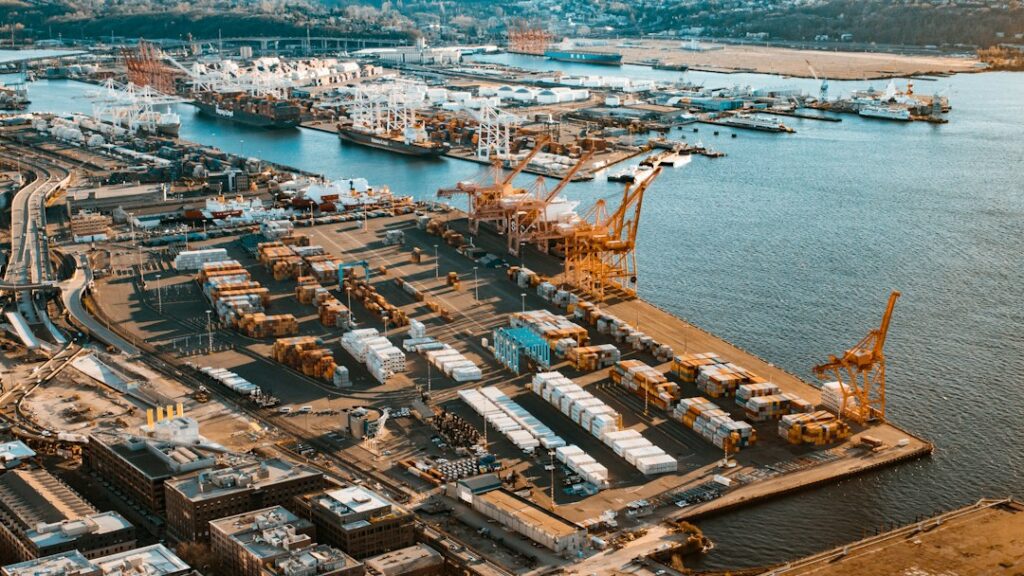
Stand at Pasir Panjang at any hour and you’ll see cranes swinging and ships waiting their turn. Singapore has no hinterland and little spare land, yet it handles a huge share of world trade because it has spent decades treating logistics as a national competence.
That history matters to anyone choosing a partner today. Most “best of” lists are crowded with global multinationals that simply run a regional office in the city. They tell you little about the firms built and run here. Singapore’s own operators range from a port group handling more than 100 million TEUs a year to a start-up that stitches together hundreds of carriers through software.
The mix is broad, from terminal operators and ocean carriers to warehousing specialists and last-mile couriers. Picking the right one depends on what you ship, where it goes and how much of the chain you want to hand over. This guide looks at the top logistics companies in Singapore for 2026, ranked on scale, track record, network reach and specialist depth, with notes on who each one suits best.
Why Businesses Are Investing in Logistics in Singapore
The case for routing goods through Singapore rests on a few practical advantages.
Unmatched Port and Air Connectivity
Singapore is one of the busiest transhipment hubs in the world, with sea links to hundreds of ports and an airport that handles freight for most major trade lanes. For a regional distributor, that means more sailings and fewer delays.
A Mature Ecosystem of Specialists
You can find specialists for almost any cargo, from chemicals to fine wine and base metals. Singapore logistics providers also tend to offer bonded warehousing and free trade zone options, which helps firms that re-export across Asia.
Predictable Rules and Strong Governance
Customs procedures are largely digital, and regulation is stable. That makes it easier to plan stock across several markets.
Investment in Automation and Green Shipping
Public and private money is going into automated terminals, warehouse robotics and lower-carbon fuels. That helps firms needing cleaner options and better emissions data.
Top 10 Logistics Companies in Singapore at a Glance
| Rank | Company | Primary Strength | Best For | HQ / Founded |
|---|---|---|---|---|
| 1 | PSA International | Global container terminal network | Shipping lines and large importers needing port access | Singapore / 2003 |
| 2 | SATS Ltd | Air cargo and ground handling | Airlines and time-critical air freight | Singapore / 1972 |
| 3 | Ocean Network Express (ONE) | Global container shipping | Exporters on major East-West trade lanes | Singapore / 2017 |
| 4 | Pacific International Lines (PIL) | Asia, Africa and Middle East container services | Shippers serving emerging-market routes | Singapore / 1967 |
| 5 | Singapore Post (SingPost) | Postal and eCommerce logistics | Online retailers and domestic delivery | Singapore / 1992 |
| 6 | YCH Group | Contract logistics and supply chain design | Brands outsourcing regional distribution | Singapore / 1955 |
| 7 | CWT | Warehousing and commodity logistics | Commodities, chemicals and bonded cargo | Singapore / 1970 |
| 8 | Ninja Van | Last-mile parcel delivery | eCommerce sellers across Southeast Asia | Singapore / 2014 |
| 9 | X-Press Feeders | Independent feeder shipping | Carriers and forwarders needing regional feeder links | Singapore / 1972 |
| 10 | Janio | Cross-border eCommerce 4PL | Brands expanding into new Asian markets | Singapore / 2018 |
Top 10 Logistics Companies in Singapore (2026)
Here’s a closer look at each company, what it does well and the kind of business it suits.
1. PSA International
PSA International traces its roots to the old Port of Singapore Authority. Its commercial terminal business was split from the regulator in 1996, and PSA International was formed in 2003 as the group’s global holding company. It now runs more than 70 deepsea, rail and inland terminals across over 180 locations in 45 countries.
Scale is the obvious strength. The group handled a record 105 million TEUs worldwide in 2025, up 5%, with its Singapore terminals alone moving 44.5 million TEUs. Under Group CEO Ong Kim Pong, it has also moved into supply chain nodes, marine services and digital platforms, while the automated Tuas Port takes over from older terminals.
Key Logistics Solutions:
- ✔ Container terminal operations in Singapore and overseas
- ✔ Rail and inland terminal links for hinterland cargo
- ✔ Marine services and supply chain nodes near ports
- ✔ Digital platforms for cargo visibility and port community data
Best for: Shipping lines, beneficial cargo owners and large importers that need reliable, high-volume port access in Asia and beyond.
2. SATS Ltd
SATS was set up in 1972 as a subsidiary of Singapore Airlines and has run airfreight terminals at Changi since the airport opened in 1981. Listed on SGX since 2000, it combines cargo and ground handling with airline catering. It changed shape in April 2023 when it completed the €1.3 billion purchase of Worldwide Flight Services (WFS), turning it into a global air cargo player.
In the year to 31 March 2026, SATS posted record revenue of S$6.35 billion and net profit of S$285.2 million, while cargo processed rose 7% to about 9.65 million tonnes. Its network now spans more than 225 stations in 27 countries. Readers tracking its airline customers may also find Singapore Airlines’ latest half-year results a useful read.
Key Logistics Solutions:
- ✔ Air cargo terminal handling, import and export
- ✔ Ramp, baggage and passenger ground services
- ✔ Temperature-controlled handling for perishables and pharma
- ✔ Global station network through WFS
Best for: Airlines, freight forwarders and shippers moving high-value or time-sensitive goods by air.
3. Ocean Network Express (ONE)
ONE is one of the world’s largest container lines, and it’s run from Singapore. The company was set up in 2017 and began sailing in April 2018, when Japan’s three big carriers, K Line, MOL and NYK, merged their container businesses into a single brand headquartered at Marina One.
Singapore was a natural base, given how central the city is to the lanes it serves. The carrier runs a broad spread of East-West, intra-Asia and North-South services, backed by its three Japanese shareholders. Leadership changed in July 2026, when Till Ole Barrelet, previously chief executive of Emirates Shipping Line, took over as CEO from Jeremy Nixon, who had led ONE since its launch.
Key Logistics Solutions:
- ✔ Full-container-load ocean shipping on global trade lanes
- ✔ Reefer services for chilled and frozen cargo
- ✔ Digital booking, tracking and documentation tools
- ✔ Special cargo and out-of-gauge handling
Best for: Manufacturers and exporters shipping large volumes on Asia-Europe, transpacific and intra-Asia routes.
4. Pacific International Lines (PIL)
Founded by the Teo family in 1967, PIL is Singapore’s own home-grown container line. It has built a reputation on routes that larger carriers sometimes treat as secondary, including links between Asia, Africa, the Middle East and Latin America.
The company has come a long way since its restructuring early this decade. It reported net profit of US$1.04 billion for 2025 and ended the year with 106 vessels, 95 of them owned. It’s also renewing its fleet with LNG dual-fuel ships such as the Kota Orkid. A planned handover is under way: Temasek’s Wan Chee Foong joined as deputy CEO in October 2026 and will succeed Lars Kastrup as chief executive in April 2027.
Key Logistics Solutions:
- ✔ Container shipping across Asia, Africa, the Middle East and Oceania
- ✔ Reefer and special equipment services
- ✔ Lower-emission tonnage through its dual-fuel newbuild programme
Best for: Traders and manufacturers serving emerging-market lanes where direct services are harder to find.
5. Singapore Post (SingPost)
SingPost’s story starts long before the company itself. Postal services in Singapore date to 1819, and the Post Office became an independent department in 1858. Singapore Post was incorporated in 1992 and listed on SGX in 2003, and it now combines the national postal service with eCommerce logistics, warehousing and freight forwarding.
In March 2025 it completed the sale of its Australian business, Freight Management Holdings, to Pacific Equity Partners at an enterprise value of A$1.02 billion. Mark Chong, formerly of Singtel, became Group CEO in November 2025 with a brief to make SingPost a technology-led logistics and eCommerce player. Its POPStation lockers and post office network remain real advantages.
Key Logistics Solutions:
- ✔ Domestic and international mail and parcels
- ✔ eCommerce fulfilment and warehousing
- ✔ Last-mile delivery and POPStation parcel lockers
- ✔ International freight forwarding
Best for: Online retailers and brands that need dependable delivery to every address in Singapore.
6. YCH Group
YCH started in 1955 as a small passenger transport firm founded by the late Yap Chwee Hock. His son, Executive Chairman Dr Robert Yap, moved it into cargo in 1977 and grew it into what the group calls Singapore’s largest home-grown supply chain solutions company.
YCH designs supply chains as well as running them. Its flagship Supply Chain City campus, DistriPark and SuperPort facilities sit alongside consulting arm Y-Consult, technology unit Y3 Technologies and training academy SCALA. It’s also building outward, breaking ground on 31 August 2026 on the Phnom Penh Logistics Complex, a Cambodia SuperPort developed with Cambodia’s WorldBridge Group. Firms comparing regional options may want to look at our guide to logistics companies in Indonesia.
Key Logistics Solutions:
- ✔ Contract logistics and multi-client warehousing
- ✔ Supply chain consulting and network design
- ✔ Supply chain software through Y3 Technologies
- ✔ eCommerce enablement through Y-SG
Best for: Consumer, electronics, healthcare and food brands that want one partner to plan and run their Asian distribution.
7. CWT
CWT began life in 1970 under the then Port Authority of Singapore and listed on SGX in 1993. After passing to C&P Holdings in 2004 and joining China’s HNA Group in 2017, it was taken private in 2018. Today it operates as CWT Pte. Limited.
Few 3PL companies in Singapore have CWT’s breadth in specialist cargo. Its Mega Logistics Hub opened in 2017, and the group covers commodity logistics for base metals and soft commodities, chemicals, cold chain and even fine wine through the Singapore Wine Vault. Freight forwarding runs through CWT Globelink, while engineering arm Indeco designs and builds logistics facilities.
Key Logistics Solutions:
- ✔ General, bonded and chemical warehousing
- ✔ Commodity logistics for metals and soft commodities
- ✔ Container depot operations and freight forwarding
- ✔ Cold chain and specialist storage
Best for: Commodity traders, chemical firms and companies with cargo that needs specialist storage and handling.
8. Ninja Van
Ninja Van was founded in Singapore in 2014 by Lai Chang Wen, Shaun Chong and Tan Boxian, famously starting with a single second-hand van. It now delivers parcels in six markets: Singapore, Malaysia, Indonesia, Vietnam, the Philippines and Thailand.
The company grew up alongside Southeast Asia’s online shopping boom, and its tools reflect that. Small sellers can book pick-ups and track parcels easily, while larger merchants can plug its delivery and tracking into their own systems. Backed by investors including Alibaba, it raised US$578 million in a 2021 Series E round, and CEO Lai has since put the focus on profitability rather than a quick listing.
Key Logistics Solutions:
- ✔ Last-mile parcel delivery across six markets
- ✔ Cross-border shipping within Southeast Asia
- ✔ Pick-up, tracking and delivery for high-volume merchants
- ✔ Self-serve shipping tools for small sellers
Best for: eCommerce businesses of any size selling to consumers across Southeast Asia.
9. X-Press Feeders
X-Press Feeders is a privately held Singapore carrier, part of the Sea Consortium group, which has been running feeder services since 1972. As an independent common carrier, it moves containers between hub ports and smaller regional ones for many mainline operators.
Its network now covers 87 services calling at around 180 ports across Asia, the Middle East, Europe, the Mediterranean and the Caribbean. The company says it handled 5.9 million TEUs in 2025 with a fleet of more than 100 vessels. It also launched what it described as Europe’s first feeder network powered by green methanol in 2024, an early move on cleaner fuels for short-sea shipping.
Key Logistics Solutions:
- ✔ Independent feeder services between hub and regional ports
- ✔ Slot services for mainline carriers and forwarders
- ✔ Lower-emission feeder options using methanol dual-fuel vessels
Best for: Carriers, NVOCCs and freight forwarding companies in Singapore that need neutral, reliable feeder connections.
10. Janio
Janio was founded in Singapore in 2018 to tackle a stubborn problem: cross-border eCommerce in Asia involves too many carriers, customs regimes and invoices. Rather than own trucks or warehouses, it works as a fourth-party logistics provider that connects shippers to vetted partners through its own platform.
The asset-light model suits brands testing new markets. Janio offers a control tower view of shipments, multi-carrier delivery, strategic procurement and invoice reconciliation, with key markets including Indonesia, Malaysia, Thailand, Vietnam and the Philippines. It raised US$8 million from revenue-based financier Choco Up in 2021, a sign of how closely it sits to Singapore’s fintech companies and start-up scene.
Key Logistics Solutions:
- ✔ Cross-border eCommerce shipping across Asia
- ✔ Control tower visibility over multiple carriers
- ✔ Logistics as a Service and strategic procurement
- ✔ Import customs clearance and invoice reconciliation
Best for: Online brands and marketplace sellers expanding into new Asian markets without building their own network.
How to Choose the Right Logistics Partner in Singapore
The best logistics companies in Singapore aren’t interchangeable, so it pays to be clear about what you need before you start talking to them.
Match the Provider to the Job
A port operator, a carrier, a 3PL and a courier do very different work. Decide which you need, and shortlist only firms in that category.
Check Network Coverage on Your Lanes
A global network means little if it’s thin on your routes. Ask for services, transit times and costs, including surcharges, on your top three lanes.
Look Closely at Specialist Handling
Chemicals, pharmaceuticals and perishables need licensed facilities and trained staff. Ask for certifications and incident records for your cargo type.
Test the Technology
Good tracking and easy integration with your ERP system save hours every week. Request a demo using your own shipment data, and ask how the provider secures it.
Ask About Sustainability Data
Customers and regulators want emissions data. Supply chain companies in Singapore are increasingly able to provide this, but quality varies, so ask how the numbers are calculated.
FAQs
What’s the difference between a 3PL, a freight forwarder and a 4PL?
A 3PL runs warehousing and transport for you. A freight forwarder arranges cargo movement, booking carrier space and handling paperwork. A 4PL like Janio sits above both, managing several providers and the data that ties them together.
Why do many lists of logistics companies in Singapore only feature foreign multinationals?
Global integrators run big regional hubs here, so they’re easy to list. But many firms that shape local logistics, such as PSA, SATS, PIL and YCH, were founded and are still run from Singapore, and this list focuses on them.
Can small businesses work with these companies?
Yes, though not always directly. SMEs usually deal with couriers like Ninja Van and SingPost, platforms like Janio or 3PLs like YCH and CWT, while carriers and port operators tend to serve them through forwarders.
Are Singapore logistics providers moving towards greener shipping?
Many are. PIL is adding LNG dual-fuel ships, X-Press Feeders has introduced methanol-powered feeders and PSA’s Tuas Port has been designed as a highly automated terminal.
Conclusion
Singapore’s logistics strength isn’t just about foreign giants with local offices. The firms on this list were built here, from a port group moving more than 100 million TEUs a year to a courier that began with one van.
The right choice depends on your cargo, your lanes and how much control you want to keep. Shortlist two or three logistics companies in Singapore that fit your brief and test them on your own data before you commit.