Top 10 Healthcare Companies in Thailand (2026)
Explore the top healthcare companies in Thailand for 2026, from BDMS and Bumrungrad to Bangkok Chain Hospital, with network size, strengths and best uses.

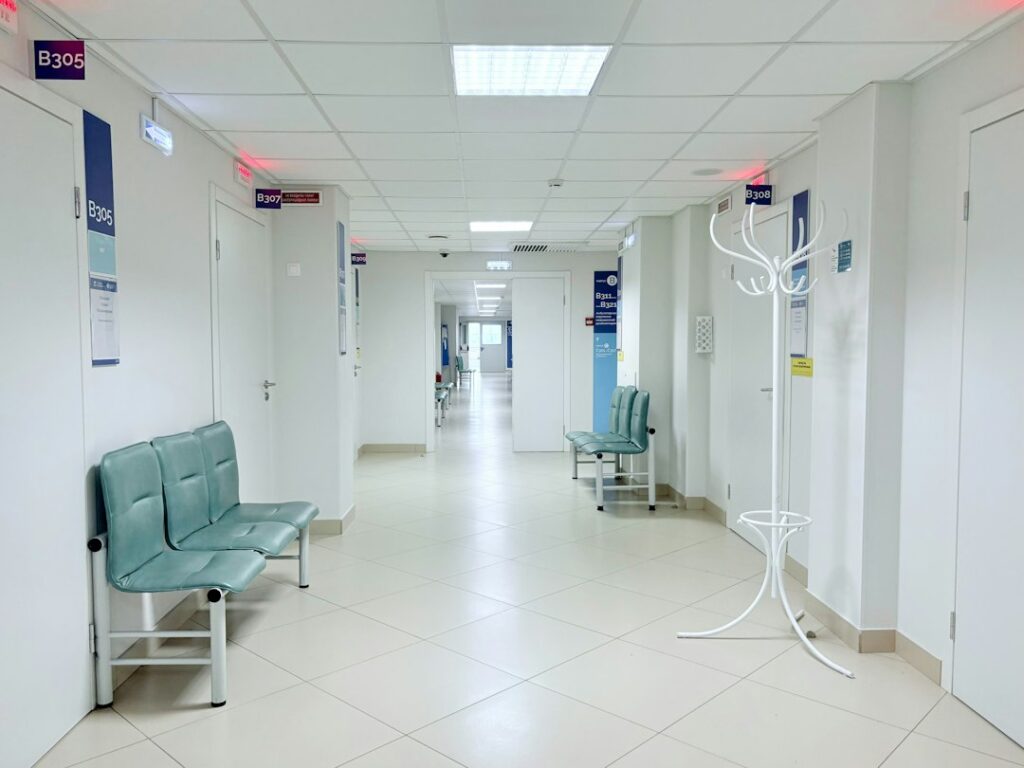
Thailand has spent five decades turning private hospitals into an export industry. Patients fly in from the Gulf, Cambodia, Myanmar, China and Europe for heart surgery, joint replacements and cancer care, while a growing domestic middle class pays out of pocket or through private insurance.
The past eighteen months have tested that model. Border tensions with Cambodia, airspace closures in the Middle East and softer domestic spending all weighed on first-quarter revenue across the sector in 2026. Yet the leading groups kept building. Bangkok Dusit Medical Services now runs 60 hospitals, Ramkhamhaeng Hospital took control of Thonburi Healthcare Group, and Bangkok Chain Hospital has two new Kasemrad sites under way. Analysts at InnovestX wrote in September 2026 that the sector’s recovery should become increasingly visible in the second half of the year, and noted that Thai hospital stocks trade at a discount of about a third to regional peers.
For investors, insurers, HR teams arranging corporate health cover and anyone working in medical travel, the question is which groups have the scale, specialist depth and financial footing to matter. This guide looks at the leading healthcare companies in Thailand in 2026, how they make money and who each one suits best.
Why Businesses Are Investing in Healthcare in Thailand
An established medical tourism base
Thailand medical tourism is not a new idea being tested. Bumrungrad alone says it treats more than 620,000 international patients a year from over 190 countries. That track record gives hospital groups pricing power and repeat referral channels that newer markets in the region still lack.
A large insured domestic market
The Social Security Scheme gives mid-market operators a steady base of registered members, and private health insurance is widening the self-pay segment. Groups such as Bangkok Chain Hospital and Chularat earn a large share of revenue from social security patients, which smooths earnings when foreign arrivals dip.
Government backing for long-stay care
Thailand’s Department of Health Service Support has proposed longer medical treatment visas, research centres inside private hospitals and centralised international insurance platforms. If those plans move ahead, they favour operators that already run large international patient desks.
Room for consolidation
Ownership of healthcare companies in Thailand is still fragmented outside the top two groups. Ramkhamhaeng’s move on Thonburi Healthcare Group in 2025 and Principal Capital’s regional hospital build-out show that mid-sized players see value in buying or building scale, much as developers have done in the property sector covered in our guide to the top real estate developers in Thailand.
Top 10 Healthcare Companies in Thailand at a Glance
| Rank | Company | Primary Strength | Best For | HQ / Founded |
|---|---|---|---|---|
| 1 | Bangkok Dusit Medical Services (BDMS) | Largest private hospital network | Nationwide corporate and insurer networks | Bangkok / 1969 |
| 2 | Bumrungrad Hospital | International patient care | Medical travel and complex treatment | Bangkok / 1980 |
| 3 | Ramkhamhaeng Hospital | Multi-brand hospital alliance | Broad provincial and Bangkok coverage | Bangkok / hospital opened 1988 |
| 4 | Bangkok Chain Hospital | Social security scale | Employee health schemes | Nonthaburi / 1993 |
| 5 | Chularat Hospital | Eastern Bangkok corridor | Industrial estates east of Bangkok | Samut Prakan / 1986 |
| 6 | Praram 9 Hospital | Kidney and heart institutes | Specialist referrals and Gulf patients | Bangkok / 1992 |
| 7 | Principal Capital (PRINC) | Regional hospital build-out | Coverage in northern and northeastern provinces | Bangkok / 2000 |
| 8 | Vejthani Hospital | Orthopaedics | Joint and spine surgery travellers | Bangkok / 1994 |
| 9 | Vibhavadi Hospital | Northern Bangkok general care | Occupational health programmes | Bangkok / 1986 |
| 10 | Sikarin | Bangna and Hat Yai presence | Southern Thailand and eastern Bangkok | Bangkok / 1979 |
Top 10 Healthcare Companies in Thailand (2026)
The ranking below weighs network size, specialist depth, revenue and how each group is positioned for the next few years.
1. Bangkok Dusit Medical Services (BDMS)
BDMS was founded by a group of physicians in 1969, and its flagship Bangkok Hospital opened on Soi Soonvijai in 1971. Today it is the largest private hospital operator in the country, with 60 hospitals and about 9,360 beds as of August 2026, including two hospitals in Cambodia.
The group runs several brands under one roof: Bangkok Hospital, Samitivej, Phyathai, Paolo, BNH and Royal International. That lets it serve premium expatriate patients and mid-market Thai families through separate front doors. BDMS reported operating income of THB 113.2 billion in 2025, up 4%, and a net profit of THB 15.8 billion. Wellness is a growing line, at about 12% of revenue according to sector analysts.
Key Solutions
- ✔ Nationwide hospital network across seven hospital brands
- ✔ Tertiary care in cardiology, oncology and neuroscience at flagship sites
- ✔ Preventive and longevity medicine through BDMS Wellness Clinic
- ✔ Corporate health check-up and insurer direct-billing programmes
Best for: Employers and insurers that need one partner covering Bangkok, resort areas and the provinces. More detail is on the BDMS website.
2. Bumrungrad Hospital
Bumrungrad opened in central Bangkok in 1980 and listed on the Stock Exchange of Thailand in 1989. It runs one large campus rather than a chain, with 580 inpatient beds and more than 60 clinics and centres.
Its edge is international reach. In 2002 it became the first hospital in Asia accredited by Joint Commission International, and it has been re-accredited every three years since. Foreign patients made up about 66% of revenue in the first quarter of 2026, the highest share among listed peers. Newsweek and Statista placed it first among Thai hospitals in their Asia’s Top Private Hospitals 2025 list.
Key Solutions
- ✔ Complex surgery and specialist care for patients from over 190 countries
- ✔ Dedicated international patient services
- ✔ Cardiac, orthopaedic and cancer programmes on a single campus
Best for: Medical travel facilitators, embassies and international insurers handling high-acuity cases. See the Bumrungrad website for services.
3. Ramkhamhaeng Hospital
Ramkhamhaeng Hospital opened as a general hospital in eastern Bangkok in February 1988 and listed on the SET in 1993. Over time it has built a web of subsidiaries and minority stakes rather than one brand, and it now describes itself as the country’s second-largest private hospital group.
The big change came in 2025. Ramkhamhaeng bought new shares in Thonburi Healthcare Group, lifting its stake from about 25% to 49.99% in August, and later consolidated Chiangmai Ram Hospital as well. Its group network now covers more than 47 hospitals and 8,301 registered beds. Revenue rose 64% to THB 16.8 billion in 2025 as the new subsidiaries were added.
Key Solutions
- ✔ Ramkhamhaeng, Vibharam, Chiang Mai Ram and Thonburi hospital groups
- ✔ Centres for heart, neurology, kidney transplant and orthopaedics
- ✔ Social Security and government scheme patient care
Best for: Investors looking for a consolidation story and employers needing wide provincial coverage.
4. Bangkok Chain Hospital
Bangkok Chain Hospital was set up in 1993 and listed in 2004. Based in Nonthaburi, just north of Bangkok, it runs the World Medical Hospital, Kasemrad International, Kasemrad and Karunvej groups, with 15 hospitals and around 2,300 registered beds in its latest company snapshot.
It is the clearest social security play among the listed healthcare companies in Thailand. TRIS Rating counted about 1.02 million registered members in mid-2024, and social security patients accounted for roughly 30% to 35% of revenue in early 2026. Revenue was THB 12.0 billion in 2025. In March 2026 BCH became one of three Thai private hospitals certified to treat patients referred from Kuwait.
Key Solutions
- ✔ Social security registration and care for large workforces
- ✔ Premium care at World Medical Hospital
- ✔ New Kasemrad hospitals in Rayong and Suvarnabhumi, due in 2027 and 2028
Best for: Manufacturers and employers enrolling staff in the Social Security Scheme.
5. Chularat Hospital
Chularat Hospital was founded in 1986 and is headquartered in Bang Phli, Samut Prakan, home to some of Thailand’s busiest industrial estates. Its registered address is Chularat 3 International Hospital, on the eastern edge of greater Bangkok.
That location shapes the business. Chularat leans on social security and government schemes for a large share of its revenue, while foreign patients are a small slice. It reported revenue of THB 8.4 billion and net profit of THB 929 million in 2025, with a net margin of about 11%. Management has pushed its heart centre and higher-acuity cases, and it dropped a planned Pattaya project.
Key Solutions
- ✔ General and emergency care near eastern industrial estates
- ✔ Cardiac treatment through its heart centre
- ✔ Social security and government scheme services
Best for: Companies with factories or logistics hubs in Samut Prakan and the eastern seaboard.
6. Praram 9 Hospital
Praram 9 Hospital opened on Rama IX Road in 1992 with 160 beds and now has 204 registered beds. It listed on the SET after a 2018 shareholder resolution and has held JCI accreditation since 2010.
Its Kidney Transplantation Institute and Cardiovascular Institute sit alongside 20 specialist centres. The hospital posted record first-quarter revenue of THB 1.3 billion in 2026, with foreign patient revenue up 9.5%. InnovestX named it the sector’s most balanced risk-reward pick in September 2026.
Key Solutions
- ✔ Kidney transplant and cardiovascular institutes
- ✔ 20 specialist centres alongside its two institutes
- ✔ International patient services, including Gulf referrals
Best for: Insurers and facilitators seeking a focused specialist hospital in central Bangkok.
7. Principal Capital (PRINC)
Principal Capital, incorporated in 2000 and formerly Metro Star Property, has repositioned itself as a healthcare company and booked a gain on disposing of its property business in 2024. Its hospitals are mostly outside Bangkok, including Pitsanuvej Hospital in Phitsanulok and Princ Hospital sites in Paknampo, Uthai Thani and Sisaket, as well as Virajsilp and Princ Hospital Suvarnabhumi.
The strategy is to serve provincial towns where large Bangkok chains are thin on the ground. Healthcare revenue reached THB 4.46 billion in the first nine months of 2025, up 3.6%. A Kamphaengphet hospital was due for completion in 2026, and a new subsidiary was set up in 2025 for senior care and nursing homes. In September 2026 it widened its cancer care partnership with Siemens Healthineers.
Key Solutions
- ✔ General hospitals in northern, central and northeastern provinces
- ✔ Cancer care programmes with Siemens Healthineers
- ✔ Senior care and nursing home services
Best for: Employers and insurers with staff in secondary cities.
8. Vejthani Hospital
Vejthani Hospital opened in Bangkok in 1994 and has around 200 inpatient beds. In 2023 the company added Bangkok Mental Health Hospital, a 30-bed facility.
Vejthani has built its name on bones and joints. It holds JCI accreditation and several JCI clinical care programme certifications, including for knee replacement and for lumbar decompression and fixation. International patients made up half its revenue in 2023, according to TRIS Rating, and the hospital says it serves patients from more than 100 countries each year.
Key Solutions
- ✔ Joint replacement and robotic spinal surgery
- ✔ Bone marrow and kidney transplant programmes
- ✔ Mental health care through Bangkok Mental Health Hospital
Best for: Medical travel agents arranging orthopaedic and spine procedures.
9. Vibhavadi Hospital
Vibhavadi Hospital opened in Chatuchak, northern Bangkok, in 1986 and is listed on the SET as Vibhavadi Medical Center. The main hospital has 258 beds and more than 200 examination rooms.
Much of its value sits in its investments. Vibhavadi holds stakes in the Chiang Mai Ram and Vibharam hospital groups, and its 2024 results presentation counted 20 hospitals across the wider group. Ramkhamhaeng also names it as a partner in its network. The hospital reports JCI and Thai HA accreditation and offers a full set of specialist centres, from cardiology and neurology to cancer care. It also runs an occupational health unit, useful for employers in northern Bangkok and Pathum Thani.
Key Solutions
- ✔ General and specialist care in northern Bangkok
- ✔ Occupational health and pre-employment check-ups
- ✔ Nationwide ambulance transfer service
Best for: Employers in northern Bangkok seeking workplace health services.
10. Sikarin
Sikarin started in 1979 as Samrong Medical and became a public company in 1985. It runs three hospitals: Sikarin Bangkok in Bangna, Sikarin Samut Prakan and Sikarin Hat Yai in Songkhla.
The Bangna campus has 331 inpatient beds and serves the fast-growing southeast of Bangkok. The Hat Yai site gives it a foothold in the south, close to the Malaysian border. Sikarin offers heart and stroke care, fertility, endoscopy and orthopaedics, plus health check-ups and social security services.
Key Solutions
- ✔ Heart, stroke and emergency care in Bangna
- ✔ Women’s health and fertility services
- ✔ Hospital access in Hat Yai for southern Thailand
Best for: Businesses with staff in Bangna, Samut Prakan or the deep south.
How to Choose the Right Healthcare Partner in Thailand
Match the network to where your people are
A Bangkok flagship is little help to a factory in Rayong or a team in Phitsanulok. Map staff locations first, then compare hospital lists.
Check accreditation at hospital level
JCI accreditation applies to an individual hospital, not a whole brand. Ask for the specific facility’s certificate and its renewal date rather than relying on a group logo.
Confirm direct billing with your insurer
Most private hospital groups in Thailand work with major insurers, but terms differ by policy. Check that cashless admission covers the hospitals your staff will actually use. Regional insurers follow similar practice, as our look at insurance companies in Hong Kong shows.
Weigh the social security option
For large workforces, a hospital registered for the Social Security Scheme can handle routine care at low cost. Groups such as Bangkok Chain and Chularat specialise in this, and many firms pair it with private cover for senior staff.
Look at specialist depth for travel cases
Facilitators should match the case to the hospital. Bumrungrad handles a broad range of complex cases, Praram 9 is known for kidney transplants and Vejthani for orthopaedics.
FAQs
Which is the largest healthcare company in Thailand?
Bangkok Dusit Medical Services is the largest private hospital operator, with 60 hospitals and about 9,360 beds as of August 2026.
Which listed healthcare companies in Thailand are most exposed to medical tourism?
Bumrungrad has the highest share of foreign patient revenue among listed hospitals, at about 66% in the first quarter of 2026. Praram 9 follows at about 26%.
Are listed healthcare stocks in Thailand affected by social security rates?
Yes. Groups such as Rajthanee, Bangkok Chain and Chularat earn a large part of revenue from the Social Security Scheme, so any change to reimbursement rates affects their earnings directly.
What happened to Thonburi Healthcare Group?
Ramkhamhaeng Hospital raised its stake in Thonburi Healthcare Group to 49.99% in August 2025 and now consolidates it as a subsidiary. THG remains listed on the SET.
Conclusion
The healthcare companies in Thailand on this list range from a 60-hospital national network to single-campus specialists. BDMS and Bumrungrad still set the pace on scale and international reach, while Ramkhamhaeng’s push into Thonburi shows the market is still consolidating.
For investors, the short-term story rests on the return of Middle Eastern patients and any rise in social security rates. For employers and insurers choosing between healthcare companies in Thailand, the decision depends less on rank and more on location, specialist depth and billing terms.