Top 10 Logistics Companies in Hong Kong (2026)
Compare the top logistics companies in Hong Kong for 2026, from KLN and HIT to Cathay Cargo, Hactl and Lalamove, with verified ownership and 2025 data.

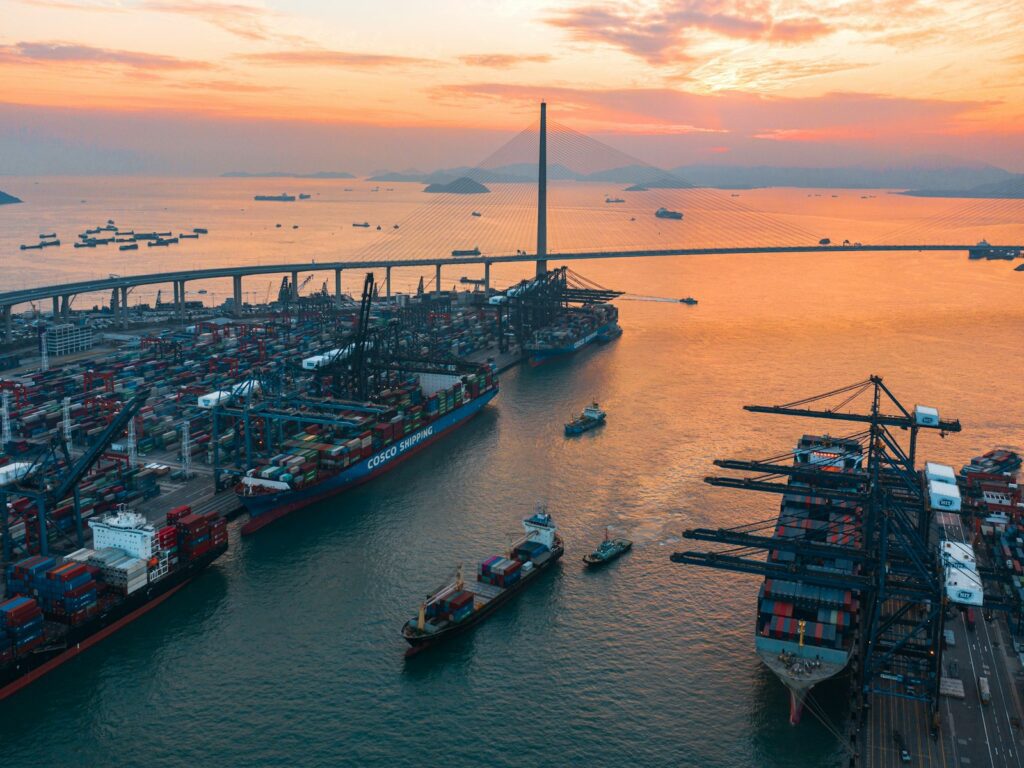
Hong Kong is small. Its logistics reach is not.
A city with almost no manufacturing of its own still runs the world’s busiest cargo airport. Hong Kong International Airport handled 5.07 million tonnes of cargo in 2025, according to Airports Council International data released by the Airport Authority, and took the top spot for the 15th time since 2010. Across the harbour, the Kwai Tsing container terminals keep moving millions of boxes a year, even as Shenzhen’s ports grow next door.
That contrast tells you a lot. The port is under pressure. Air cargo is booming. E-commerce has rewired the warehouse. And the ownership map has changed fast, with Kerry Logistics now trading as KLN under SF Holding, OOCL inside the COSCO family and CK Hutchison still in talks to sell most of its overseas ports.
So the old lists need a rethink. Shippers today need to know who actually runs the terminals, who owns the freighters, who controls the last mile and who has quietly changed hands.
This guide looks at the top logistics companies in Hong Kong for 2026, from terminal operators and air cargo handlers to 3PLs, express integrators and digital delivery platforms, with each entry checked against recent filings and company announcements.
Why Businesses Are Investing in Logistics in Hong Kong
Hong Kong’s case rests on a few hard advantages that competing hubs find difficult to copy.
Unmatched air cargo capacity
The airport’s three-runway system was commissioned on 28 November 2024, adding runway capacity just as demand for e-commerce and high-tech freight rose.
A gateway to the Greater Bay Area
Hong Kong sits at the mouth of the Pearl River Delta, a short truck or barge ride from the factories of Guangdong. Many logistics providers in Hong Kong run cross-border trucking, bonded storage and sea-air transfers that link mainland production with global markets.
Free-port rules and simple customs
As a free port that charges no customs tariffs, Hong Kong keeps paperwork light for re-exports and transhipment. That suits regional consolidation.
Deep capital and legal infrastructure
Several of the region’s largest carriers and terminal groups are listed or headquartered here. The city’s finance and legal base, which also drew the AIIB’s Hong Kong office agreement, gives logistics firms easy access to funding, insurance and contract enforcement.
Top 10 Logistics Companies in Hong Kong at a Glance
| Rank | Company | Primary Strength | Best For | HQ / Founded |
|---|---|---|---|---|
| 1 | KLN Logistics Group | Integrated logistics and freight forwarding | Multinationals needing end-to-end supply chains | Hong Kong / 1981 (first warehouse) |
| 2 | Hongkong International Terminals (HIT) | Container terminal operations | Shipping lines and high-volume ocean cargo | Hong Kong / 1969 |
| 3 | Cathay Cargo | Air freight capacity from Hong Kong | Forwarders and shippers of premium air cargo | Hong Kong / 1946 (cargo service) |
| 4 | Hactl | Independent air cargo terminal handling | Airlines and forwarders at HKIA | Hong Kong / 1976 |
| 5 | Modern Terminals | Container terminals in Hong Kong and Shenzhen | Carriers serving the Pearl River Delta | Hong Kong / 1969 |
| 6 | OOCL | Global container shipping | Exporters on transpacific and Asia-Europe lanes | Hong Kong / 1947 (as Orient Overseas Line) |
| 7 | DHL Express (Central Asia Hub) | International express | Urgent documents, samples and parcels | Bonn, Germany / HK hub opened 2004 |
| 8 | Lalamove | On-demand van and truck delivery | SMEs and same-day local delivery | Hong Kong / 2013 |
| 9 | Cainiao (Hong Kong eHub) | Cross-border e-commerce logistics | Online sellers shipping out of Asia | Hangzhou, China / HK eHub at HKIA |
| 10 | Janco Holdings | Specialist freight forwarding and warehousing | Mid-sized shippers on South Asia lanes | Hong Kong / 1990 |
Top 10 Logistics Companies in Hong Kong (2026)
Here’s who leads, ranked on scale, Hong Kong footprint and verified recent performance.
1. KLN Logistics Group
Formerly Kerry Logistics Network, KLN rebranded in 2025 and remains listed in Hong Kong under stock code 636. Its roots go back to 1981, when its first Hong Kong warehouse opened. SF Holding took a 51.8% stake in 2021, and KLN now operates in 58 countries and territories with about 18,600 employees and roughly 58 million square feet of land and facilities, according to its 2025 sustainability report.
KLN’s strength is breadth. It combines integrated logistics, international freight forwarding and project cargo under one roof. In 2025, revenue came in at HK$56.3 billion, down 3%, while core net profit rose 3% to HK$1.40 billion. CEO Vic Cheung has flagged a “KLN 2.0” strategy aimed at doubling scale. The Ezhou airport ground-handling venture with SF Holding saw volumes jump 75%. You can explore its services on KLN’s official site.
Key Solutions:
- ✔ Integrated logistics and contract warehousing
- ✔ International air and ocean freight forwarding
- ✔ Project logistics for energy and infrastructure
- ✔ Cross-border trucking across Asia
Best for: Multinationals that want one partner for warehousing, freight and regional distribution.
2. Hongkong International Terminals (HIT)
Founded in 1969, HIT calls itself Hong Kong’s largest container terminal operator. It runs Terminals 4, 6, 7 and 9 North at Kwai Tsing, with 12 berths across 111 hectares. HIT is wholly owned by Hutchison Port Holdings Trust, whose manager is a CK Hutchison subsidiary.
HIT’s Hong Kong portfolio, which includes the COSCO-HIT and Asia Container Terminals joint ventures, handled about 6.64 million TEU in 2025, roughly 6% lower year on year. Since 2019, HIT has worked with other operators in the Hong Kong Seaport Alliance, which pools 23 berths at Kwai Tsing to improve berth planning. One point worth clearing up: CK Hutchison’s proposed sale of 43 overseas ports excludes its Hong Kong and mainland terminals, so HIT is not part of that deal.
Key Solutions:
- ✔ Deep-water container handling for mega-ships
- ✔ Transhipment and gateway cargo
- ✔ Joint berth planning through the Seaport Alliance
Best for: Shipping lines and large importers needing reliable deep-sea terminal capacity.
3. Cathay Cargo
Cathay’s cargo business dates back to 1946, and the division was renamed Cathay Cargo in 2023. Based at Hong Kong International Airport, it carried 1.677 million tonnes in 2025, up 9.5% year on year, according to Cathay Group’s annual results. Its subsidiary Cathay Pacific Services runs the Cathay Cargo Terminal, which has capacity of 2.6 million tonnes a year.
The airline operated more than 100 weekly return freighter flights to over 40 destinations in 2025, and used belly space on passenger flights to more than 100 destinations. Growth came from e-commerce, AI-related electronics and specialised cargo such as pharmaceuticals, perishables and dangerous goods. Digital tools like Click & Ship booking and Ultra Track tracking help forwarders manage shipments online.
Key Solutions:
- ✔ Freighter and belly capacity from Hong Kong
- ✔ Cathay Pharma and Cathay Priority products
- ✔ Click & Ship online booking
- ✔ Ultra Track shipment tracking
Best for: Forwarders moving high-value, temperature-sensitive or urgent air freight.
4. Hactl (Hong Kong Air Cargo Terminals)
Hactl began operations at Kai Tak in 1976 and moved into SuperTerminal 1 at the new airport in 1998. The Airport Authority lists its terminal capacity at 2.6 million tonnes a year, and the company describes itself as the largest independent air cargo terminal operator at the airport.
In June 2026, Hactl secured a 15-year franchise extension that starts in July 2028 and runs to 2043, alongside a plan to invest at least HK$1 billion in infrastructure, technology and ESG upgrades. Frosti Lau, a Cathay Pacific veteran with over 25 years in aviation and air cargo, took over as chief executive on 8 June 2026. The terminal runs dedicated centres for perishables, livestock, horses and valuables, plus an express centre.
Key Solutions:
- ✔ Ramp, terminal and cargo handling for airlines
- ✔ Perishable and livestock centres
- ✔ Valuable and express cargo handling
Best for: Airlines and forwarders that want a neutral, high-capacity handler at HKIA.
5. Modern Terminals
Modern Terminals was founded in 1969 and opened Hong Kong’s first purpose-built container terminal in 1972. Wharf (Holdings) owns 67.6%. The company operates Container Terminals 1, 2, 5 and 9 at Kwai Tsing, and Wharf puts its total handling capacity at around seven million TEU a year.
What sets it apart is the Shenzhen side of the business. Modern Terminals operates DaChan Bay Terminals and holds stakes in Shekou Container Terminals and Chiwan Container Terminal. That gives carriers options on both sides of the border, which is useful as cargo shifts between Hong Kong and Shenzhen. It’s also a founding member of the Hong Kong Seaport Alliance formed in 2019. For shippers, that two-sided footprint offers a fallback when one gateway gets congested.
Key Solutions:
- ✔ Container terminal handling at Kwai Tsing
- ✔ Shenzhen terminal operations and stakes
- ✔ Shared berth capacity through the Seaport Alliance
Best for: Carriers and cargo owners routing volumes through both Hong Kong and western Shenzhen.
6. OOCL (Orient Overseas Container Line)
OOCL started life in 1947 as Orient Overseas Line, founded by C.Y. Tung, and took its current name after moving into container shipping in 1969. It remains headquartered in Hong Kong, but COSCO Shipping completed its takeover of parent Orient Overseas (International) in 2018. OOCL is part of the OCEAN Alliance with COSCO Shipping Lines, Evergreen and CMA CGM.
In 2025, OOIL reported revenue of US$9.72 billion and profit of US$1.52 billion, both down on 2024 as freight rates eased. Volumes still grew, with total liftings up 3.7%. The fleet keeps modernising too: nine 16,828 TEU ships arrived in 2025, and 24,000 TEU dual-fuel vessels are due from 2026. OOCL was an early adopter of integrated shipping IT through its IRIS system.
Key Solutions:
- ✔ Transpacific, Asia-Europe and intra-Asia liner services
- ✔ OCEAN Alliance network coverage
- ✔ Reefer and specialised container services
Best for: Exporters who want a Hong Kong-headquartered carrier with a global network.
7. DHL Express (Central Asia Hub)
DHL is headquartered in Germany, but its Central Asia Hub at Hong Kong International Airport is one of only three global DHL Express hubs, alongside Leipzig and Cincinnati. The hub opened in 2004 and was the airport’s first dedicated express cargo terminal, making DHL one of the most visible logistics providers in Hong Kong.
A US$409 million expansion completed in 2023 grew the facility by 50% to 533,000 square feet and lifted peak capacity by nearly 70%, to 125,000 pieces an hour. Lee Kwong Ming became general manager of the hub on 1 February 2026. For businesses shipping samples, spare parts or e-commerce parcels out of Hong Kong, DHL’s own aircraft network and in-house customs brokerage help keep transit times short. It’s the strongest fit when speed matters more than unit cost.
Key Solutions:
- ✔ Time-definite international express
- ✔ Customs clearance and brokerage
- ✔ E-commerce parcel services
Best for: Companies that need door-to-door international delivery in one to three days.
8. Lalamove
Lalamove was founded in Hong Kong in 2013 as an app for booking vans and motorbikes on demand. It now sits within parent group Lalatech, which runs Huolala in mainland China. By May 2026, Lalamove said it operated in 17 markets across Asia, the Americas and EMEA, after launching in Berlin.
The scale is real. Lalatech’s group-wide fulfilled orders passed 1.03 billion in 2025, with gross transaction value of US$13.32 billion, according to its Hong Kong listing filings reported by The Bamboo Works. The group filed an updated Hong Kong IPO application on 30 April 2026. For SMEs, the appeal is simple: instant or scheduled bookings, up to 20 drop-offs per order and live GPS tracking. Drivers set their own schedules, which keeps capacity flexible at busy times.
Key Solutions:
- ✔ On-demand van, lorry and motorbike delivery
- ✔ Multi-stop routing
- ✔ Scheduled business deliveries
Best for: SMEs and retailers that need fast, flexible local delivery without a fleet.
9. Cainiao (Hong Kong eHub)
Cainiao, Alibaba’s logistics arm, is based in Hangzhou but has made Hong Kong a core cross-border node. Its Hong Kong eHub sits in the airport’s South Cargo Precinct, about five minutes from the runway. Separately, the Cainiao Smart Gateway logistics centre at the airport, developed by a Cainiao-led joint venture, began operating in September 2023 and offers around 380,000 square metres of floor space.
The eHub completed end-to-end RFID deployment in June 2025, which Cainiao says made it the first fully RFID-enabled freight centre in Hong Kong. In July 2025 it passed TAPA’s FSR audit at A level, the highest security tier. A four-hour flight radius supports 72-hour delivery promises, and the hub syncs with Cainiao’s Liège eHub in Europe. It shows how e-commerce is reshaping Hong Kong logistics companies.
Key Solutions:
- ✔ Cross-border e-commerce consolidation
- ✔ RFID-tracked air cargo handling
- ✔ Asia-Europe eHub connectivity
Best for: Online sellers and platforms shipping high volumes of parcels out of Asia.
10. Janco Holdings
Janco was established in Hong Kong in 1990 and is listed on the city’s GEM board (stock code 8035). Headquartered in Tsuen Wan, it’s a much smaller player than the names above, which is exactly why it’s here: it represents the specialist forwarders that serve Hong Kong’s mid-market shippers.
Janco’s 2025 revenue was HK$211.4 million, split across air freight, ocean freight, logistics and warehousing, and a growing e-commerce fulfilment line. Its niche is South Asia, with services to Bangladesh, India and Sri Lanka, plus the Mekong region and cross-border Greater Bay Area links. The company did report a wider loss in 2025, so buyers should weigh financial strength alongside service fit. Among freight forwarders in Hong Kong, it’s a useful contrast to the big integrators.
Key Solutions:
- ✔ Air and ocean freight forwarding
- ✔ Warehousing and logistics
- ✔ E-commerce fulfilment
Best for: Mid-sized shippers, particularly garment and consumer goods firms on South Asia routes.
How to Choose the Right Logistics Partner in Hong Kong
Match the provider to the job
A terminal operator, an airline and a 3PL do very different things. Most shippers contract a forwarder or 3PL, which books the carrier and terminal.
Check ownership and stability
Ownership has shifted a lot. Check filings for who controls the company today and whether a pending sale or listing could change priorities.
Look at the cross-border network
Many Hong Kong logistics companies earn their keep on the Shenzhen and Guangdong side. Ask about bonded facilities, trucking licences and sea-air options across the border.
Ask for sector proof
Pharma, electronics and perishables need specific handling. Ask for certifications such as TAPA ratings or GDP compliance, plus case studies.
Test the technology
Real-time tracking, online booking and ERP integration can save hours every week. Ask for a demo first.
Frequently Asked Questions
Is Kerry Logistics still a Hong Kong company?
Yes. It now trades as KLN Logistics Group and is still listed in Hong Kong, but SF Holding has held a majority stake since 2021.
Does CK Hutchison’s port sale affect Hong Kong terminals?
No. The proposed sale covers 43 ports in 23 countries and excludes Hong Kong and mainland China. Talks were still ongoing in 2026, with Chinese investors reported to be joining.
What happened to GOGOX?
GOGOX, once a Lalamove rival, sold its mainland business and shrank sharply, so it’s not on this list.
How does Hong Kong compare with Singapore and Japan?
Each market has different strengths. See our guides to logistics companies in Singapore and top logistics companies in Japan for side-by-side context.
Conclusion
The logistics companies in Hong Kong on this list cover every link in the chain, from Kwai Tsing berths and airport terminals to freighters, vans and e-commerce hubs. The port is under pressure, but air cargo, cross-border e-commerce and Greater Bay Area trade are keeping the city central.
Pick a partner on fit, not fame. Know who owns them, what they specialise in and how they link to the mainland.