Top 10 Real Estate Developers in Hong Kong (2026)
Discover the top real estate developers in Hong Kong for 2026, from SHKP and CK Asset to Swire and Hongkong Land, with profits, land banks and key risks.

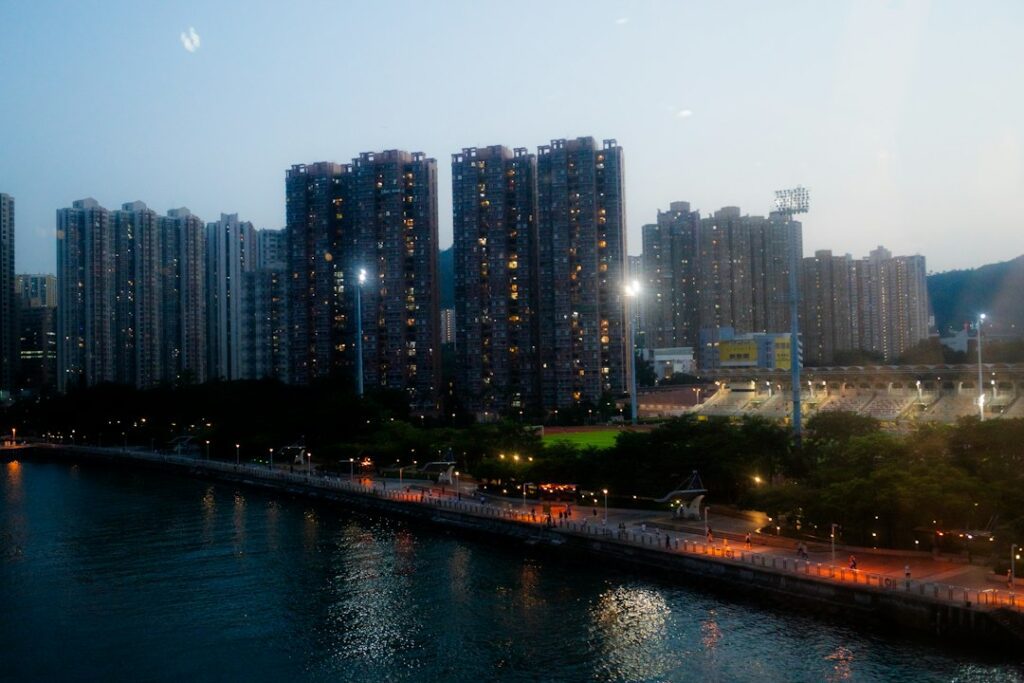
For three years, Hong Kong property was the trade nobody wanted. Prices slid, buyers waited, and even the biggest names booked painful writedowns.
Then the numbers turned.
The Rating and Valuation Department’s private home price index rose 3.25% in 2025, its first annual gain since 2021. By the end of September 2026, prices were up another 7.1% for the year, and rents had hit fresh records. Policy helped. The government scrapped all extra stamp duties on homes in February 2024, then extended the flat HK$100 stamp duty to properties worth up to HK$4 million from 26 February 2025.
The recovery hasn’t lifted every boat equally, though. Some developers came through the downturn with low debt, deep land banks and rental portfolios that kept paying. JLL expected just three firms, Sun Hung Kai Properties, CK Asset and Henderson Land, to deliver about 60% of new homes in 2025 and 2026, up from 40% in the two years before.
This guide looks at the top real estate developers in Hong Kong for 2026, from the homebuilders that dominate new supply to the landlords behind the city’s best-known offices and malls.
Why Businesses and Investors Are Looking at Hong Kong Real Estate
Several forces are pulling capital and occupiers back.
A Stronger Economy
In November 2026 the government raised its full-year growth forecast to 4.8%, up from 3.5% to 4.5% in August, largely on demand for AI-related electronics. Business World Asia covered the details in its report on the Hong Kong GDP forecast being raised on AI-led exports.
Friendlier Rules for Buyers
With extra stamp duties gone and lower duty on homes up to HK$4 million, buying costs less. Smaller flats have benefited most, which suits developers with large pipelines of compact units.
Rents at Record Levels
Official data showed residential rents reaching a new high in September 2026, up 6.2% on a year earlier. That improves yields for landlords.
Deep Capital Markets
The big developers are listed, widely covered by analysts and funded by a large banking system. If you’re weighing financing partners, our guide to the top banks in Hong Kong shows who lends to the sector.
Top 10 Hong Kong Real Estate Companies at a Glance
| Rank | Company | Primary Strength | Best For | HQ / Founded |
|---|---|---|---|---|
| 1 | Sun Hung Kai Properties | Scale across homes, offices and malls | Buyers and tenants | Wan Chai / 1963 |
| 2 | CK Asset Holdings | Diversified income | Long-term investors | Central / 1950 (as Cheung Kong) |
| 3 | Henderson Land | New Territories land bank | Northern Metropolis exposure | Central / 1976 |
| 4 | Swire Properties | Mixed-use districts | Corporate tenants | Hong Kong / 1972 |
| 5 | Hongkong Land | Prime Central portfolio | Financial firms, luxury brands | Central / 1889 |
| 6 | Sino Land | Steady homebuilding | Mid-market buyers | Tsim Sha Tsui / 1971 (Sino Group) |
| 7 | Wharf REIC | Destination retail | Retail brands | Hong Kong / 2017 |
| 8 | Hang Lung Properties | Mainland luxury malls | Luxury retailers | Central / 1960 |
| 9 | Kerry Properties | Premium homes, mainland mixed-use | Premium buyers | Quarry Bay / 1978 |
| 10 | New World Development | Culture-led retail | Turnaround investors | Central / 1970 |
Top 10 Real Estate Developers in Hong Kong (2026)
Here’s how the largest property companies in Hong Kong compare on scale, financial strength and portfolio quality.
1. Sun Hung Kai Properties
Sun Hung Kai Properties began in 1963 as Sun Hung Kai Enterprises, founded by Kwok Tak-seng, Fung King-hey and Lee Shau Kee, and listed in 1972. Based at Sun Hung Kai Centre in Wan Chai, it’s the largest local developer by market value. It owns the International Commerce Centre, the city’s tallest building, and was part of the consortium behind the International Finance Centre.
For the year to June 2026, underlying profit rose about 4.6% to HK$22.85 billion, with gross rental income near HK$25 billion. Its Hong Kong land bank is about 56.4 million sq ft, and Euromoney named it Hong Kong’s best real estate developer in 2025.
Key Solutions:
- ✔ Large residential launches, including the Cullinan projects at Kai Tak
- ✔ Grade A offices such as ICC and the International Gateway Centre
- ✔ Malls including The ANGLE in Kowloon East
Best for: Buyers and tenants who want the most established name in the market.
2. CK Asset Holdings
CK Asset traces its roots to Cheung Kong, founded by Li Ka-shing in 1950, and took its current form in a 2015 reorganisation. Based at Cheung Kong Center in Central and chaired by Victor Li Tzar-kuoi, it builds homes in Hong Kong and the mainland and also owns aircraft leasing and the UK pub group Greene King.
In 2025, revenue rose 27.2% to HK$57.9 billion and property sales roughly doubled to HK$20.4 billion. Underlying profit edged up 2.3% to HK$11.96 billion, though an HK$11.1 billion fair value loss cut reported profit. It holds about 65 million sq ft of land, roughly 6 million in Hong Kong, and says it will bid for sites when returns make sense.
Key Solutions:
- ✔ Residential development in Hong Kong and the mainland
- ✔ Investment properties and hotels
- ✔ Non-property income from aircraft leasing and pubs
Best for: Investors who value financial discipline and income beyond property.
3. Henderson Land Development
Lee Shau Kee founded Henderson Land in 1976, and it listed in 1981. Headquartered in Two IFC and led by chairmen Peter Lee Ka-kit and Martin Lee Ka-shing, it owns The Henderson, a Zaha Hadid Architects tower shaped like a Bauhinia bud, and is building Central Yards on the New Central Harbourfront.
Its biggest edge is land: about 40.5 million sq ft in the New Territories, the largest such holding among the city’s developers, which suits the Northern Metropolis plan. In 2025, Hong Kong contracted sales jumped 71% to HK$19.27 billion and underlying profit reached HK$6.06 billion. It also cut its final dividend by 41.5%, citing prudent financial management. The Henderson was 95% leased.
Key Solutions:
- ✔ Residential projects across all three regions of Hong Kong
- ✔ Premium Central offices, including The Henderson and IFC
- ✔ Long-term land for new town development
Best for: Buyers and investors seeking Northern Metropolis exposure.
4. Swire Properties
Swire Properties was established in 1972 and sits within the Swire Group. Rather than scatter towers across the city, it builds whole districts: Pacific Place in Admiralty, Taikoo Place in Quarry Bay, Cityplaza and Citygate. Its completed portfolio covers about 16.3 million sq ft in Hong Kong and 14.4 million sq ft on the mainland.
In 2025, underlying profit rose 27% to HK$8.62 billion, helped by non-core disposals, while recurring profit slipped to HK$6.26 billion as office rents softened. Gearing fell to 14.6%, and about 67% of its HK$100 billion investment plan is committed. Its pipeline includes Taikoo Place Beijing and Taikoo Li Xi’an on the mainland, plus new Upper House hotels planned for Shenzhen, Xi’an and Tokyo.
Key Solutions:
- ✔ Grade A offices at Taikoo Place and Pacific Place
- ✔ Taikoo Li and Taikoo Hui retail on the mainland
- ✔ Luxury homes and Upper House hotels
Best for: Corporate tenants who want a low-debt, long-term landlord.
5. Hongkong Land
Founded in 1889 by Sir Paul Chater and James Johnstone Keswick, Hongkong Land is the oldest name here. Part of the Jardine Matheson group, it’s described as the largest landlord in Central, with Exchange Square, The Landmark, Chater House, Prince’s Building and Jardine House.
The company is changing shape. Since late 2024 it has been exiting build-to-sell housing to focus on managing real estate capital, and by February 2026 it had raised US$3.6 billion of a US$4 billion recycling target. Underlying profit fell 8% to US$458 million in 2025, and Central office rents dropped 7%, but net debt fell 30%. Assets under management reached US$50 billion, helped by deals such as the sale of floors at One Exchange Square.
Key Solutions:
- ✔ Prime office space in Central
- ✔ LANDMARK luxury retail
- ✔ Real estate funds, including a Singapore office fund
Best for: Financial institutions and luxury brands that want a Central address.
6. Sino Land
Sino Land is the flagship listed company of Sino Group, founded by Ng Teng Fong in 1971. It listed in 1981, is chaired by Daryl Ng Win Kong and is based at Tsim Sha Tsui Centre. The group builds homes and owns shopping centres, offices and hotels.
For the year to June 2026, revenue rose 13.3% to HK$9.27 billion and net profit grew 14.2% to HK$4.59 billion, though underlying profit eased to HK$4.79 billion. It sold homes at Grand Mayfair III, ONE PARK PLACE and the La Mirabelle projects, holds about 13.6 million sq ft of investment properties and hotels, and after year-end it was awarded the first Northern Metropolis pilot area at Hung Shui Kiu/Ha Tsuen.
Key Solutions:
- ✔ Family and mid-market housing
- ✔ Shopping centre and office leasing
- ✔ Hotels under the Sino Hotels brand
Best for: Homebuyers who want a careful developer with a steady sales record.
7. Wharf Real Estate Investment Company
Wharf REIC was spun off from The Wharf (Holdings) in 2017 and is controlled by Wheelock. It’s a pure landlord, owning Harbour City in Tsim Sha Tsui and Times Square in Causeway Bay, plus Crawford House and Wheelock House, and Wheelock Place and Scotts Square in Singapore.
Harbour City alone was valued at HK$145.3 billion, excluding its three hotels, in the 2026 interim report, with retail occupancy at 92%. In 2025, underlying net profit rose to HK$6.46 billion and the dividend went up, but a HK$10.53 billion revaluation deficit pushed the group to a reported loss, a clear sign of how far valuations have fallen even while rent keeps coming in.
Key Solutions:
- ✔ Destination retail at Harbour City and Times Square
- ✔ Office leasing in Tsim Sha Tsui and Central
- ✔ Hotels within Harbour City
Best for: Retail brands that need high footfall and tourist traffic.
8. Hang Lung Properties
Hang Lung was founded in 1960 and is based at the Standard Chartered Bank Building in Central, with Adriel Chan as chair and Weber Lo as chief executive. It moved into mainland China early, joining the Grand Gateway 66 project in Shanghai in 1992, with Plaza 66 opening in 2001. Its Hong Kong assets include Kornhill Plaza and Grand Centre in Tsim Sha Tsui.
Its strength today is mainland luxury retail, including Westlake 66 in Hangzhou, Center 66 in Wuxi and Forum 66 in Shenyang. In 2025, leasing revenue held almost flat at HK$9.39 billion, underlying net profit rose 3% to HK$3.2 billion, and retail occupancy stood at 96% on the mainland and 95% in Hong Kong.
Key Solutions:
- ✔ Luxury malls in major mainland cities
- ✔ Offices within its “66” complexes
- ✔ Hong Kong retail and office leasing
Best for: Luxury brands seeking flagship space in mainland China.
9. Kerry Properties
Kerry Properties has invested in Hong Kong since 1978 and listed in 1996. Linked to the Kuok family and led by chairman and chief executive Kuok Khoon Hua, it’s based at Kerry Centre in Quarry Bay, with mainland assets including Jing An Kerry Centre in Shanghai and Beijing Kerry Centre.
Contracted sales jumped 175% to HK$34.7 billion in 2025, led by Jinling Residences in Shanghai, and in February 2026 it won a Shau Kei Wan site expected to yield about 300 homes. It also plans to add 7.6 million sq ft of mainland investment property, focused on Shanghai, Wuhan and Shenyang. Underlying profit fell 22% to HK$2 billion, and management has promised a prudent approach to new investment.
Key Solutions:
- ✔ Luxury residential projects in Hong Kong
- ✔ Kerry Centre mixed-use schemes on the mainland
- ✔ Office and commercial leasing
Best for: Premium homebuyers and mainland mixed-use partners.
10. New World Development
Cheng Yu-tung founded New World Development in 1970, and it listed in 1972. Based in Central and led by chairman Henry Cheng and chief executive Echo Huang, it created the K11 art-and-retail brand and owns Victoria Dockside on the Tsim Sha Tsui waterfront.
NWD earns its place on assets, but the risks are real. In June 2025 it refinanced about HK$88.2 billion of offshore loans, with the earliest tranche due in June 2028. For the year to June 2026 it posted a HK$28.15 billion loss, mainly from impairments tied to ending the 11 SKIES airport project. Recurring profit returned for the first time in three years at about HK$2.2 billion, and total debt eased to around HK$143.3 billion.
Key Solutions:
- ✔ K11 retail and cultural destinations
- ✔ Harbourfront mixed-use property at Victoria Dockside
- ✔ Residential sales in Hong Kong and the mainland
Best for: Lifestyle retailers and investors comfortable with a turnaround story.
How to Choose the Right Developer or Landlord Partner
Choosing among property developers in Hong Kong takes more than a famous name. These checks matter just as much.
Check the Balance Sheet
Gearing, debt maturities and cash tell you whether a developer can finish projects and honour commitments. Low-debt firms have had far more room to buy land in this cycle.
Look at the Delivery Record
Ask how many projects a developer has completed on time and how past launches have held value.
Match the Partner to Your Use
Some firms are homebuilders first; others, like Wharf REIC and Hongkong Land, are mainly landlords. A retailer, an office tenant and a flat buyer each need a different partner.
Know Where the Income Comes From
Recurring rent cushions a developer when sales slow. Heavy mainland exposure can add risk from China’s property cycle, so check the split.
Study the Pipeline
Land in the Northern Metropolis, Kai Tak and West Kowloon will shape the next decade of supply.
FAQs
Are Hong Kong property prices rising in 2026?
Yes. Official data showed home prices up 7.1% in the first nine months of 2026, after a 3.25% rise in 2025.
What stamp duty do homebuyers pay now?
Extra stamp duties were removed in February 2024. Since 26 February 2025, properties worth up to HK$4 million pay a flat HK$100, while pricier homes pay standard ad valorem rates.
What’s the difference between a developer and a landlord?
Developers mainly build and sell homes; landlords hold offices, malls and hotels for rent. Most top Hong Kong developers do both, but Wharf REIC is almost entirely a landlord, while Sino Land and Henderson sell far more homes.
How do Hong Kong developers compare with Gulf developers?
Hong Kong’s leaders are mostly older, family-controlled groups with large rental books, while many Gulf developers focus on new master-planned communities. For comparison, see our list of the top real estate developers in the UAE.
Conclusion
The top real estate developers in Hong Kong have come through one of the city’s hardest property cycles, and the gap between them has widened. SHKP, CK Asset and Henderson dominate new housing, while Swire, Hongkong Land, Wharf REIC and Hang Lung lean on prime rental assets.
With prices rising, rents at records and growth beating forecasts, the outlook for property developers in Hong Kong has improved. Still, balance sheets matter more than ever. Whether you’re buying, leasing or investing, choose a partner whose finances are as solid as its buildings.