Top 10 Renewable Energy Companies in UAE (2026)
Discover the top renewable energy companies in UAE for 2026, from Masdar and DEWA to rooftop solar and waste-to-energy firms, with verified latest data.

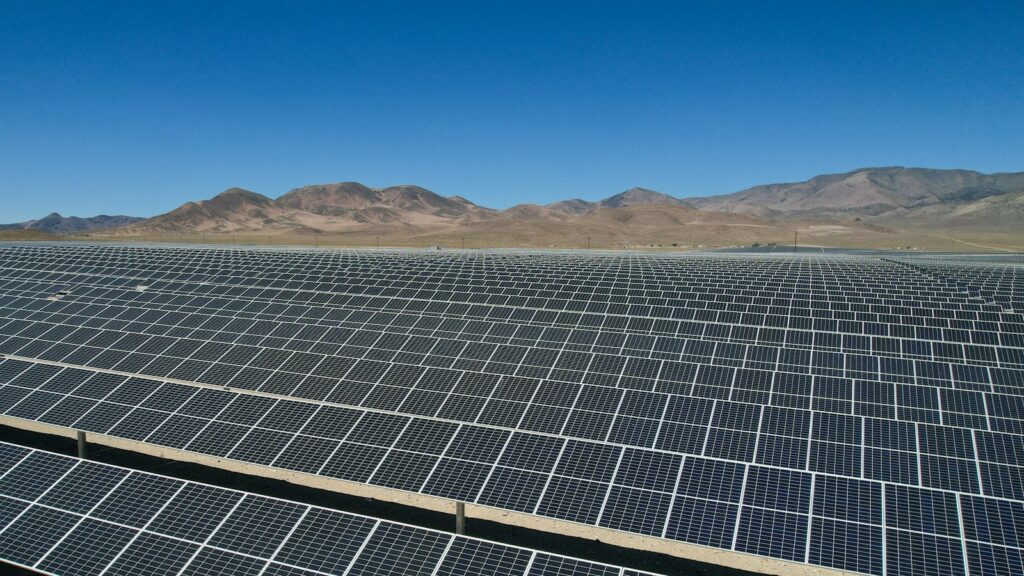
The UAE made its fortune from oil. Now it’s building a second one from sunlight.
Ten years ago, solar here was a showcase. Today it’s core infrastructure. According to the Emirates News Agency (WAM), the country’s installed renewable capacity has passed 7.7GW, and projects in development should take it above 23GW by 2031. Dubai’s solar park alone had 3,860MW of capacity at the start of 2026.
That’s the headline. The detail is more interesting.
Behind every gigawatt sits a chain of players. Utilities buy the power. Developers raise the money and build the plants. Specialists bolt panels onto warehouse roofs and sell the electricity back to the tenant. One firm turns household rubbish into megawatts. Some names appear in every headline; others rarely make the news but sign the contracts that cut a factory’s power bill.
Most online lists name fifty firms with no detail or quote stale figures. Here, capacity and ownership change every quarter.
This guide looks at the top renewable energy companies in UAE for 2026, from gigawatt-scale developers to rooftop and waste-to-energy specialists, using the latest official figures.
Why Businesses Are Investing in Renewable Energy in the UAE
Clean power in the Emirates has moved from a sustainability statement to a commercial decision.
Predictable energy costs
Solar leases and power purchase agreements (PPAs) let a business pay only for the electricity it uses, usually over 15 to 25 years. Steelmaker Emsteel signed a 31MW rooftop deal in 2025 with no upfront investment.
Clear government targets
Dubai’s Clean Energy Strategy 2050 aims for 100% clean power capacity by mid-century, and in September 2026 EWEC raised Abu Dhabi’s solar target to more than 35GW by 2035. Long-dated targets make projects easier to finance.
Emissions reporting pressure
Listed companies and suppliers to multinationals increasingly have to report Scope 2 emissions. On-site solar is one of the quickest ways to cut them.
Storage is extending solar past sunset
Masdar and EWEC are pairing 5.2GW of solar with 19GWh of batteries, and DEWA’s Hatta plant stores 1,500MWh in water. Clean power is starting to run around the clock.
Top 10 Renewable Energy Companies in UAE at a Glance
| Rank | Company | Primary Strength | Best For | HQ / Founded |
|---|---|---|---|---|
| 1 | Masdar | Gigawatt-scale solar, wind and storage | Utility-scale partnerships | Abu Dhabi / 2006 |
| 2 | DEWA | Mohammed bin Rashid Al Maktoum Solar Park | Dubai IPP bidders, rooftop users | Dubai / DFM-listed |
| 3 | EWEC | Abu Dhabi’s single power buyer | Abu Dhabi IPP developers | Abu Dhabi / part of ADQ |
| 4 | TAQA | Integrated utility, Masdar’s top shareholder | Grid-scale investors | Abu Dhabi / 2005 |
| 5 | Emerge | Distributed solar and storage | Industrial and commercial sites | UAE / 2021 |
| 6 | Yellow Door Energy | Solar leases and PPAs | Factories and district cooling | Dubai / c. 2015 |
| 7 | AMEA Power | Wind, solar and batteries abroad | Emerging-market co-investors | Dubai / 2016 |
| 8 | SirajPower (Positive Zero) | Zero-capex rooftop solar | Retail and real estate groups | Dubai / Positive Zero 2022 |
| 9 | BEEAH Group | Waste-to-energy | Municipal and circular projects | Sharjah / 2007 |
| 10 | Alcazar Energy Partners | Renewables fund management | Institutional investors | Dubai (DIFC) / AEP-II 2021 |
Top 10 Renewable Energy Companies in UAE (2026)
Ranked on scale, track record and recent delivery.
1. Masdar
Founded in 2006 and based in Abu Dhabi, Masdar is the country’s flagship clean energy developer. In January 2026, at its 20th anniversary, it reported a 65GW portfolio across more than 40 countries, up from 51GW a year earlier. TAQA (43%), Mubadala (33%) and ADNOC (24%) own its renewables business, and CEO Mohamed Jameel Al Ramahi is targeting 100GW by 2030.
At home, Masdar is behind many of the landmark projects. It co-developed the 2GW Al Dhafra plant, is building the 1,800MW sixth phase of Dubai’s solar park with DEWA, and is developing the 1.5GW Khazna plant with ENGIE. In July 2026 it closed US$6.1 billion of financing for its round-the-clock project with EWEC. In August 2026, however, it cancelled a planned 100MW green hydrogen electrolyser.
Key Solutions:
- ✔ Utility-scale solar PV and wind
- ✔ Solar-plus-battery round-the-clock power
- ✔ International acquisitions and joint ventures
Best for: Governments, utilities and investors that need a gigawatt-scale partner.
2. Dubai Electricity and Water Authority (DEWA)
DEWA is Dubai’s listed utility and the force behind the Mohammed bin Rashid Al Maktoum Solar Park, launched in 2012. The park had 3,860MW of operating capacity in January 2026 after adding 1,000MW in 2025, and DEWA plans more than 8,000MW there by 2030. It had 17,979MW of total installed capacity at the end of 2025.
The park runs on the independent power producer model, so private developers compete to finance and operate each phase. Of the 1,800MW sixth phase, 800MW was scheduled for Q4 2026, and the seventh phase is already in procurement. Clean sources generated 10.10TWh in 2025, or 16.23% of DEWA’s output. Its 250MW Hatta pumped-storage plant began exporting power to Dubai in August 2025.
Key Solutions:
- ✔ Utility-scale solar through IPP tenders
- ✔ Pumped-hydro storage at Hatta
- ✔ Shams Dubai rooftop net metering
Best for: Developers bidding for Dubai solar phases and property owners connecting rooftop systems.
3. Emirates Water and Electricity Company (EWEC)
EWEC, part of the ADQ holding group, is Abu Dhabi’s sole procurer and supplier of water and electricity. It plans demand, signs long-term PPAs and despatches the system, which makes it the buyer behind the emirate’s giant solar plants: Noor Abu Dhabi (1.17GW, operating since 2019), Al Dhafra (2GW, inaugurated in 2023), Al Ajban (1.5GW), Khazna (1.5GW, due in 2028) and Zarraf (1.5GW).
Its ambitions keep growing. In September 2026 EWEC raised its solar target to more than 35GW by 2035, up from 18GW, alongside up to 15GW of battery storage. In May 2026 it signed a collaboration framework agreement with Masdar to speed up delivery. It’s also tendering the 140MW Al Sila wind project, which would lift Abu Dhabi’s wind capacity to about 240MW.
Key Solutions:
- ✔ Tenders for solar, wind and storage IPPs
- ✔ Long-term power purchase agreements
- ✔ System planning and grid despatch
Best for: International developers and lenders targeting Abu Dhabi’s utility-scale pipeline.
4. TAQA (Abu Dhabi National Energy Company)
Founded in 2005 and headquartered in Abu Dhabi, TAQA is a listed utilities and energy group with assets in 25 countries and gross generation capacity of more than 70GW. It reported 2025 revenue of AED 54.8 billion and net income of AED 7.5 billion. Jasim Husain Thabet is Group CEO and Managing Director.
TAQA’s renewable weight comes mainly through Masdar, where it holds the largest share of the renewables business at 43%. It’s also a direct co-owner of Al Dhafra alongside Masdar, EDF and JinkoPower, and the partners completed a US$870.75 million green bond to refinance the plant. Because TAQA also runs transmission and distribution networks, it plays a central role in connecting new solar capacity to the grid. It has set a goal of 30% renewables in its generation capacity by 2030.
Key Solutions:
- ✔ Power and water generation
- ✔ Transmission and distribution networks
- ✔ Renewable investment through Masdar
Best for: Partners in grid-scale infrastructure and integrated utility projects.
5. Emerge
Emerge was set up in 2021 as a joint venture between Masdar and France’s EDF Group to bring solar and storage to commercial and industrial sites. It’s growing fast. Operating capacity rose from 10MW to 30MW during 2024, and contracts signed that year will add 147MW once built. By August 2025 it supplied more than 40 sites across the GCC.
The client list gives it credibility. Emerge inaugurated a 1.8MW plant for Coca-Cola Al Ahlia Beverages in Al Ain, signed a 13.25MWp project with Tawazun Industrial Park and paired 1.52MW of rooftop solar with 5MWh of batteries for Turbotem in Ras Al Khaimah. It’s also solarising ADNOC Distribution service stations, and in August 2025 it signed an agreement with Emirates Development Bank to explore financing for distributed solar.
Key Solutions:
- ✔ Rooftop, carport and ground-mounted solar
- ✔ Battery storage and hybrid systems
- ✔ Off-grid solar for remote sites
Best for: Industrial, education and hospitality operators wanting a well-backed solar partner.
6. Yellow Door Energy
Dubai-headquartered Yellow Door Energy marked its tenth anniversary in 2025, reporting 400MWp of solar assets in operation, construction or planning, including 155MWp operating. Its projects have generated more than 1 billion kWh across seven countries. Shareholders include Actis, the IFC, Mitsui & Co. and The Arab Energy Fund, and Jeremy Crane is Group CEO.
The company specialises in solar leases and PPAs: it finances, builds, owns and maintains systems while clients pay for the power. In the UAE, its biggest current job is a 31MW installation across 40 Emsteel roofs at the Industrial City of Abu Dhabi, due for commissioning in 2026. In November 2025 it launched four plants totalling 1.2MWp for district cooling provider Emicool. It’s now expanding into South Africa, where it reached financial close on the 49MWp Lion Thorn solar park.
Key Solutions:
- ✔ Solar leases with no upfront cost
- ✔ Power purchase agreements
- ✔ Solar plus battery storage
Best for: Manufacturers, malls and district cooling operators that want savings without capital spend.
7. AMEA Power
AMEA Power was founded in 2016 by its chairman, Hussain Al Nowais, and belongs to AlNowais Investments, a family group established in 1979. Headquartered in Dubai Marina, it reports more than 2.6GW of clean power in operation or under construction and a pipeline of more than 6GW across 20 countries.
AMEA’s projects sit outside the UAE, mainly in Africa and the Middle East, with operating or under-construction assets in Egypt, Jordan, Morocco, Tunisia, Togo, Djibouti, Burkina Faso and Côte d’Ivoire. In May 2026 it commissioned a 120MWp solar plant in South Africa that generates about 325GWh a year, and it’s developing the 500MW Amunet II wind farm in Egypt. A World Bank MIGA guarantee programme covers its subsidiaries in ten countries. It’s a clear example of UAE capital and expertise building clean power abroad.
Key Solutions:
- ✔ Utility-scale wind and solar PV
- ✔ Battery energy storage systems
- ✔ Green hydrogen and desalination projects
Best for: Emerging-market governments and co-investors seeking an experienced Gulf developer.
8. SirajPower (Positive Zero)
SirajPower is one of Dubai’s best-known distributed solar providers and now part of Positive Zero, a decarbonisation platform set up by climate investor Creek Capital in 2022. Positive Zero combined SirajPower with energy-efficiency firm Taka Solutions and battery business HYPR Energy, and in December 2023 BlackRock’s Diversified Infrastructure group agreed to invest up to US$400 million.
Positive Zero says it now runs 200MW of distributed solar across four countries. SirajPower’s model is simple: it finances, designs, builds and maintains rooftop systems, and clients pay for the electricity they use. Its customers include some of the UAE’s biggest property and family groups, such as Nakheel, with installations across nine retail and residential sites, plus AW Rostamani Group, Al Ghurair and Al Shirawi Group. That depth in retail, real estate and industry is its real edge.
Key Solutions:
- ✔ Zero-capex rooftop and carport solar
- ✔ Energy-efficiency retrofits
- ✔ Battery and distributed power
Best for: Retail, real estate and FMCG groups with large roof space across many sites.
9. BEEAH Group (Emirates Waste to Energy)
Founded in Sharjah in 2007, BEEAH Group has grown from a waste-management company into a holding group spanning environmental services, renewable energy, green mobility, education and technology. Its clearest renewable contribution is Emirates Waste to Energy, the joint venture that owns and operates the Sharjah Waste-to-Energy plant.
Inaugurated in 2022 as the Middle East’s first commercial-scale waste-to-energy plant, the facility generates 30MW from up to 300,000 tonnes of non-recyclable waste a year, enough for around 28,000 homes. Ownership changed recently: in July 2025 Masdar sold its stake to Abu Dhabi’s Tadweer Group, now BEEAH’s partner. The two plan an expansion to 60MW that would double processing capacity. It’s a rare UAE project that tackles landfill and power at once.
Key Solutions:
- ✔ Waste-to-energy power generation
- ✔ Landfill diversion and waste management
- ✔ Clean energy and green mobility ventures
Best for: Municipalities and developers exploring circular-economy power projects.
10. Alcazar Energy Partners
Alcazar Energy Partners is a renewables investor based in Dubai’s DIFC, managing sustainable infrastructure funds that back wind and solar in emerging markets. It says it has raised more than US$730 million across two funds. The second, AEP-II, reached a final close of US$490 million in 2024, with investors including the IFC, AIIB, Proparco and FMO.
Its pipeline grew sharply in 2026. In November it closed US$436 million of debt from lenders including the EBRD, EIB and DEG for the 500MW Niat and Rasgha wind farms in Egypt, due online by the end of 2028. It has also signed to acquire Egypt’s 580MW Gabal El Zeit wind farm and holds the 118MW Bijela wind project in Montenegro, with further wind assets in North Macedonia and an operating 45MW farm in Jordan. Co-founder and Managing Partner Daniel Calderon leads the team.
Key Solutions:
- ✔ Renewable energy private equity funds
- ✔ Wind and solar acquisition and development
- ✔ Finance structured with development banks
Best for: Institutional investors seeking a Gulf-based partner for emerging-market wind.
How to Choose the Right Renewable Energy Partner in the UAE
Match the track record to your scale
A firm that builds 2GW desert plants isn’t automatically right for a 2MW warehouse roof. Ask for operating projects similar in size and type to yours.
Compare financing models
You can buy a system, lease it or sign a PPA. Leases and PPAs protect capital but run for 15 to 25 years, so check exit, transfer and price-escalation clauses.
Check who stands behind the company
Shareholders such as development banks, sovereign funds or global utilities suggest the provider will still be around to maintain your system in year 20.
Confirm the rules in your emirate
Dubai runs rooftop connections through DEWA’s Shams Dubai, while Abu Dhabi and the Northern Emirates have their own processes. Make sure your installer is approved locally.
Insist on performance guarantees
Dust and heat cut solar output in the Gulf, so cleaning schedules and monitoring matter. Get a written performance guarantee, and pick a partner that can add batteries later.
Frequently Asked Questions
Which is the largest renewable energy company in the UAE?
By portfolio, it’s Masdar, which reported 65GW worldwide in January 2026, counting operating, under-construction, committed and advanced-pipeline projects.
Can a UAE business get solar with no upfront cost?
Yes. Solar companies in the UAE such as Yellow Door Energy, Emerge and SirajPower finance, build and maintain systems, and the client pays for the electricity under a long-term lease or PPA.
Does the UAE generate power from waste?
Yes. The Sharjah Waste-to-Energy plant, run by BEEAH and Tadweer Group, produces 30MW from non-recyclable waste, with an expansion to 60MW planned.
Is green hydrogen a near-term option in the UAE?
Not at commercial scale yet. Masdar cancelled a planned 100MW electrolyser in August 2026, although a 2.1MW pilot plant in Abu Dhabi is still running.
Conclusion
The UAE’s clean energy story is no longer about a few headline plants. It’s a full value chain, from utilities such as DEWA and EWEC that buy the power, to developers like Masdar and AMEA Power, to rooftop and waste-to-energy specialists working site by site. The renewable energy companies in UAE featured here cover every link. Sectors such as real estate development in the UAE and the country’s fast-growing AI companies will lean on them heavily as power demand rises.
For buyers, the right partner depends on scale, financing and contract length. For investors, the pipeline of clean energy companies in the UAE keeps getting deeper. For a regional comparison, see our list of renewable energy companies in India.