Petrovietnam Nghi Son Investment: US$5.16bn Five-Year Plan
Petrovietnam Nghi Son investment plan targets VND133 trillion over five years for crude storage, petrochemicals and port logistics in Thanh Hoa.

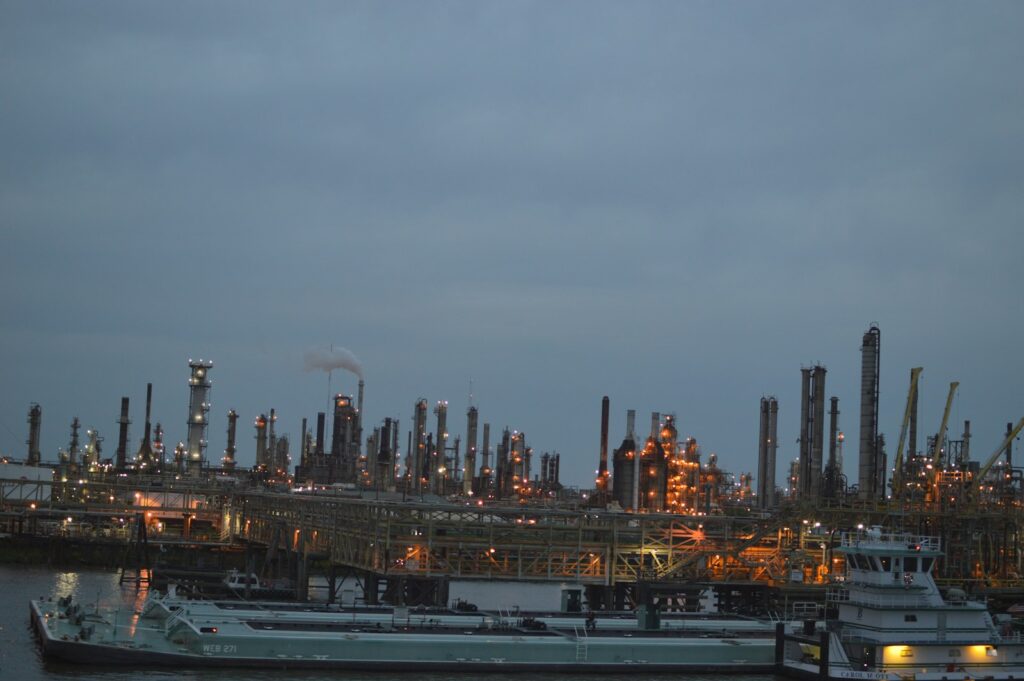
State-owned Petrovietnam plans to invest VND133 trillion (about US$5.16 billion) over the next five years in Nghi Son Economic Zone in central Vietnam’s Thanh Hoa province. The Petrovietnam Nghi Son investment would expand petrochemical facilities, crude oil storage and port logistics around the Nghi Son Refinery and Petrochemical Complex, The Investor reported. VnEconomy carried the same figures.
The project pipeline was reviewed at a recent meeting in Hanoi between Petrovietnam and Thanh Hoa provincial authorities. The aim is to speed up projects under a cooperation agreement the two sides signed in early February 2026. The VND133 trillion figure is a projected scale: not every project has been approved or has an investment decision yet, VnEconomy noted.
Petrovietnam Nghi Son investment: what is planned
The flagship project is a one-million-ton crude oil storage facility on 60 hectares in Hai Binh ward. It is designed to serve both a national crude oil reserve and commercial storage for the Nghi Son refinery, and has been identified as a national priority investment project.
The group is also looking at investments in seaports, inland ports, oil and gas services and logistics. The Nghi Son integrated port and petroleum services project is nearing completion of adjustments to its investment policy.
Downstream, the number of planned chemical projects has grown to 11. They include plants for sulfuric acid, ammonia solution, carbon black and hydrogen peroxide, as well as hydrogen recovery facilities. Provincial authorities also backed plans by Petrovietnam subsidiary PVOIL to expand its Nghi Son storage terminal, work with state fuel distributor Petrolimex and grow its network of retail fuel stations.
Delays the province wants cleared
Officials acknowledged delays on several fronts. The main hold-ups are finalising the scale and land needs of some projects, settling site clearance costs and selecting investors for the downstream chemical plants.
Thanh Hoa People’s Committee Chairman To Anh Dung urged Petrovietnam to quickly finish boundary surveys for the crude storage site and to seek special investment mechanisms from the central government. He also asked the group to negotiate shared crude-receiving infrastructure with the refinery’s operator, Nghi Son Refinery and Petrochemical (NSRP).
Dung further called on Petrovietnam to work with NSRP’s joint-venture shareholders to speed up investor selection for chemical projects that are ready to launch. In return, he pledged that the province would fast-track land clearance and administrative approvals.
Why it matters for Vietnam’s energy security
The Nghi Son refinery is a key asset for Vietnam’s fuel supply. From January to October 2026, it ran at an average 121% of capacity and supplied roughly 40% of domestic fuel demand, according to The Investor.
The storage plan builds on earlier government instructions. In April, a government meeting chaired by the prime minister ordered Petrovietnam to start building a crude oil storage facility at Nghi Son, Vietstock reported. The government said stockpiling would reduce supply risks for a country that depends heavily on international crude markets and faces rising fuel consumption. Refiners across the region are also watching margins closely, as PTT’s third-quarter results in Thailand showed.
Petrovietnam already has a large footprint in the province. It runs 12 units in Thanh Hoa, covering petrochemicals, technical services, construction, fuel trading, fertiliser, banking and insurance. In the first 10 months of 2026, those units employed nearly 2,500 people, generated VND251.3 trillion (about US$9.75 billion) in revenue and contributed VND22.48 trillion (about US$871.82 million) to the state budget.
For investors, the plan signals more state-led spending on energy infrastructure as the government pushes for double-digit growth. It also opens potential roles for other partners in the chemical projects, where investor selection is still under way, and for lenders such as those on our list of the top banks in Vietnam. Readers following the country’s power sector can also see our list of the top renewable energy companies in Vietnam.
What happens next
The immediate steps are administrative. Petrovietnam needs to complete boundary surveys for the storage site, secure any special mechanisms from the central government and agree shared infrastructure arrangements with NSRP.
The pace of land clearance in Thanh Hoa will largely decide how quickly the Petrovietnam Nghi Son investment moves from plan to construction. Investor selection for the 11 downstream chemical projects will be the next test of whether the zone can attract the partners it needs.