Tata Steel APL Apollo Deal: ₹15,510 Crore Stake Plus 26% Open Offer
Tata Steel APL Apollo deal: ₹15,510 crore for a 26.38% stake plus a 26% open offer could take the total to ₹32,266 crore and Tata Steel to 52.38%.

Tata Steel has agreed to buy a 26.38% stake in APL Apollo Tubes for ₹15,510.61 crore and will make an open offer for a further 26% worth up to ₹16,755.66 crore. If the open offer is fully accepted, the Tata Steel APL Apollo deal would cost up to ₹32,266 crore (about US$3.5 billion) in total and give Tata Steel about 52.38% of the company. The transactions were announced to the stock exchanges on 23 November 2026 and also include the sale of Tata Steel’s steel tubes and colour-coated businesses to APL Apollo.
Tata Steel will buy 7,38,60,062 shares, equal to 26.38% of APL Apollo’s expanded voting share capital, from promoter-group entity S Gupta Holding Private Limited for ₹2,100 a share. This stake purchase works out to ₹15,510.61 crore (about US$1.67 billion), according to the company’s stock exchange announcement.
How the Tata Steel APL Apollo deal is structured
Of this stake, 9.91% was acquired through an on-market block deal on 23 November. A further 11.90% will be transferred off-market at closing, and the balance of 4.57% on or before 31 March 2028. These latter two tranches depend on conditions that include anti-trust approvals.
Under SEBI’s takeover rules, Tata Steel will make an open offer for a further 26%, or 7,28,06,387 shares, at ₹2,301.40 per share, aggregating up to ₹16,755.66 crore (about US$1.8 billion). Kotak Mahindra Capital Company is the manager to the offer, and a detailed public statement is due by 1 December 2026. The ₹32,266 crore figure is the sum of the stake purchase and a fully accepted open offer. Tata Steel said it has no intention of delisting APL Apollo and has firm financing arrangements in place.
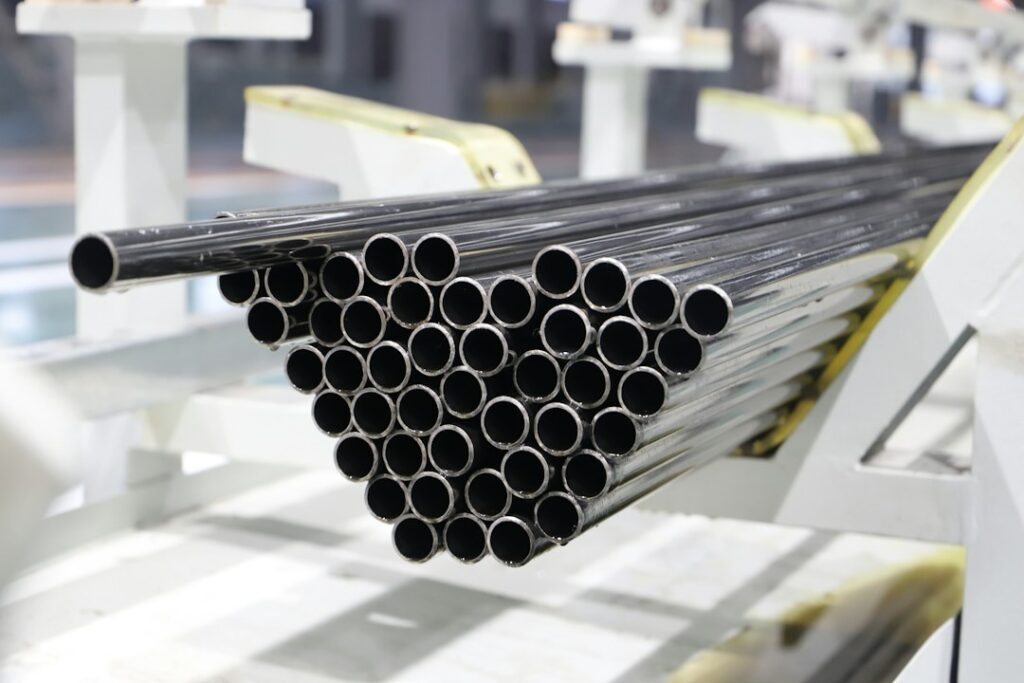
In return, under agreements dated 22 November, Tata Steel will sell to APL Apollo its steel tubes and pipes operations at Jamshedpur, Hosur and Sahibabad and its downstream facility at Khopoli, along with 100% of Tata Steel Colors Pvt Ltd. The combined consideration is ₹28,000 crore (about US$3 billion). These businesses have 1.7 million tonnes a year of steel tubes capacity and 800,000 tonnes a year of surface-coated coil capacity.
According to Business Standard, APL Apollo will initially fund the purchase through acquisition financing and later replace it with long-term capital. A third agreement sets up an exclusive contract manufacturing partnership with SG Tech Engineering, a promoter-associated company, for colour-coated products.
Why Tata Steel wants downstream scale
APL Apollo’s installed steel tubes capacity is 5 million tonnes per annum. With the Tata assets added, combined tubes and colour-coated capacity would be around 7.5 million tonnes per annum initially, ANI reported. This is targeted to grow to 15.5 million tonnes per annum by 2035, comprising around 9 million tonnes of tubes and 6.5 million tonnes of colour-coated products.
Tata Steel’s downstream integration would rise to about 53% from around 35%. The combined business is targeting EBITDA of around ₹10,000 crore, high returns on capital employed and a debt-free balance sheet.
The move would also help Tata Steel insulate itself from rising input costs. According to Business Standard, the company expects iron ore costs to rise after 2030, so owning more downstream assets close to customers is attractive. It sees this as a way to sustain the EBITDA margins of ₹14,000 to ₹15,000 per tonne it has averaged over the past decade.
T V Narendran, CEO and Managing Director of Tata Steel, spoke of “unlocking multiple synergies between the two companies”. Koushik Chatterjee, Executive Director and CFO, said the aim was to keep APL Apollo’s balance sheet strong and able to grow. For APL Apollo, led by Chairman and Managing Director Sanjay Gupta, the deal means handing control to a far larger partner.
Investors give a cold verdict
Shares of both companies fell sharply on Monday, 23 November. APL Apollo ended at ₹1,668.15, down 21.39% on the BSE, and Tata Steel was down 8.16% at ₹163.25, according to Business Standard.
The selling continued when trading resumed on Wednesday, 25 November, after the Guru Nanak Jayanti market holiday. APL Apollo fell close to 20% in early trade to a fresh 52-week low before paring some of its losses, while Tata Steel traded slightly higher, according to Business Today and India Infoline. Brokerages including Nuvama and Centrum Broking downgraded APL Apollo and cut their target prices, citing the debt the company would take on to buy the Tata Steel businesses.
The open offer covers only 26% of APL Apollo’s equity, well below the roughly 72% held by public shareholders, so not every minority investor will be able to sell at ₹2,301.40, the Free Press Journal noted. NDTV Profit reported that Tata Steel may tweak the deal structure to make it more attractive to minority shareholders. Neither company has confirmed this.
The transaction adds to a run of big-ticket Indian corporate deals, including the Fairfax IIFL Finance stake sale, and follows strong recent numbers from group company Tata Power, covered in our Tata Power Q2 results report. It also shows how steelmakers are looking to value-added products to protect margins.
What happens next
The Tata Steel APL Apollo deal needs clearance from the Competition Commission of India and any required overseas competition authorities, as well as exemptive relief from the US Securities and Exchange Commission. The offer may be withdrawn if the necessary statutory approvals are not received or if the share purchase agreement is rescinded.
Completion is targeted in the 2027 financial year. Expansion plans include adding 3 million tonnes of tubes capacity and 5 million tonnes of colour-coated capacity, mostly through SG Tech Engineering, with the first 1 million tonnes expected within 24 months. Full details of the transaction are in the Business Standard report.