Top 10 Real Estate Developers in Thailand (2026)
Compare the top real estate developers in Thailand for 2026, from AP and Sansiri to Central Pattana and MQDC, with strengths, projects and tips.

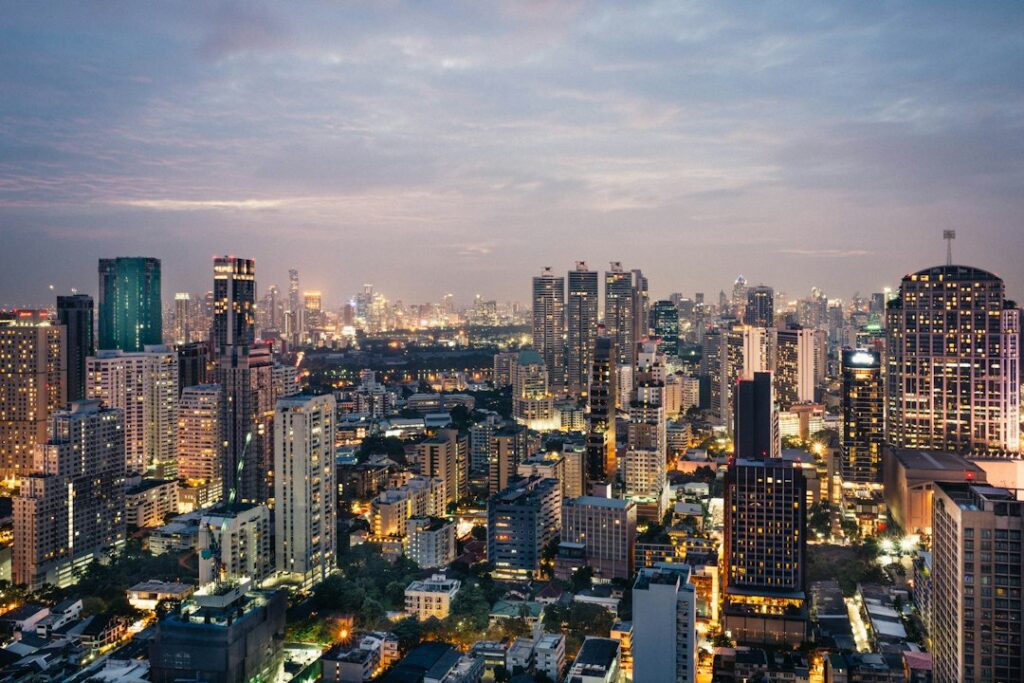
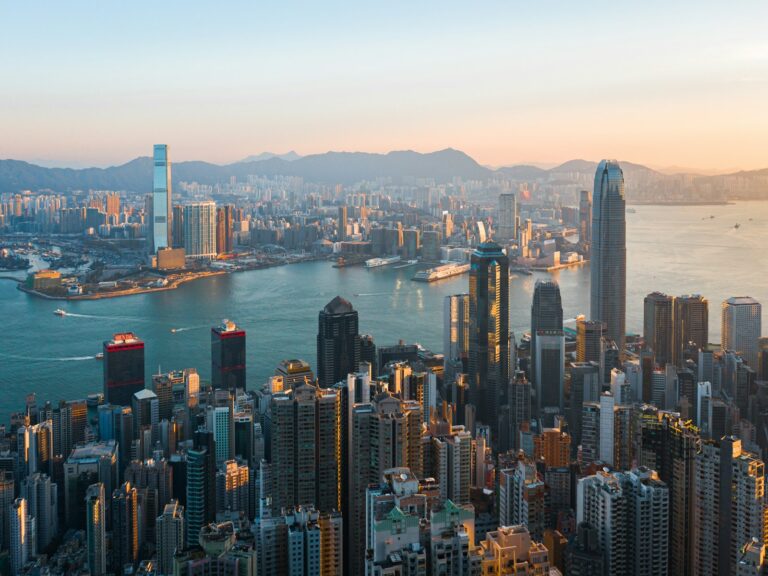
Bangkok’s skyline doesn’t sleep.
Cranes swing over Rama 9. Mall-and-condo districts rise on old hotel sites. Out on the Bangna-Trad corridor, a forest is being planted between apartment towers.
And yet the market isn’t easy. Household debt is high, banks are cautious with mortgages, and developers have had to work harder for every booking. Some have pulled back. Others have quietly reinvented themselves as hotel owners, warehouse landlords and even hospital operators.
That split is the real story of 2026. The companies doing well aren’t always the ones building the most units. They’re the ones with sharp land banks, strong balance sheets and income that doesn’t depend on a single condo launch selling out in a weekend.
For investors, corporate tenants and buyers, picking the right partner matters more than it did five years ago. Delivery records, financing strength and after-sales service now separate the leaders from the rest.
This guide looks at the top real estate developers in Thailand for 2026, covering SET-listed heavyweights, mixed-use specialists and a private developer that has built its brand on quality, using the companies’ own 2026 plans and filings.
Why Businesses Are Investing in Real Estate Development in Thailand
A Concentrated, Well-Capitalised Market
A small group of listed developers dominates new supply in Greater Bangkok. A 2024 launch survey reported by Propholic found that the ten largest listed firms accounted for 56% of new units and 63% of launch value in the Bangkok Metropolitan Region, which gives partners a clear set of established names to work with.
Mixed-Use and Recurring Income
Thailand’s biggest projects now combine retail, offices, hotels and homes on one site. That model gives developers steadier rental income and gives occupiers a ready-made district, much like the large township schemes taking shape elsewhere in the region.
Industrial and Logistics Demand
Warehouses and factories have become a growth engine. Several Thai property developers are adding logistics space along the Bangna and Eastern Economic Corridor routes to serve e-commerce and manufacturing tenants.
Expansion Beyond Bangkok
Provincial cities such as Khon Kaen, Chiang Mai and Phuket are getting serious investment. Leading residential developers in Thailand are taking malls, housing estates and hotels well outside the capital.
Top 10 Real Estate Developers in Thailand at a Glance
| Rank | Company | Primary Strength | Best For | HQ / Founded |
|---|---|---|---|---|
| 1 | AP (Thailand) | Low-rise housing at scale | Mid-market homebuyers | Bangkok / 1991 |
| 2 | Sansiri | Lifestyle and luxury brands | Premium condo and resort buyers | Bangkok / 1984 |
| 3 | Supalai | Nationwide reach, financial discipline | Provincial and value-focused buyers | Bangkok / 1989 |
| 4 | Land and Houses | Single-detached homes, hotels | Family homebuyers | Bangkok / 1983 |
| 5 | Central Pattana | Retail-led mixed-use | Retailers and office occupiers | Bangkok / 1980 |
| 6 | SC Asset | Upscale housing, diversification | Upper-income buyers | Bangkok / over 20 years |
| 7 | Pruksa Holding | Housing plus healthcare | First-time buyers | Bangkok / 1993 |
| 8 | Frasers Property Thailand | Industrial and logistics | Manufacturers and 3PLs | Bangkok / 1990 |
| 9 | MQDC | Sustainable, wellness-led communities | Quality-first buyers | Bangkok / DTGO group |
| 10 | Origin Property | Transit condos, hotels | Young urban buyers and investors | Samut Prakan / 2009 |
Top 10 Real Estate Developers in Thailand (2026)
Here’s how each company earns its place, based on verified 2025 and 2026 company data.
1. AP (Thailand)
AP started out in 1991 as Asian Property and took its current name in 2013. It’s headquartered at Ocean Tower 1 on Ratchadaphisek Road in Bangkok and is listed on the SET. For 2026 the company planned 46 new projects worth THB 56 billion, with a net presales target of THB 49 billion. By the end of September it had booked about THB 36.9 billion, roughly three-quarters of that goal.
Low-rise housing is the engine, contributing over THB 30 billion of presales in the first nine months. AP’s brand ladder runs from Pleno townhomes to Centro and The City detached homes, with Aspire and Life condos near mass transit. Its APITOWN provincial brand is expected to reach 26 projects across 22 provinces by the end of 2026. TRIS Rating has kept AP at “A” with a stable outlook for four years running.
Key Offerings:
- ✔ Townhomes, twin homes and detached houses
- ✔ Transit-linked condominiums
- ✔ APITOWN provincial communities
Best for: Mid-market buyers who want choice across price points and locations. More at AP’s official website.
2. Sansiri
Sansiri began in 1984 as San Samran Holding and listed on the SET in 1996. It runs from Siri Campus in Bangkok’s Phra Khanong area. As of 30 June 2026 it had 135 active projects, and its 2026 plan covers 33 launches worth THB 51 billion. Second-quarter presales came in at about THB 10 billion, up 28% year on year.
Sansiri is best known for design-led condos and luxury homes, from the 98 Wireless tower to resort projects in Phuket, which management has named a priority market. It’s built joint ventures with BTS Group along mass-transit lines and became a major shareholder in hotel brand Standard International in 2019. Sansiri was rated AAA in the SET ESG Ratings 2025.
Key Offerings:
- ✔ Luxury and super-luxury condominiums
- ✔ Detached homes and townhomes
- ✔ Resort residences and hospitality
- ✔ Brokerage and property management
Best for: Buyers and investors looking for premium, brand-driven Bangkok and Phuket property.
3. Supalai
Supalai was founded on 26 June 1989 and listed on the SET in November 1993. Led by CEO Dr Prateep Tangmatitham, it’s known for steady execution and a conservative balance sheet. In January 2026 the company set a sales target of THB 45 billion: THB 30 billion in Thailand and THB 15 billion in Australia.
Supalai’s edge is reach. Its 2026 plan includes 28 new projects and expansion into Suphan Buri and Koh Samui, bringing coverage to 30 provinces. In Australia it expected to reach 25 projects across four states. It’s also moving into warehouse leasing, adding a recurring income stream. In 2025, 21 of its projects worth about THB 35.5 billion sold out.
Key Offerings:
- ✔ Affordable and mid-range housing estates
- ✔ City and provincial condominiums
- ✔ Australian residential joint ventures
- ✔ Warehouse leasing
Best for: Value-focused buyers outside Bangkok. See Supalai’s website for current projects.
4. Land and Houses
Land and Houses was incorporated in 1983 and is based at Q. House Lumpini on South Sathorn Road. It’s one of the oldest names among Thai property developers and built its reputation on single-detached homes. Low-rise housing made up 87% of its sales revenue in 2025.
The group’s 2026 portfolio covers 69 projects worth about THB 80 billion, including high-end houses under the Nantawan and Chaiyapruek brands. LH has also built a hospitality and rental arm: Grande Centre Point hotels, the Terminal 21 Rama 3 mall and apartments and hotels in the US. The company set 2026 targets of THB 15 billion in bookings and THB 17 billion in transfers, and plans to cut its net debt-to-equity ratio to 1.0x by year-end.
Key Offerings:
- ✔ Single-detached luxury and family homes
- ✔ Condominiums such as Wanvayla Na Chaophraya
- ✔ Grande Centre Point hotels and retail
Best for: Families who want an established name in landed housing.
5. Central Pattana
Central Pattana was established in 1980 and opened Central Ladprao, Thailand’s first fully integrated shopping centre, in 1982. It’s been SET-listed since 1995. In March 2026 its portfolio stood at 142 projects, including 45 shopping centres, 11 office buildings, 17 hotels and 53 residential developments.
It’s the clearest example of the retail-led mixed-use model. Central Park, part of the Dusit Central Park scheme, recorded 25 million visits in its first year, while The Residences there were 96-97% sold by September 2026. The company has earmarked THB 110 billion for 2026-2030 to deliver 33 mixed-use projects, including a 750-rai Rangsit district. Its PHYLL condo in Khon Kaen sold out within three days.
Key Offerings:
- ✔ Shopping centres and community malls
- ✔ Grade A offices
- ✔ Hotels and mall-linked condominiums
Best for: Retailers, office tenants and buyers who want homes inside a full lifestyle district.
6. SC Asset
SC Asset, headquartered on Vibhavadi Rangsit Road in Bangkok, has more than two decades in the market and ranked 404th in the Fortune Southeast Asia 500. In April 2026, under CEO Nuttaphong Kunakornwong, it launched its first major rebrand in 20 years under the theme “Beyond Residential”.
The strategy splits the business into three engines: homes for sale, recurring income from hotels, warehouses, offices and US rental apartments, and new services. SC targets 2026 revenue of THB 25.5 billion and sales of THB 27 billion. Plans include 450 more hotel rooms in Pattaya and Phuket and 170,000 square metres of warehouse space in the Bangna-EEC zone. Its RueJai after-sales service and LINTON concierge cater to upscale residents.
Key Offerings:
- ✔ Upscale detached homes and luxury condos
- ✔ Hotels and warehouses
- ✔ After-sales and concierge services
Best for: Upper-income buyers who value service after handover.
7. Pruksa Holding
Pruksa’s real estate business dates back to 1993, and Pruksa Holding was set up in 2016 as the group’s listed parent. It’s based at the Pearl Bangkok Building on Phahonyothin Road. Pruksa was once the country’s biggest homebuilder by volume, and it still runs its own precast concrete factories, opened at Navanakorn in 2013.
The group has deliberately scaled back launches and pushed into healthcare. Its ViMUT Hospital has 222 beds, and ViMUT Theptarin adds another 80. For 2026 Pruksa aims for seven launches worth THB 8.2 billion, THB 16.5 billion in presales and THB 2.6 billion in healthcare revenue. Brands include The Palm, The Reserve and the Chapter condo line.
Key Offerings:
- ✔ Townhomes and detached houses
- ✔ Chapter condominiums
- ✔ ViMUT hospitals and wellness centres
- ✔ Precast construction
Best for: First-time buyers and those who like integrated health services nearby.
8. Frasers Property Thailand
Frasers Property Thailand traces its roots to TICON Industrial Connection, founded in 1990 and listed on the SET in 2002. It adopted its current name and FPT ticker in 2019, then absorbed residential developer Golden Land, which was delisted in 2020. CEO Lim Hua Tiong leads a “One Platform” model across residential, industrial and commercial property.
Industrial is its strongest card. Factory occupancy averaged 96% in the quarter to December 2025, and it’s building a 65,000-square-metre automated sorting centre for SPX Express. In housing, its Goldina, Gramour and GUTE brands focus on green design; it says it was the first Thai developer to earn TREES-Home Gold certification from the Thai Green Building Institute.
Key Offerings:
- ✔ Factories, warehouses and built-to-suit logistics
- ✔ Townhomes and detached houses
- ✔ Offices and retail space
Best for: Manufacturers and logistics firms needing ready or custom space.
9. MQDC (Magnolia Quality Development Corporation)
MQDC is a privately held Bangkok developer within the DTGO group, founded by Thippaporn Ahriyavraromp. It isn’t SET-listed, but its projects carry real weight. Its flagship, The Forestias on Bangna-Trad Road, secured THB 22 billion in project finance from Siam Commercial Bank in 2025. MQDC set a 2026 completion target, and by August 2026 it was marketing ready-to-move-in homes there.
MQDC’s angle is quality and well-being. It offers a 30-year home warranty and runs a sustainability research centre, RISC. The Forestias combines Whizdom condos, Mulberry Grove multi-generational homes, The Aspen Tree community for over-50s and 27 Six Senses villas. Its Cloud 11 creative hub near BTS Punnawithi is valued at about THB 43 billion. MQDC has also joined developments such as ICONSIAM.
Key Offerings:
- ✔ Luxury and wellness-focused residences
- ✔ Senior living communities
- ✔ Large mixed-use districts
Best for: Buyers who rank build quality and long warranties above price.
10. Origin Property
Origin Property was founded in 2009 and is headquartered in Samut Prakan, making it the youngest firm on this list. Led by CEO Peerapong Jaroon-Ek, it grew fast by building condos near new rail lines, under brands such as Knightsbridge, Park Origin and Origin Place. Its low-rise homes sit under Britania and Grand Britania.
Origin is now steering hard towards recurring income. Hotels, services and warehouses contributed about 45% of net profit in 2025, and the company expected that share to reach 50% in 2026, with a long-term goal of two-thirds. It sold two Bangkok hotels for THB 1.3 billion in 2025. Projects extend to Phuket, Khon Kaen, Rayong and the Eastern Economic Corridor.
Key Offerings:
- ✔ Transit-oriented condominiums
- ✔ Britania townhomes and houses
- ✔ Hotels and property services
Best for: Young professionals and investors targeting rail-linked units.
How to Choose the Right Real Estate Developer in Thailand
Check the Delivery Record
Visit completed projects, not just show units. Look at how buildings have aged and how quickly defects were fixed.
Look at Financial Health
For listed developers, SET filings show debt levels, backlog and credit ratings. A firm with a healthy backlog and a stable rating is less likely to stall mid-build.
Match the Segment
Some developers excel at affordable townhomes; others at luxury towers or factories. Pick a company whose core business matches what you need.
Ask About After-Sales Service
Warranty length and juristic management quality vary widely. MQDC’s 30-year warranty and SC Asset’s service platforms show how far some firms now go.
Understand the Financing
Mortgage approvals have tightened, so ask what bank partnerships or payment plans the developer offers. Foreign buyers should also confirm how funds must be transferred into Thailand.
Frequently Asked Questions
Can foreigners buy condos from Thai developers?
Yes. Under Section 19 bis of the Condominium Act, foreigners may own up to 49% of a building’s total unit floor area. Proposals to raise that to 75% have been discussed since 2024, but as of November 2026 they haven’t become law.
Can foreigners own landed houses?
Generally not freehold land. Long leases are the usual route, and the Civil and Commercial Code still caps a single lease term at 30 years.
Which real estate developers in Thailand are listed on the stock exchange?
Nine of the ten here trade on the Stock Exchange of Thailand (SET). MQDC is private, so less financial data is public.
Are Bangkok condo developers moving beyond housing?
Many are. SC Asset, Origin, Supalai and Frasers Property Thailand are all adding hotels, warehouses or rental assets, while Pruksa has moved into hospitals. Payments are changing too, with the Bank of Thailand setting out rules for baht-backed stablecoins.
Conclusion
The leading property developers in Thailand don’t look the same anymore. AP, Supalai and Land and Houses lean on housing scale, while Central Pattana, MQDC and Frasers Property Thailand build districts, logistics hubs and recurring income.
Whether you’re comparing Bangkok condo developers or industrial landlords, check the filings, visit finished projects and match the developer to the job. In a cautious market, those steps matter more than any brochure.